What "on-chain perps" actually means for Hyperliquid and dYdX
Most decentralized exchanges you may have heard of — Uniswap, Curve, even GMX — settle trades against a pool of liquidity using an automated market maker (AMM). There is no order book; a smart contract quotes a price based on inventory, and your trade is filled against that pool. Perpetuals on these venues are essentially synthetic: a vault takes the other side of your bet, and the price is tracked against an oracle.
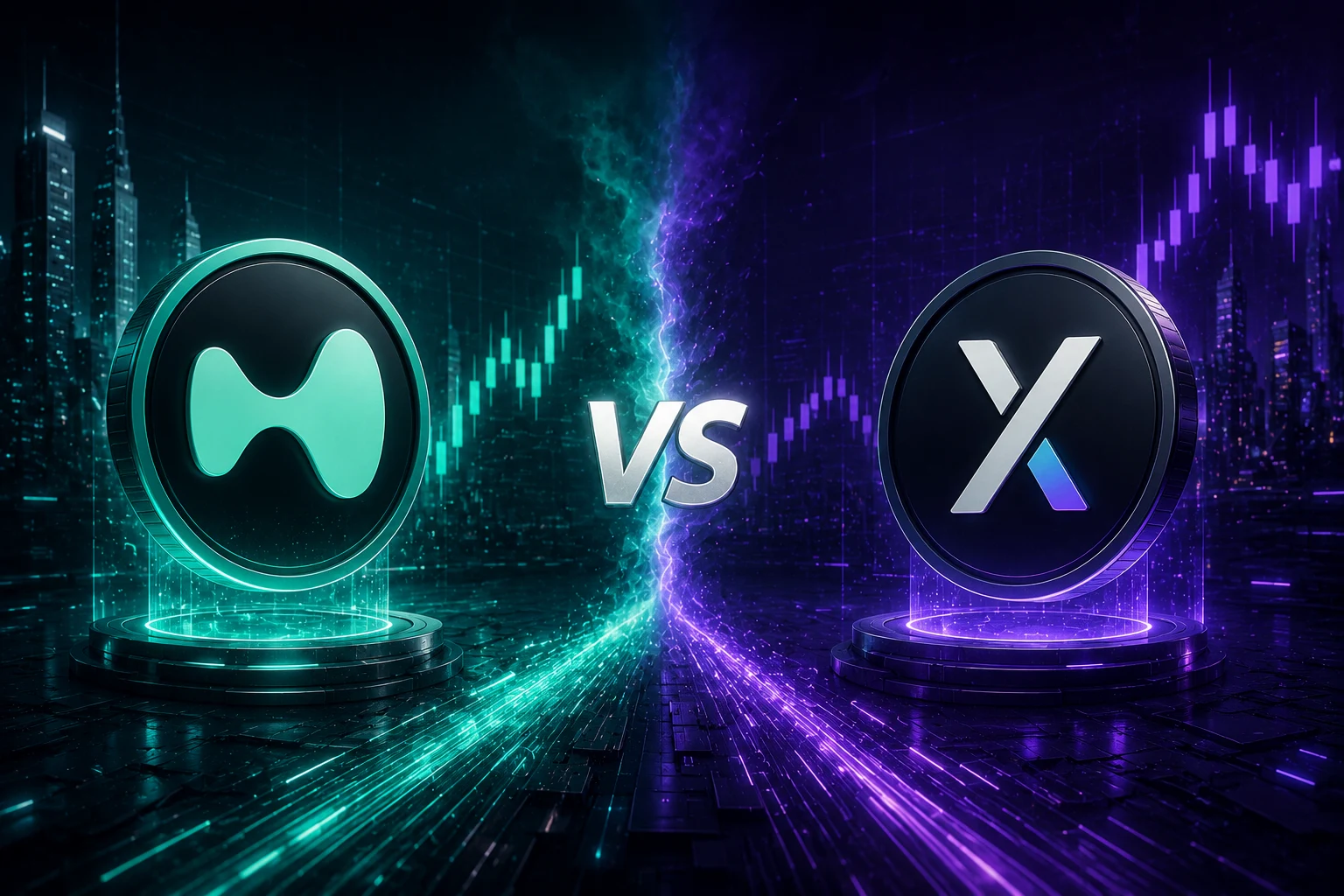
Hyperliquid and dYdX take a different approach. Both run a fully on-chain central limit order book (CLOB), the same kind of bid/ask book you would see on Coinbase or Binance, but every order, cancel, and match is settled by a blockchain rather than a private matching engine. The difference matters because order-book perps let sophisticated traders post limit orders, earn the spread as a market maker, and manage inventory with the same tools they would use on a centralized exchange.
To make this fast and cheap, both projects abandoned Ethereum and launched their own chain. Hyperliquid built Hyperliquid L1, a custom blockchain with its own consensus and a native token, HYPE, used for gas and staking. dYdX v4 is a Cosmos appchain: it runs the CometBFT consensus engine, uses DYDX as its staking and governance token, and connects to the broader Cosmos ecosystem via IBC rather than living on Ethereum. In both cases, "on-chain" does not mean "on Ethereum" — it means the matching engine, the order book, and the settlement all happen on a chain the protocol itself controls.
The practical upshot is that both venues can offer CEX-like latency and fee structures, but each inherits a new set of risks that simply do not exist on an Ethereum-based DEX. The biggest of those is the validator set, which we will return to several times.
Architecture: custom L1 versus Cosmos appchain
Hyperliquid L1 is purpose-built for a single application: the Hyperliquid order book. It uses a HotStuff-style consensus among its own validator set, with the network optimized for high throughput and low latency of order operations. HYPE is the gas token, and the chain is designed so that the protocol's own validators also stake HYPE to secure block production. There is no general-purpose smart-contract platform competing for block space; the chain exists to run the exchange.
dYdX v4 is built with the Cosmos SDK and runs CometBFT, the same consensus family that secures the Cosmos Hub, Osmosis, and other Cosmos chains. The dYdX DAO governs the validator set, and validators stake DYDX. Like Hyperliquid, the chain is application-specific: rather than hosting many dApps, it is dedicated to running the v4 order book. Trades are matched and settled on-chain, with the dYdX frontend and third-party frontends providing access.
Both designs are a deliberate trade. By leaving Ethereum, the protocols avoid congestion and the unpredictable gas costs of an L2 rollup, and they can tune the chain to a single workload. They also give up Ethereum's validator set — hundreds of thousands of stakers, deep social consensus, years of client diversity — in exchange for a much smaller, appchain-sized set they can actually coordinate. That is the trade, and it is the one most under-appreciated by traders who reflexively assume "on-chain = secure like Ethereum."
Risks you should care about before trading either
Before comparing fees and tokens, it is worth being explicit about the failure modes both platforms share, because the marketing copy tends to bury them.
Validator-set centralization
Both Hyperliquid L1 and dYdX v4 are secured by validator sets that are small compared to Ethereum's. Even a healthy appchain might have on the order of 100 active validators, and the top validators often hold disproportionate stake. That has two consequences. First, if a quorum of validators colludes or is compromised, the chain can be halted or, in the worst case, used to censor specific orders. Second, because the validator set is identifiable and the staking token is a known, traded asset, validators face off-chain legal and regulatory pressure that pseudonymous Ethereum miners largely do not. This is the single most important risk factor that "on-chain" branding tends to obscure.
Liquidation engine risk
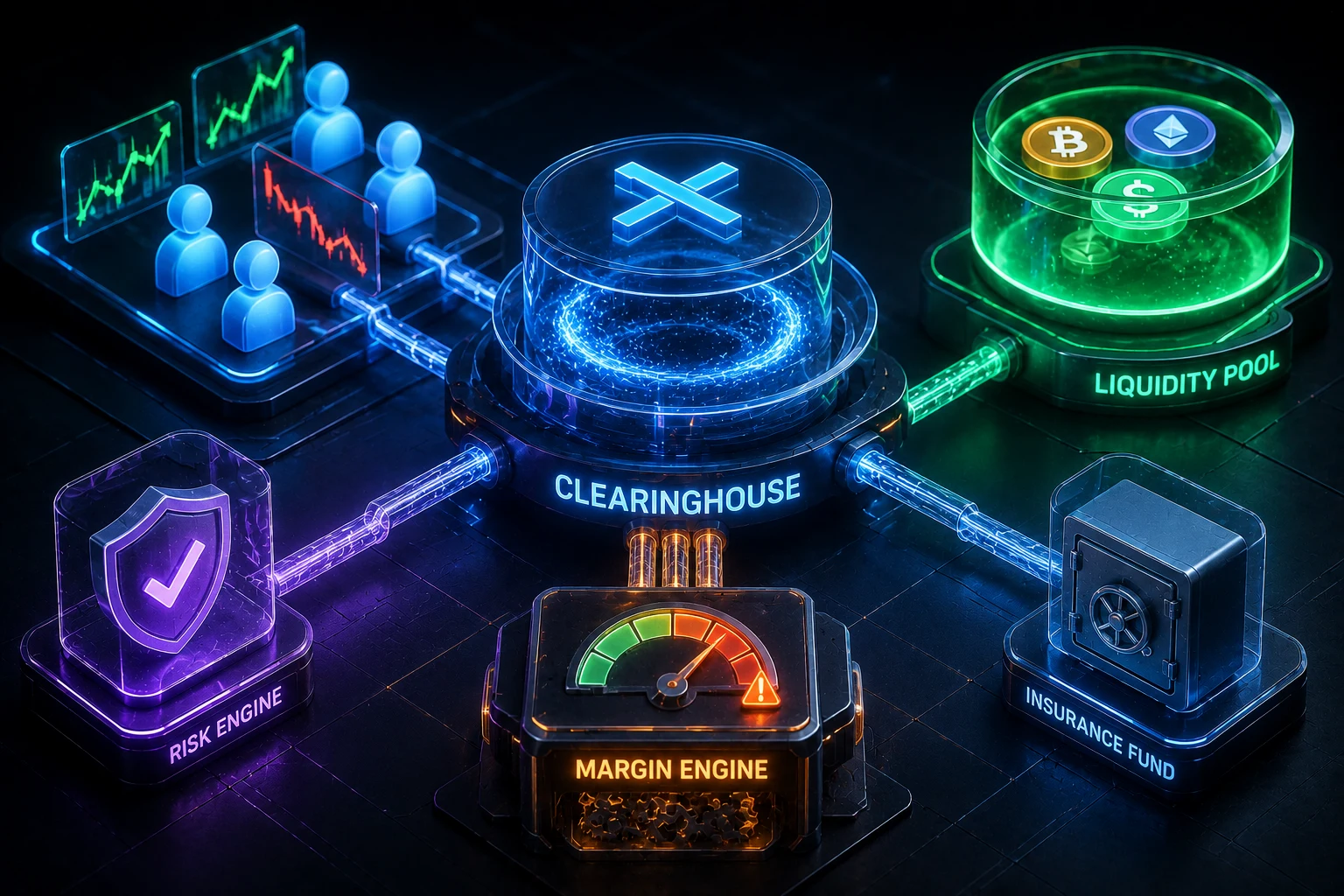
On-chain perpetuals require an on-chain liquidation system: when a position falls below maintenance margin, someone — usually a liquidator bot — must close it to keep the insurance fund and counterparties whole. If the chain is congested, the price is moving fast, or the liquidation engine is poorly designed, positions can be closed at far worse prices than the mark, producing socialized losses for other users. Both platforms have had incidents or near-misses in this area, and traders should know the platform's insurance fund mechanics before going anywhere near size.
Smart contract and bridge risk
Deposits to both chains require a bridge. Bridging USDC, for example, means trusting the bridge's security model, and bridges have historically been one of the most attacked surfaces in crypto. Even on appchains, a compromised bridge can lock user funds or mint unbacked assets, and the appchain itself may have limited ability to absorb that shock.
Uptime and oracle failure
Both platforms depend on price oracles for mark prices and funding rates. If an oracle lags, freezes, or returns a bad value during volatility, the on-chain liquidation system can produce cascading bad debt. Track record matters here: how did each platform behave during past liquidation cascades, and were there extended outages?
Fee structures and maker rebates
Fees are one of the most concrete differences between the two venues, and they matter a lot for active traders, especially market makers whose entire business model is collecting the spread plus rebates.
Hyperliquid charges maker and taker fees that scale with 14-day trading volume, in tiers, with maker rebates available at higher tiers. The base fees are competitive with mid-tier centralized exchanges, and the rebate structure is designed to attract liquidity providers who post tight quotes on the order book. There is also a staking discount: staked HYPE can reduce the taker fee, which aligns the token with the actual user experience of the platform.
dYdX v4 similarly uses a tiered fee schedule based on 30-day trading volume, with maker rebates that grow as you trade more. dYdX has historically had very low base fees, sometimes as low as 0 bps for top-tier makers, in an effort to win market-share from centralized exchanges. The catch is that to reach those top tiers, you typically need to stake substantial DYDX, which we will get to in the next section.
For a casual retail trader placing the occasional market order, the difference between the two fee schedules is small. For a market maker posting two-sided quotes 24/7, even a few basis points of rebate difference compounded over thousands of fills is material, and the staking requirements to unlock those tiers become a real consideration. Always check the current published fee schedule, because both protocols tune their numbers in response to volume.
HYPE versus DYDX token utility
The two tokens look similar at a glance — both have "DY" in the name and are staking tokens for their respective chains — but they are not interchangeable, and the differences are worth understanding.
HYPE is the native gas token of Hyperliquid L1, so every transaction on the chain pays gas in HYPE. It is also the staking token for validators, and the protocol runs a delegation model that lets token holders delegate to validators and earn a share of network rewards. Crucially, HYPE is also the settlement asset for trades on the order book: the chain uses USDC for margin, but the gas economy and validator security are denominated in HYPE. Holding HYPE is, in a sense, holding equity in the security of the exchange itself.
DYDX on dYdX v4 is primarily a staking and governance token. Validators stake DYDX to secure the chain, and delegators can delegate to validators in exchange for a share of protocol rewards. DYDX is not used to pay gas on the chain, and it is not the settlement asset for trades — dYdX v4 settles in USDC. Governance over the protocol's parameters, fee schedule, and validator set is controlled by DYDX holders via the dYdX DAO.
The practical upshot: if you are a user of either platform, you do not strictly need to hold the native token. You can deposit USDC and trade. But if you want the best fee tier, or if you want to participate in securing the chain and earning a yield, you need to engage with the native token. The risk to consider is concentration: a large share of both HYPE and DYDX is held by the founding teams, the foundations, and early investors, so the circulating float is smaller than the headline supply suggests.
Liquidation handling, uptime, and track record
Track record is the hardest thing to evaluate from the outside, because it requires looking at how each platform actually behaved during stress events, not just the marketing after the fact.
Hyperliquid has, in its relatively short public history, experienced moments of high volatility where the liquidation engine and insurance fund were tested. Reports from those events generally point to the protocol holding up, with positions liquidated on the order book and the insurance fund absorbing residual losses where the market was thin. The chain itself has had uptime incidents, including brief halts that paused block production, which is a reminder that appchains can and do go down in ways that Ethereum mainnet essentially does not.
dYdX has a longer track record because the v3 product ran on Ethereum L2 (StarkEx) for years before the v4 migration to a Cosmos appchain. During that time, dYdX v3 had its own set of stress events, and the migration to v4 was, in part, a response to the cost and throughput limits of running an order book on a rollup. Since the v4 launch, the platform has continued to operate, but it inherits the standard appchain risks discussed above: small validator set, possible halts, and bridge risk for deposits.
For traders, the actionable questions are: how large is the insurance fund on each platform, how transparent are its mechanics, and how have past near-death events been communicated? Both projects publish dashboards and post-mortems, and those are worth reading rather than trusting either team's narrative.
Which one should you actually use?
There is no universal answer, and anyone who tells you there is one is selling something. The honest framing is that the right venue depends on what you are doing.
If you are an active market maker or a high-frequency trader who cares about the deepest rebate tiers and a settlement asset you can farm yield on via the native token, Hyperliquid's fee structure and HYPE staking model may be more attractive. If you are a swing trader or a less frequent user who wants a long-running venue with a familiar Cosmos-based architecture and you are willing to stake DYDX for fee discounts, dYdX v4 is a reasonable choice.
If you are risk-sensitive, the more important question is which validator set you are more comfortable trusting. Look at the validator distribution, the slashing conditions, the bridge architecture, and the insurance fund documentation. Both chains are smaller than Ethereum and inherit smaller-chain risks, so the choice between them is a choice about which smaller-chain risk profile you find more acceptable, not a choice between "on-chain" and "off-chain."
Finally, size your positions accordingly. On-chain perps are a real improvement over centralized counterparty risk in some ways, but they introduce new categories of risk — validator compromise, bridge hacks, oracle failures, insurance fund depletion — that do not exist on a regulated CEX. Use these venues with the same caution you would use on a young, growing exchange, and never with money you cannot afford to lose.
How to follow on-chain perp news the smart way
On-chain perpetual exchanges move fast: validator changes, fee schedule tweaks, insurance fund updates, and bridge incidents all affect where you should be trading. Tracking every news item, governance vote, and validator-set change manually is a losing game. Zippfeed surfaces Hyperliquid, dYdX, and broader on-chain perp headlines with sentiment scoring (bullish, neutral, or bearish) and an importance rating, so you can separate signal from noise and react to the events that actually move the markets you trade.

 CoinDesk
 WuBlockchain
 TheBlock
 Lookonchain