Why people argue about wallet types in the first place
The phrase 'not your keys, not your coins' became a rallying cry after Mt. Gox in 2014 and again after FTX in 2022. In both cases, customers of centralized exchanges discovered that deposits were being lent, rehypothecated, or simply spent before withdrawals stopped working. The slogan correctly captures a real failure mode: when a third party holds your assets, you are exposed to that third party's solvency, honesty, and operational competence.
But the slogan has been stretched past its useful range. It implies that any time someone other than you holds the private key, your funds are unsafe. That conflates very different arrangements. A teenager's Binance account, a fintech startup's hot wallet on a shared laptop, and a pension fund's allocation held by a qualified custodian in New York under a written trust agreement are not the same setup, even though all three technically involve 'someone else holding the keys'.
This article lays out the actual risk matrix behind smart contract wallet vs custodial wallet choices. Rather than declaring a winner, it walks through code risk, counterparty risk, recovery, inheritance, seizure, and user error, the six categories that determine whether you actually get your ETH, USDC, or USDT back when something goes wrong.
The real risk matrix: what can actually go wrong
Most wallet debates focus on a single axis, who holds the private key, and ignore the others. A useful comparison has to score at least six categories. Below is the framework the rest of the article uses.
- Code risk. Bugs in the smart contract, the wallet SDK, or the underlying signature scheme can drain funds even when the user does everything right.
- Counterparty risk. The custodian, exchange, or staking provider becomes insolvent, freezes withdrawals, or misuses customer assets.
- Key management risk. The user loses their seed phrase, signs a malicious transaction, or gets phished out of an owner key.
- Recovery risk. When the user is incapacitated, dead, or simply locked out, can the assets still be reached by the right people?
- Seizure and censorship risk. Governments, hackers, or chain-level actors can freeze or confiscate assets.
- Operational risk. Day-to-day mistakes, like approving the wrong contract, sending to the wrong chain, or using a compromised browser extension.
Every wallet design, from a hardware wallet running Safe to a regulated custodian holding USDC for an institution, has a different profile across these six categories. Picking the 'safest' option without thinking about which risks matter most for you is how people end up paying 0.8% per year on custody they don't need, or holding nine figures on a laptop with no backup.
How smart-contract wallets actually work
A smart-contract wallet is not a single key on a single device. It is a smart contract deployed on Ethereum (or another chain) that holds the assets and enforces rules about who can move them. The most widely deployed example is Safe (formerly Gnosis Safe), which holds tens of billions of dollars in ETH, USDC, and USDT across DAOs, treasuries, and individual users.
Because the wallet is a contract, you can program it. The most common features are multisig (for example, 3-of-5 signers must approve a transaction), spending limits (a signer can only move up to X per day without full multisig approval), allowlists (transactions can only go to pre-approved destinations), and guardians (third-party accounts that can pause or recover the wallet under defined conditions).
More recent designs use ERC-4337 account abstraction. Instead of an EOA (externally owned account) controlled by one private key, a 4337 wallet is a smart account whose signature logic is fully programmable. That enables features that were impossible on a regular wallet: gas payments in USDC instead of ETH, batched transactions, session keys that expire, social recovery through trusted friends or devices, and ZK-email or ZK-passkey recovery where you prove control of an email or hardware key without that key ever touching the chain.
The key point is that 'smart-contract wallet' describes a family of designs, from a 2-of-3 Safe used by an individual, to a 4337 smart account with passkey login and social recovery, to a multisig treasury run by a foundation. They share one property: the user (or a configured set of users) directly controls the assets without any intermediary's permission.
How custodial wallets actually work
On the other end of the spectrum, a custodial wallet is one where a third party holds the private keys on your behalf. That covers three very different products, and the difference matters a lot.
Exchange custody. A retail or institutional account on a venue like Coinbase or Binance. Funds are pooled, often rehypothecated, and protected mainly by the exchange's internal controls and any insurance or bankruptcy status the venue has. This is the model that has failed most spectacularly: Mt. Gox, Quadriga, FTX, and several smaller venues.
Qualified custody. A purpose-built custodian such as BitGo, Fireblocks, Anchorage, or Coinbase Custody Trust, regulated under frameworks like the New York Department of Financial Services BitLicense or a SOC 1 / SOC 2 audited trust charter. Customer assets are segregated, the custodian cannot lend them without explicit permission, and there is typically insurance and a clear bankruptcy-remote structure.
Self-custody-lite. Apps like centralized mobile wallets or 'earn' products where the provider holds the keys but the UX feels like self-custody. The legal reality is closer to exchange custody than to qualified custody.
The smart-contract-wallet-versus-custodial-wallet debate often blurs these three together, which is why the conversation gets confused. Comparing a Safe multisig to a random offshore exchange is not the same comparison as Safe versus a SOC-audited qualified custodian holding your USDC in segregated cold storage.
Code risk vs counterparty risk: the heart of the trade-off
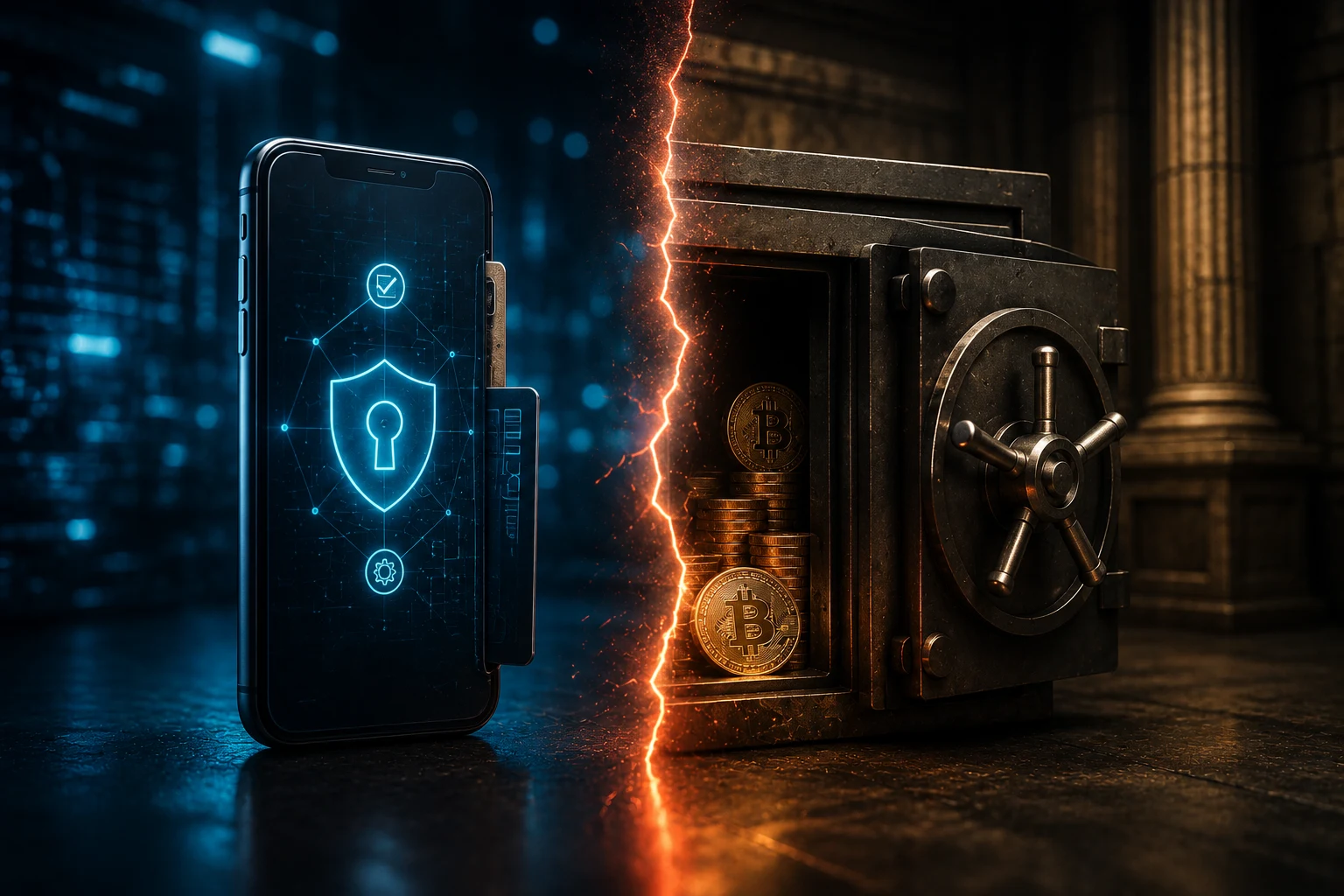
Every smart-contract-wallet-versus-custodial-wallet decision eventually comes down to which risk you fear more: a bug in the code that holds your assets, or a failure of the company that holds your assets. Both are real, both have a long track record, and both are misunderstood.
What code risk actually looks like
Safe itself has had security incidents. In 2024, a vulnerability in Safe's singleton contract was disclosed and patched before exploitation, but a separate earlier issue had already cost users tens of millions in crafted signature attacks. Other smart-wallet exploits include the 2022 Wintermute bridge attack, the 2022 Ronin validator compromise, and the 2024 radi.capital 'exit' scam that drained user wallets that had approved a malicious module. The pattern is consistent: every layer of code, the wallet, the modules, the signers, the UI, the RPC, is a potential failure point, and composability means a secure wallet can still drain funds if a connected dApp is malicious.
What counterparty risk actually looks like
Counterparty risk is not only 'the exchange steals your money'. It includes: the exchange becomes insolvent and customer assets are treated as part of the estate (FTX), the exchange freezes withdrawals during a contentious hard fork or regulatory action, the custodian is hacked through a hot-wallet compromise, the custodian's staff colludes, the custodian's insurance turns out to exclude the loss that occurred, or the custodian's jurisdiction passes a law that prevents withdrawal (Canada's 2022 emergency orders against certain accounts).
Qualified custodians shrink the worst of these by segregating assets, undergoing audits, carrying insurance, and operating under a regulatory license that gives customers a clearer bankruptcy-remote claim. They do not eliminate the risk. Fireblocks, Anchorage, and BitGo have all had incidents of varying severity, though none on the scale of an FTX.
The honest answer is that both risk types are large in absolute terms, and the right weighting depends on holdings. For a few hundred dollars in ETH, the dominant risk is the user losing their seed phrase, not a Safe contract bug. For nine figures in USDC, the dominant risk shifts toward a single point of failure in your own key-management process or a smart-contract bug in the wallet you trusted.
What 'not your keys, not your coins' actually misses
The slogan is correct that an unregulated, unaudited, pooled exchange account is not safe for non-trivial holdings. It is wrong to extend that conclusion to all forms of custody.
Qualified custody, in the legal sense, is closer to a brokerage account at a bank than to a tween's Robinhood balance. Customer assets are segregated, the custodian cannot mix them with its own treasury, regulators supervise the custodian's solvency and controls, and in many jurisdictions customers have priority claim in bankruptcy. The dollar value at risk is not zero, but it is structured, insured, audited, and legally enforceable. Holding USDC at Anchorage for a corporate treasury is a fundamentally different proposition from holding USDC on a foreign exchange that lends it out.
The slogan also misses the asset-specific dimension. USDC and USDT are stablecoins with issuers who can freeze specific addresses on the underlying chains. A smart-contract wallet holding USDC is still subject to issuer-level censorship, independent of who holds the keys. A custodian holding USDC adds another layer of operational control on top, which is sometimes a feature (a corporate policy that only the custodian can freeze the account, not the user) and sometimes a bug (the custodian freezes the user's own account on a regulator's request).
Once you accept that the slogan is a useful rule of thumb for retail exchange accounts rather than a universal truth, the smart-contract-wallet-versus-custodial-wallet question becomes a portfolio question, not a religion.
Recovery, inheritance, and the boring half of self-custody
The most under-discussed advantage of qualified custody is succession. A well-drafted custody agreement names beneficiaries, provides for a corporate trustee, and survives the death or incapacitation of the account holder. A self-custody wallet, by default, does not. If the seed phrase is lost, the assets are gone. If the holder dies and nobody knows the seed, the assets are gone.
Smart-contract wallets are catching up. ERC-4337 designs support social recovery (a configured set of guardians can rotate the owner key), ZK-email recovery (prove control of an email account to recover), and passkey recovery (a hardware key, like a YubiKey, can be one factor). Safe supports a guardian-based recovery flow via Zodiac modules. These features are real, but they each introduce a new key-management tradeoff: every guardian is a potential social-engineering target, every recovery mechanism is a new attack surface, and the more recovery you add, the closer the wallet gets to a custodian in practice, just with worse accountability.
What the tradeoffs look like in practice
A reasonable pattern for an individual with mid-five-figure holdings in ETH, USDC, and USDT is a Safe multisig with a hardware wallet per signer, plus a documented recovery plan (shamir backup, instructions in a sealed envelope with a lawyer, or a paid inheritance product like Casa Relay or Anchorage Digital's institutional onboarding).
A reasonable pattern for a DAO or corporate treasury is a 4-of-7 Safe, signer keys held by named individuals in different jurisdictions, with a public signer rotation policy and a separate operational wallet with lower limits for day-to-day spending.
A reasonable pattern for a fund or family office with eight figures or more is a qualified custodian holding the bulk in segregated cold storage, plus a smaller self-custody allocation for operational use. The exact split depends on jurisdiction, regulatory requirements, and the cost of custody (typically 25 to 100 basis points annually).
How to choose the right setup for your situation
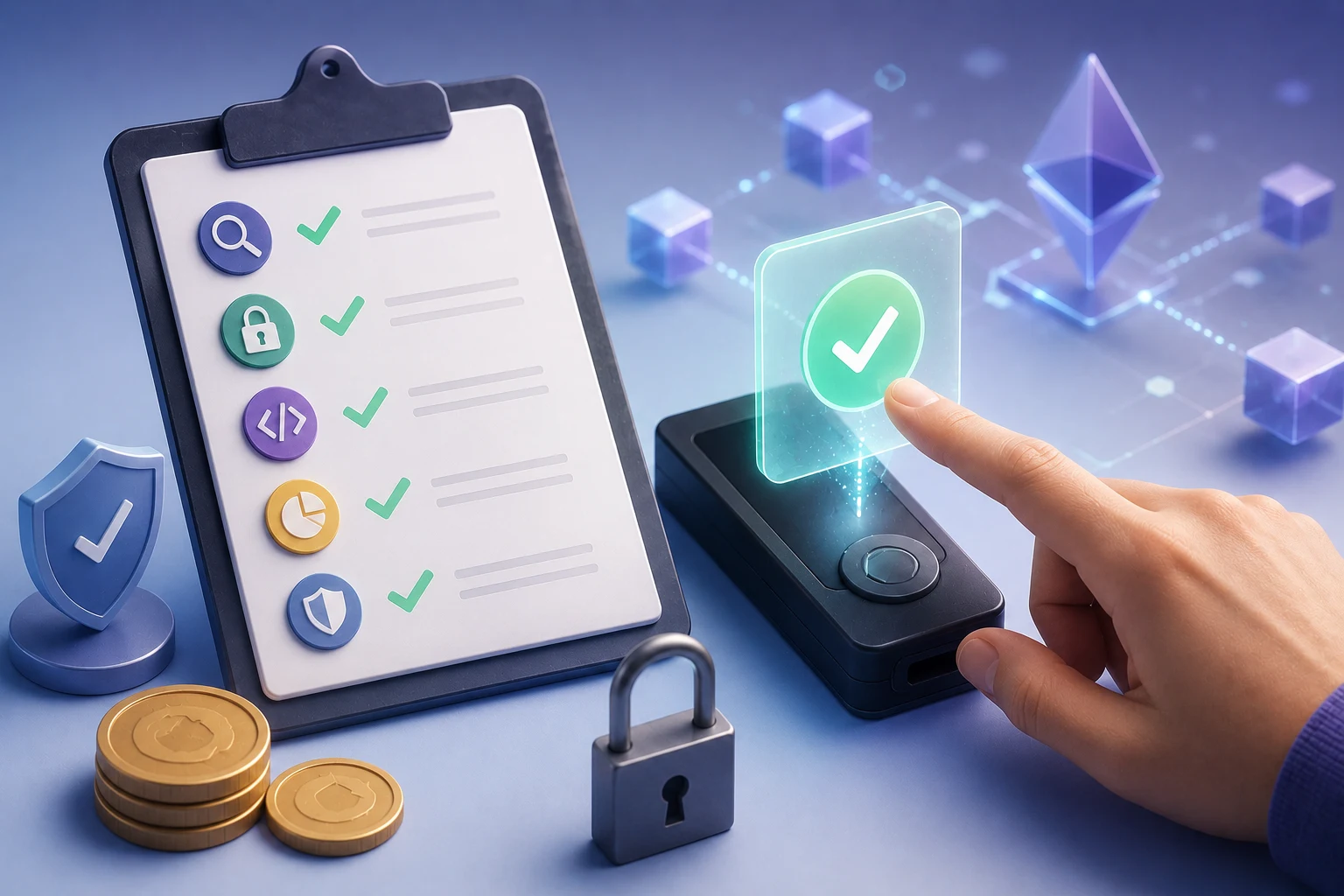
For non-trivial holdings, the safest setup is rarely a single wallet. It is a deliberate mix, with explicit answers to five questions.
- What am I protecting against first? If the dominant threat is your own operational mistakes, qualified custody reduces the blast radius. If the dominant threat is regulatory seizure or platform failure, self-custody reduces that surface.
- Who needs to inherit this? If the answer is 'a named individual or entity with a legal process', qualified custody or a properly structured self-custody recovery plan is required. If the answer is 'nobody, this is for me and I'll handle it', self-custody is fine.
- What is the cost of a mistake? For small balances, the simpler the wallet the better. For large balances, professional custody fees are cheap insurance.
- What chain and asset am I holding? Long-tail assets and bridges concentrate smart-contract risk. ETH, USDC, and USDT on Ethereum mainnet have the deepest liquidity and the most audited infrastructure, but they also have the most sophisticated attackers.
- What jurisdiction am I in? US-based qualified custodians have access to bankruptcy-remote structures that some offshore exchanges do not. The reverse can also be true for users in jurisdictions the US has sanctioned.
If you are starting from scratch, a defensible default is: keep an operational amount in a 4337 smart account with a hardware key and social recovery, keep the bulk of long-term holdings in a Safe multisig with geographically distributed signers, and consider a qualified custodian for any amount that, if lost, would be life-changing. The right ratio depends on the person, not on the slogan.
Stay ahead of wallet security risks with sharper signal
Smart-contract-wallet and custody risks move fast: new audit findings, new exploits, new regulatory rulings, new recovery standards. Tracking the news manually, especially the difference between a Safe UI bug and a Safe contract vulnerability, is a losing game. Zippfeed surfaces crypto security headlines with sentiment scoring (bullish, neutral, or bearish) and an importance rating, so you can separate a real Safe post-mortem from routine product updates and react before the next incident reaches your setup.



 CoinTelegraph
 Crypto Capital Venture
 CoinDesk
 CryptoSlate
 TheBlock