The one-sentence definition
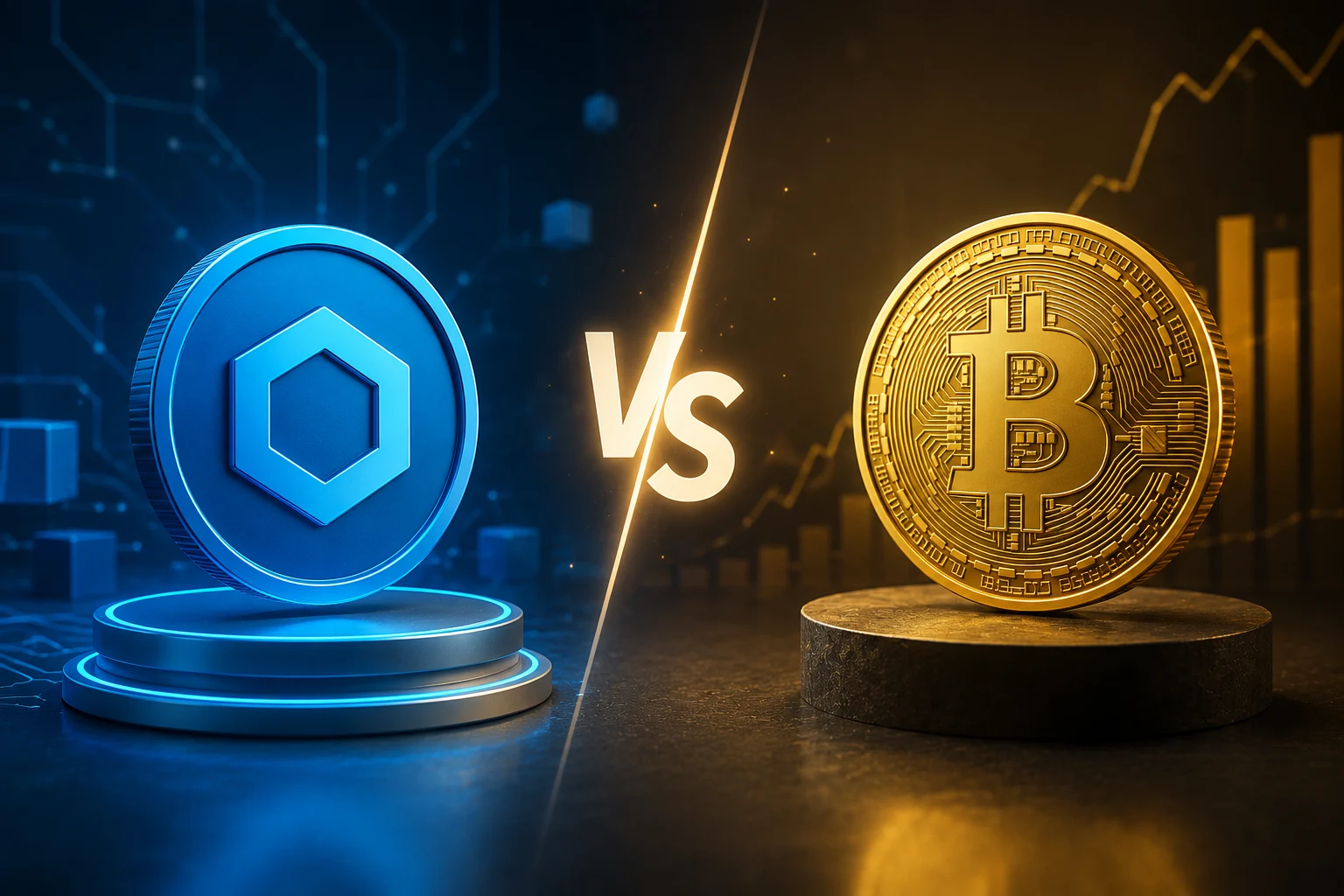
A coin is the native asset of a specific blockchain — meaning it exists at the protocol level, has no smart contract behind it, and is used to pay that chain's fees and reward its validators. A token is an asset created by a smart contract that runs on an existing blockchain, with its own balances, transfer logic, and rules — but it does not run the chain. One blockchain has one coin and can host millions of tokens.
If you have ever sent ETH and seen the network ask for ETH as the gas fee, that is the difference in practice. ETH the coin is what fuels Ethereum. USDC or LINK on Ethereum are tokens that ride along; they cannot pay their own gas — they need ETH.
Coins: the engine fuel
Every blockchain needs an internal economy. Validators have to be paid, network spam has to be priced, and the rules of issuance need an asset to apply to. The coin is that asset.
What coins do
A coin has three core jobs on its own chain. First, it pays for compute — every transaction fee is in coin, not in token. Second, it incentivises validators — block rewards on proof-of-stake chains and mining rewards on proof-of-work chains are paid in coin. Third, it serves as the reserve asset of the chain's economy — most lending, swaps and stablecoin systems on a chain price themselves against the coin.
Examples and the chains they power
- BTC powers Bitcoin. No smart contracts, no tokens at the base layer — just BTC moving around as transactional money.
- ETH powers Ethereum. The chain hosts hundreds of thousands of tokens, but ETH is what pays gas and what validators stake.
- SOL powers Solana. Tokens on Solana (SPL tokens) still need SOL to pay fees and rent.
- BNB powers BNB Chain. Same model — tokens depend on BNB for gas.
Each coin only works on its home chain. BTC cannot pay an Ethereum gas fee; ETH cannot pay a Bitcoin fee.
Tokens: the assets built on top
Once a chain supports smart contracts, anyone can write a contract that issues a token. The contract defines who owns how much, how it transfers, and whatever other rules the creator wants. The chain just runs that contract reliably.
The dominant standard: ERC-20
On Ethereum and every EVM-compatible chain, the standard token interface is ERC-20. It defines a handful of functions every token contract implements: how to check a balance, how to transfer, how to approve another contract to spend on your behalf. Because every ERC-20 looks identical to wallets and exchanges, USDC, UNI, AAVE, LINK and ten thousand others can be supported by the same code that supports any of them. Solana, Cosmos, Tron and others have their own equivalents (SPL on Solana, CW20 on Cosmos), but the pattern is the same.
What tokens are used for
- Stablecoins — USDC, USDT, DAI: tokens designed to hold a price around one dollar, used for payments and settling DeFi trades.
- Governance tokens — UNI, AAVE, COMP: tokens that grant voting rights on a protocol's decisions and sometimes a share of fees.
- Utility tokens — LINK, GRT: tokens that pay for a specific service inside a protocol.
- Project tokens — anything new being launched; varies wildly in quality.
- Wrapped coins — WBTC, wETH: tokens that represent a coin from one chain on a different chain. Useful for using BTC inside Ethereum DeFi.
Why so many tokens exist
Creating a token is trivial: a few dozen lines of Solidity, a deployment fee, and you have your own asset on Ethereum. This is why there are tens of thousands of tokens and the bar for quality is very low. The chain does not vouch for any of them — it just runs them. We go deeper on the trade-offs in our what is a token guide.
Five practical differences that matter
The technical definitions are useful, but five concrete differences come up over and over again.
1. You pay gas in the coin, never in a token
Sending USDC on Ethereum still costs ETH for gas. Sending USDT on Tron costs TRX. This is the single most frequent surprise for newcomers: they hold a stablecoin, want to send it, and discover they need a little of the chain's coin too.
2. A token can exist on multiple chains
USDC lives natively on Ethereum, Solana, Avalanche, Base, and more. Each is a separate token contract with its own supply — they are bridged or issued versions, not the same balance. Sending Ethereum USDC to a Solana address only works through a bridge; the token does not move automatically.
3. A coin's security depends on its chain; a token's depends on two things
BTC is as secure as the Bitcoin network. ETH is as secure as Ethereum. A token on Ethereum is as secure as both Ethereum AND the token's smart contract. A bug in the contract or a malicious upgrade by its issuer can drain or freeze the token, even though the chain underneath is fine.
4. Issuance is fundamentally different
A coin's supply is determined by the chain's protocol — Bitcoin's twenty-one million cap, Ethereum's post-merge issuance curve. A token's supply is determined by its contract — whatever the issuer wrote. Tokens with mintable supplies, admin keys, or hidden trapdoors are common; tokens with fixed supply enforced by code exist but are not the default.
5. Stablecoins are tokens, not coins
This trips many people up. USDC, USDT and DAI are tokens, not coins, even though they often act as money. They depend on the issuer (for centralised stablecoins) or on the collateral and contract design (for decentralised ones). They are extremely useful but they are not the same kind of thing as BTC or ETH.
How to tell which one you are looking at
The fastest test: is the asset the native unit that pays gas on its chain? Then it is a coin. If you need a different asset to pay gas when you send it, it is a token.
Less reliable but still useful: read the address. On a block explorer, the native coin shows up at every transaction as the gas-fee item and has no contract address. Tokens always have a contract address — a long hex string identifying the smart contract that issued them.
Exchange listings often blur the distinction by lumping coins and tokens together as cryptocurrencies. That is fine for casual use, but if you are bridging, paying gas, or trying to understand a token's security model, the distinction is sharp.
Why the difference shapes risk
The technical distinction translates into real risk differences for holders.
Holding a coin exposes you to the chain itself: its security, its monetary policy, its long-term viability. If Ethereum fails (extremely unlikely but not impossible), ETH is worth zero. The risk surface is well-studied, the protocols are public, and changes happen slowly through governance.
Holding a token exposes you to two layers: the chain and the token contract. If Ethereum is fine but the token's issuer drains the contract, mints new supply, or blacklists addresses, your balance is affected. Centralised stablecoins are explicit about this — they reserve the right to freeze any address — while project tokens vary in how much trust they require.
This is not an argument against tokens. It is an argument for knowing what you are holding. Custodial stablecoins are fine when you understand the trade-off; long-tail tokens are fine when you have read the contract; mystery memecoins from a Discord raid are not fine.
Tokens that get treated like coins anyway
Real life is messier than the textbook definition. A few cases are worth flagging.
Wrapped Bitcoin (WBTC) on Ethereum. A token that represents BTC, backed one-to-one by BTC held by a custodian. People treat it as a way to use BTC in Ethereum DeFi. The risk is the custodian — if they fail or are compromised, the WBTC peg breaks.
Liquid staking tokens (stETH, stSOL). Tokens that represent staked ETH or SOL, earning yield while staying tradable. Effectively a coin wrapper plus a yield component, with their own protocol risks.
Stablecoins. Functionally money for most users. Technically tokens with reserve dynamics. Worth understanding the backing of any stablecoin you hold meaningful balances in.
Following news that affects coins and tokens differently
Coin-level news (protocol upgrades, halvings, validator economics) tends to move the whole chain and everything on it. Token-level news (an exploit in a single contract, a stablecoin de-peg, a governance vote) can move that asset sharply without touching the underlying coin. Confusing the two leads to bad reactions in both directions. Zippfeed surfaces both kinds of headlines with a sentiment score (bullish, neutral or bearish) and an importance rating, so a token-specific event does not get read as a chain-wide one. This is education, not financial advice — but the people who size positions sensibly are the ones who can tell which kind of news is in front of them.


 CryptoSlate
 TheBlock
 CoinTelegraph
 WuBlockchain
 Crypto News
 CoinDesk