A transparency unlike anything in traditional finance
Imagine if you could see, in real time, every transaction in an entire financial system — how much is moving, where, and by whom (pseudonymously). In traditional markets, that data is private, delayed, or simply unavailable. On a public blockchain, it is all out in the open. This is one of crypto's most genuinely unique features, and learning to read on-chain data gives you a window into the market that no stock investor has ever had.
What on-chain data actually is
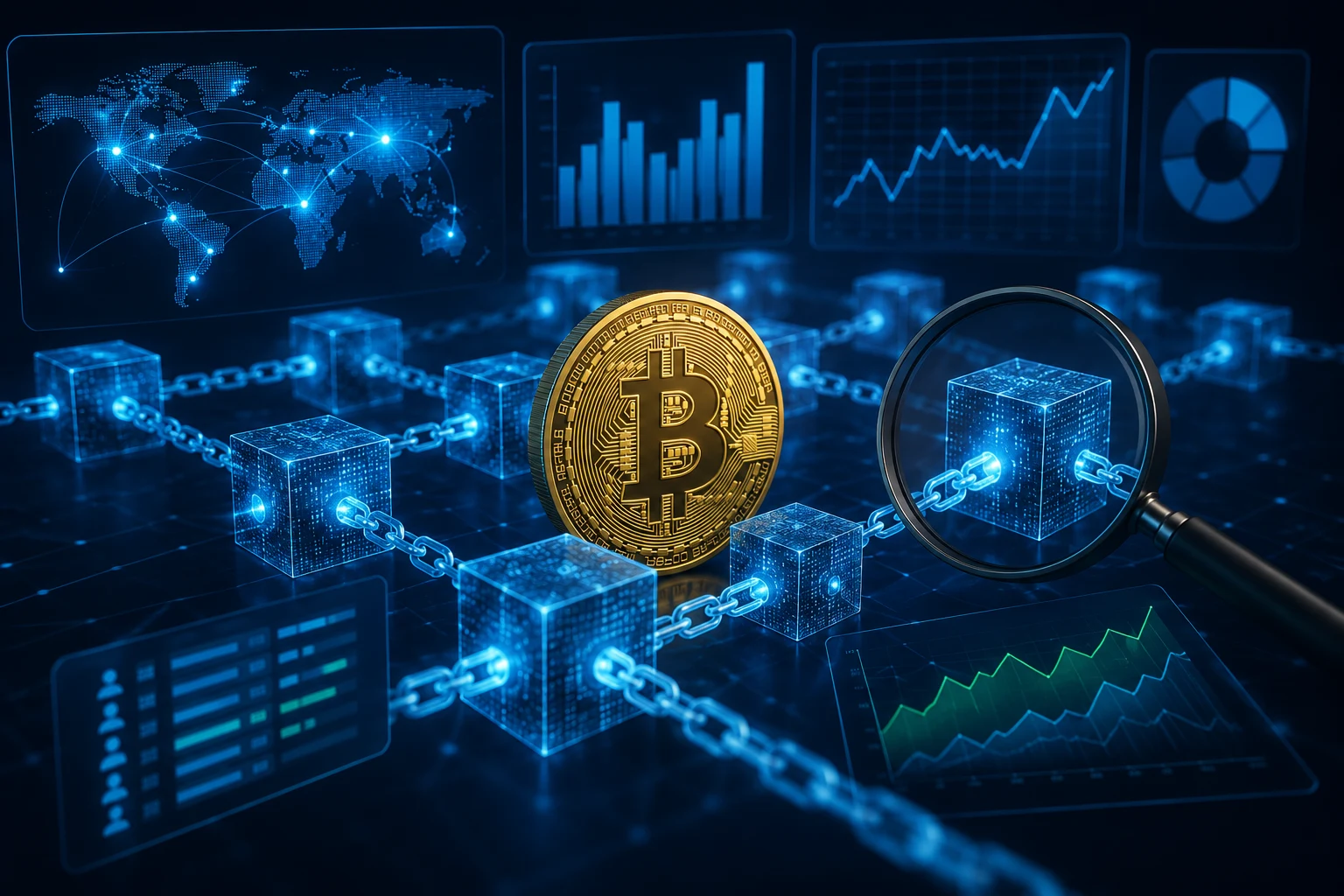
On-chain data refers to all the activity recorded directly on a blockchain. Because blockchains are public ledgers, every transaction, every movement of coins between addresses, and every interaction with a smart contract is permanently recorded and visible to anyone. On-chain data is simply this raw, transparent record — and the analysis of it.
Crucially, this is *behavioral* data. It does not show opinions or predictions; it shows what people actually did with their money on the network. That makes it harder to fake than social media sentiment or marketing claims, and it is a core input into how to read crypto market sentiment.
What on-chain data can reveal
Analysts study on-chain data to answer questions traditional data cannot. Some of the most-watched signals include:
Exchange flows
Movements of coins to and from crypto exchanges are closely watched. Large amounts flowing *onto* exchanges can suggest holders are preparing to sell (often read as bearish); large amounts flowing *off* exchanges into private wallets can suggest accumulation and a desire to hold (often read as bullish). These are tendencies, not certainties.
Active addresses and network usage
The number of active addresses and the volume of transactions offer a rough gauge of how much a network is actually being used. Growing genuine usage can indicate real adoption rather than mere price speculation.
Holder behavior
On-chain data can distinguish, in aggregate, between long-term holders and short-term traders. Whether long-term holders are accumulating or selling is treated as a meaningful signal about conviction in the market.
Whale activity
Large holders ("whales") can move markets, and their on-chain movements are tracked for clues, though interpreting them is tricky.
Network health and value locked
For ecosystems like DeFi, metrics such as total value locked measure how much capital is committed to protocols — a gauge of real economic activity. We cover this in its own guide.
Why on-chain analysis is valuable
- It reflects real behavior, not stated intentions, making it harder to manipulate than chatter.
- It is available to everyone. Unlike privileged data in traditional finance, on-chain data is public — a rare leveling of the playing field.
- It offers a fundamental lens. Amid hype and noise, on-chain metrics can ground your understanding in what is actually happening on the network.
The important limits
On-chain data is powerful but far from a crystal ball, and misreading it is easy:
- Interpretation is hard. The same data can support opposite conclusions. A coin leaving an exchange might mean accumulation — or simply someone moving to a different platform. Context is everything.
- Pseudonymity complicates everything. You see addresses, not identities. One entity can control many addresses, and movements between an entity's own wallets can look like meaningful activity but mean nothing.
- It describes, it doesn't predict. On-chain data tells you what happened, not what will happen. Past patterns can break.
- Noise and complexity. Raw blockchain data is overwhelming. Turning it into reliable insight requires skill, and even experts disagree.
- Not financial advice. On-chain signals are one input among many, never a standalone basis for decisions.
The honest framing: on-chain data is a genuinely valuable and unique tool that grounds analysis in real activity — but it requires humility, context, and combination with other information to use well.
Pair on-chain insight with the news
On-chain data shows what's happening on the network, but understanding *why* requires connecting it to events and sentiment. Zippfeed tracks crypto news with sentiment and importance scoring, complementing the behavioral picture on-chain data provides — so you can pair what wallets are doing with what's happening in the wider market and form a more complete, grounded view.