The gateway into crypto
For almost everyone, the journey into crypto begins at an exchange. It is where your dollars become Bitcoin, where one token becomes another, and where a lot of people unknowingly make their first security mistakes. Understanding what an exchange actually is — and the crucial difference between the two main types — protects you before you deposit a cent.
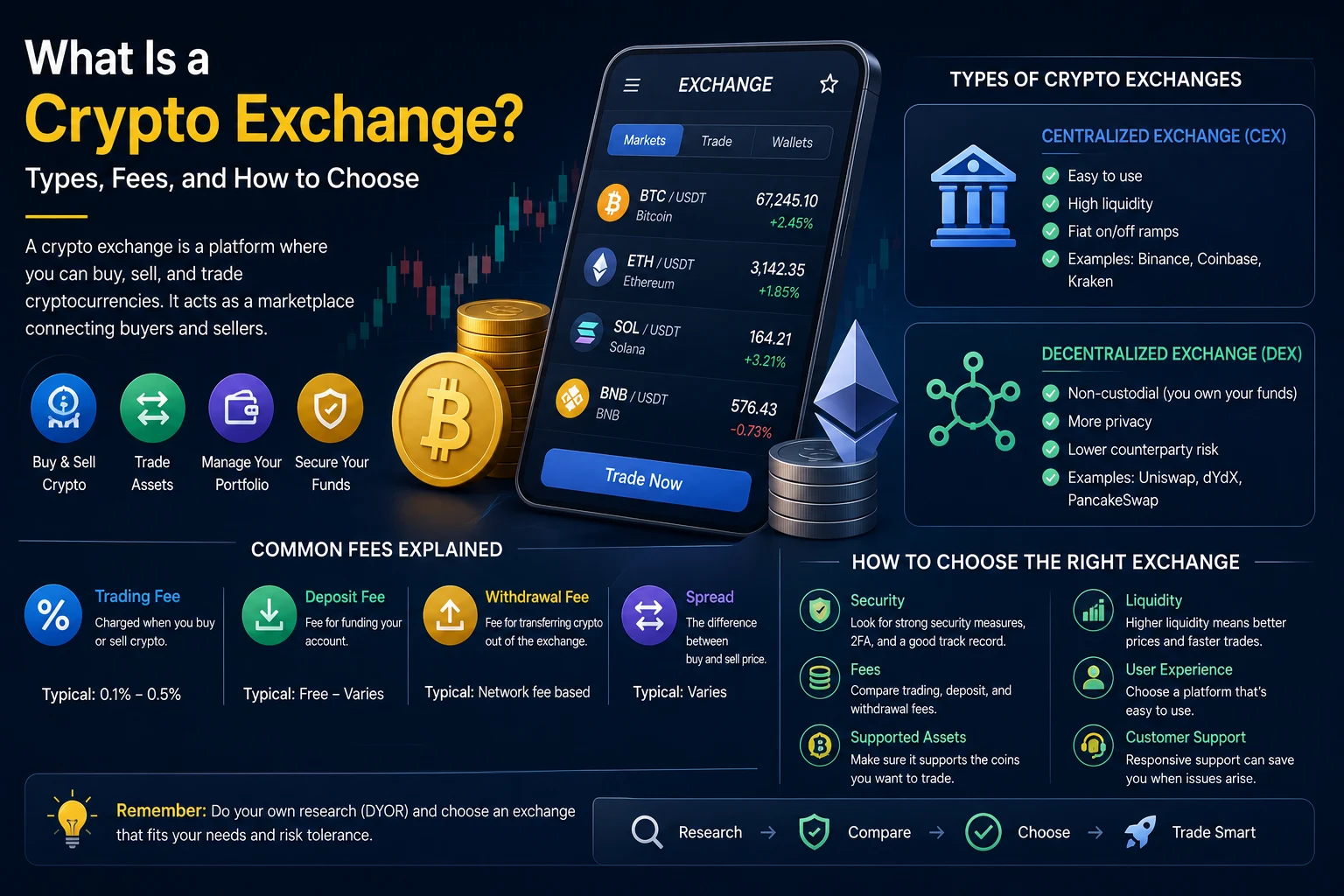
A crypto exchange is a marketplace for buying, selling, and trading cryptocurrencies. That is the simple part. The important part is *who is in the middle*.
The two fundamental types
Centralized exchanges (CEXs)
A centralized exchange is run by a company that acts as the middleman. You create an account, deposit funds, and the company matches buyers and sellers and holds your crypto for you. This is the model most beginners start with.
Strengths: Easy to use, high liquidity (you can buy and sell quickly at fair prices), customer support, fiat on-ramps (you can deposit regular money), and familiar account recovery.
The big trade-off: custody. When your crypto sits on a centralized exchange, the company controls the private keys — not you. The phrase "not your keys, not your coins" exists because exchanges have failed, been hacked, or frozen withdrawals, and users lost everything. A CEX is excellent for buying and active trading; it is a poor place to store significant long-term holdings.
Decentralized exchanges (DEXs)
A decentralized exchange removes the company from the middle. You trade directly from your own wallet through smart contracts, and you never give up custody of your funds. Most DEXs use liquidity pools rather than traditional order books. We cover one advanced example in what is Hyperliquid.
Strengths: Self-custody (you always control your funds), access to a vast range of tokens before they reach big exchanges, no account or identity requirements, and permissionless access.
The trade-offs: Steeper learning curve, you are fully responsible for your own security, smart-contract risk, and often less straightforward ways to convert to and from regular money.
How exchange fees work
Fees quietly eat into returns, so know what you are paying:
- Trading fees — usually a small percentage per trade, often split into "maker" (adding liquidity) and "taker" (removing it) rates.
- Spread — the gap between buy and sell prices, sometimes where the real cost hides.
- Deposit and withdrawal fees — especially for moving crypto off the platform or using certain payment methods.
- Hidden conversion costs — "free" trades sometimes bury the cost in a worse exchange rate.
Always find the full fee schedule before committing. Cheap headline rates can mask expensive spreads.
How to choose an exchange
Match the platform to your needs, and prioritize these:
- Security track record. Has it been hacked? How does it custody funds? This matters more than any feature.
- Regulation in your jurisdiction. A regulated exchange offers more recourse and accountability.
- Liquidity. High volume means better prices and easier trades.
- Supported assets and payment methods you actually need.
- Transparent fees you can find without digging.
- Reputation. Be deeply skeptical of platforms promoted via DMs, ads promising returns, or strangers in chats.
Once you have bought, do not leave large amounts on the exchange. Read how to buy crypto safely and best crypto wallets to do it properly.
Choose with eyes open
Exchanges live and die on trust, and warning signs — withdrawal issues, security incidents, regulatory trouble — usually surface in the news before they become official. Zippfeed tracks exchange-related headlines with sentiment and importance scoring, so you can monitor the health of a platform you use and react early if confidence starts to slip, rather than being among the last to know.