The basics: what "metaverse" really means
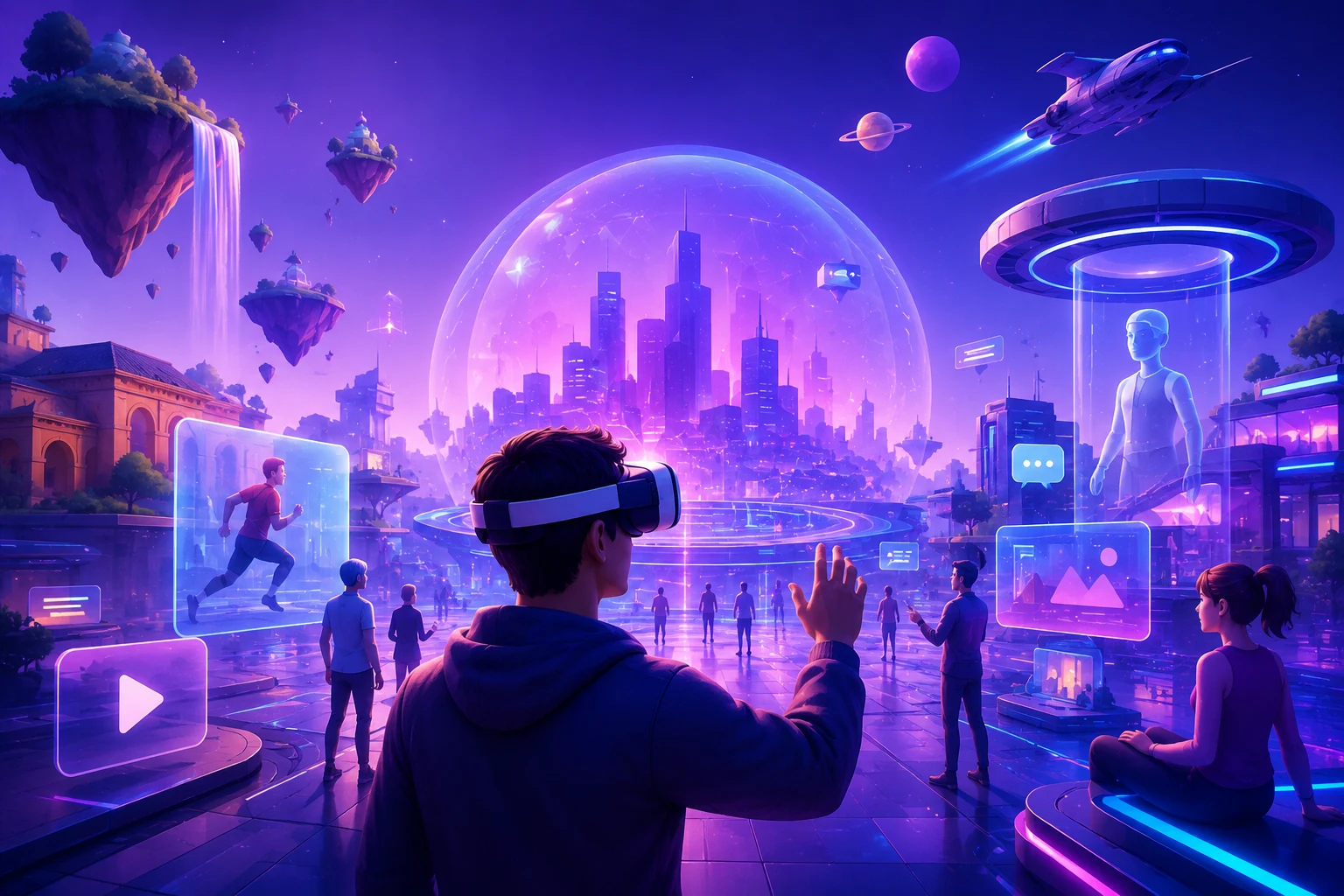
The term metaverse comes from the 1992 novel Snow Crash, where it described a shared virtual world people enter as avatars. Today it's an umbrella term — there's no single "the metaverse," just a category of persistent, shared 3D environments people log into, hang out in, and increasingly own digital things in.
What separates a metaverse from a video game is persistence (the world keeps existing when you log off), shared presence (other real people are there), and usually some form of asset ownership (avatars, clothing, land, items that travel with you).
The two main camps
Crypto-native metaverses
Decentraland and The Sandbox are the two best-known. They sell virtual land as NFTs — finite parcels you can build on, rent out, or resell. Items, wearables, and characters are also NFTs. The world's rules and economy are at least partly governed by token holders, not by a central company.
What you get: real ownership of digital assets, lower barriers to creating and monetizing content, an interoperable wallet-based identity. What you give up: graphics that lag behind triple-A games, smaller user counts, the need to manage a crypto wallet.
Corporate metaverses
Meta's Horizon Worlds, Roblox, VRChat, and gaming platforms like Fortnite with social features compete here. These offer polished graphics, large user bases, and friction-free signup. The trade-off: the operator owns everything inside, can change rules unilaterally, and your items don't leave their walled garden.
How crypto metaverses actually work
In a typical crypto metaverse, the world is divided into a finite number of land parcels, each an NFT. Owners can build experiences on their parcels — galleries, games, shops, events. A native token (MANA for Decentraland, SAND for Sandbox) handles in-world transactions: buying land, paying for items, sometimes voting on governance.
Avatars, wearables, art, and event tickets are usually NFTs too. The pitch is that everything you own in this world is portable and transferable — you can sell your land, gift your avatar, or take your wearables to compatible apps.
What people use the metaverse for
- Hanging out and socializing. Concerts, parties, hangouts where avatars actually feel like other humans.
- Branded experiences. Brands run pop-ups, fashion shows, product launches. Most are short-lived marketing exercises.
- Virtual events. Conferences, art exhibitions, music performances by artists wanting to extend their reach.
- Creating and selling. Independent creators build experiences, design wearables, and sell directly to other users.
- Real estate speculation. Buying parcels hoping the next wave of interest will lift prices. This is mostly how the 2021 boom played out.
The 2021 hype and what's left in 2026
The metaverse was the biggest crypto narrative of 2021-2022. Meta renamed itself; Decentraland's MANA token soared; The Sandbox raised at unicorn valuations; reports of virtual land selling for millions filled headlines. By late 2022 prices had collapsed: most parcels lost 80-95% of their peak value, daily active users in many crypto metaverses fell to a few thousand, and reports questioned whether anyone was actually "living" in these worlds.
The honest 2026 read: the technology and asset model are real, but the user demand didn't match the marketing. The metaverse didn't die — it just stopped being the dominant story. Some worlds (especially Roblox-style platforms aimed at younger users) thrived; speculative virtual land mostly didn't.
The risks worth knowing
- Liquidity. Virtual land and items are notoriously illiquid. You can list at any price; selling is another story.
- Centralized dependencies. Even "decentralized" metaverses depend on the company maintaining the world software. If they stop, the world degrades.
- User churn. A metaverse without users is an empty mall. Daily active users is the single most important metric most projects don't publish honestly.
- Speculation vs use. Most virtual land buyers in 2021 weren't building — they were flipping. Land that nobody uses or visits has no recurring value.
- Hardware barrier. Full VR metaverses require headsets. Adoption stalled when the cost-to-pleasure ratio didn't justify the price for most people.
How to start (carefully)
If you want to try a metaverse, start without buying anything. Decentraland and Sandbox both let you visit as a guest. Spend an evening; see if you'd come back without an investment angle. If a specific use case actually appeals — running a gallery, throwing an event, building a game — then NFT ownership starts to make sense. Buying virtual land speculatively is one of the hardest sells in crypto today. Our guides on what is an NFT and how to store crypto securely are good adjacent reads.
Read the metaverse without the marketing
Metaverse narratives swing fast — a Meta announcement, a brand activation, a partnership press release. Most are noise; some signal real change in user behavior. Zippfeed tracks metaverse, gaming, and NFT news across multiple sources with sentiment and importance scoring, so you can tell when a story is actually shifting the space versus when it's a coordinated push around a token unlock. The metaverse's future is being written in usage data, not announcements.