A bridge between two financial worlds
Crypto's early years were mostly about native digital assets — coins and tokens that existed only on a blockchain. Tokenization points in a different direction: bringing the *traditional* financial world onto the blockchain. It is one of the most-watched trends in crypto precisely because it connects the trillions of dollars in real-world assets to the speed and openness of blockchain technology.
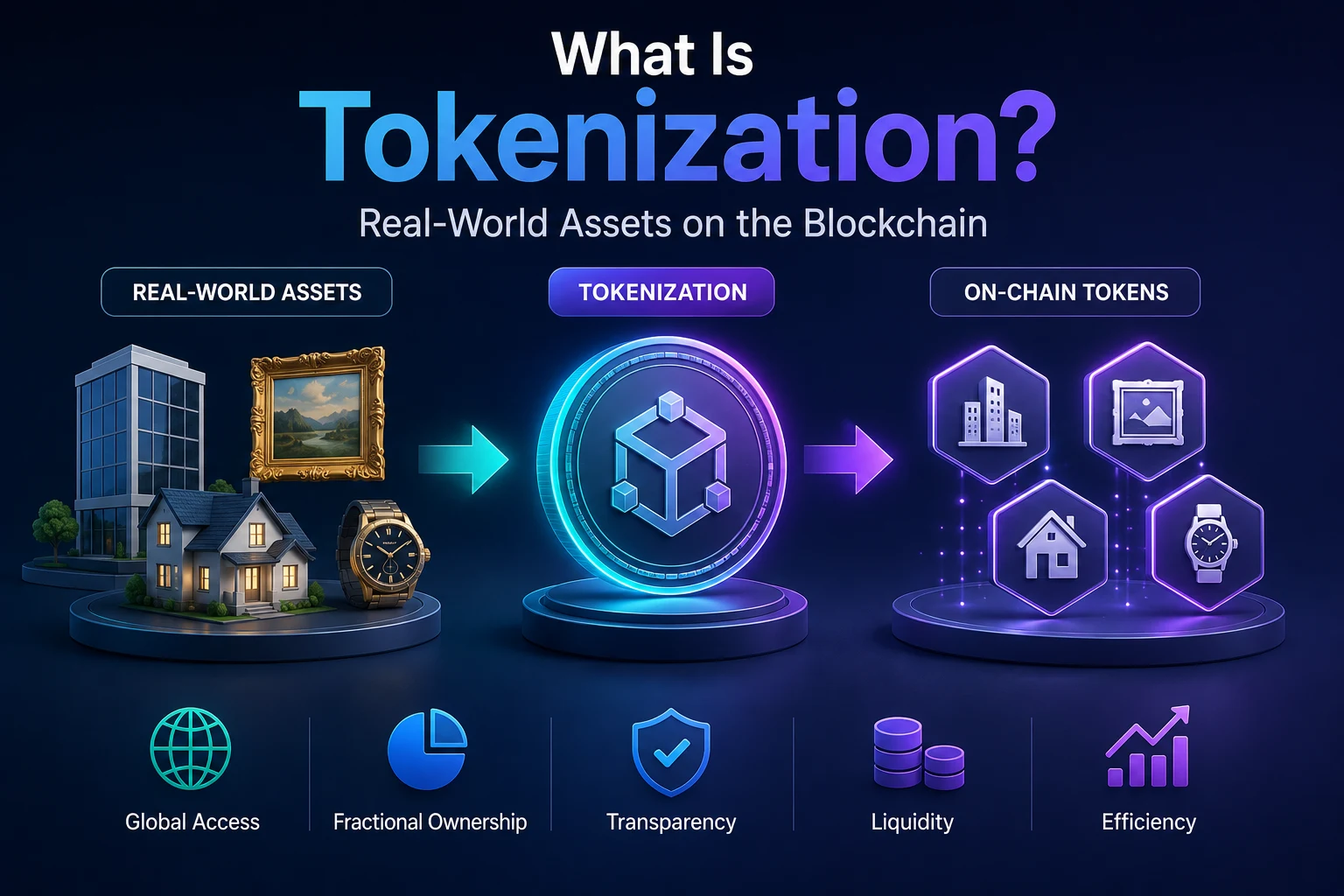
At its simplest, tokenization is the process of creating a digital token that represents ownership of a real-world asset. The asset stays in the real world; the token is its on-chain representation, and it can be traded, divided, and transferred like any other crypto token.
What can be tokenized
In principle, almost any asset with value. In practice, the action is concentrated where tokenization solves a real problem:
- Real estate — turning a single property into many tradable shares.
- Bonds and other debt — government and corporate bonds issued as tokens.
- Funds and equities — tokenized money market funds and other investment products.
- Commodities — gold and other physical goods represented on-chain.
- Art and collectibles — fractional ownership of high-value pieces.
The common thread is taking something traditionally hard to divide, transfer, or access and making it more flexible.
Why anyone bothers: the real benefits
Fractional ownership
A building worth millions can be split into thousands of affordable tokens. This opens access to assets that were once reserved for the wealthy or institutions — you could own a fraction of something you could never buy outright.
Liquidity for illiquid assets
Selling real estate or fine art traditionally takes months and heavy fees. Tokenized versions can, in theory, be traded far more quickly on digital markets, unlocking value that was previously frozen.
Efficiency and transparency
Settlement that takes days in traditional finance can happen in minutes on-chain. Ownership records become transparent and harder to dispute. Smart contracts can automate processes like dividend or interest payments.
Round-the-clock, global access
Blockchain markets do not keep banking hours or stop at borders.
Why institutions are paying attention
This is not just a crypto-native phenomenon. Major financial institutions have been actively tokenizing assets, drawn by the efficiency gains and the prospect of modernizing slow, paper-heavy processes. That institutional involvement is part of why tokenization is taken seriously as more than hype — though, as always, attention and reality are not the same thing.
The catch: a token is only a claim
Here is the part that separates careful thinking from hype. A token representing an asset is only as good as the legal and custodial structure behind it.
- Legal enforceability. Owning a token must actually entitle you to the underlying asset under real law. The token is a claim; that claim has to hold up.
- Custody and trust. Someone has to genuinely hold and safeguard the real-world asset. You are trusting that party.
- Regulation. Tokenized assets often fall under securities and other financial regulations, which vary by jurisdiction and are still evolving. Understanding what MiCA is and SEC crypto regulation is part of the picture.
- Oracle and bridge risk. Connecting real-world data and assets to the blockchain introduces technical points of failure.
None of this is investment advice. Tokenization is a genuinely powerful idea, but the digital wrapper does not erase the need to trust the people and laws standing behind the asset.
Follow the trend with substance
Tokenization is moving from concept to real institutional adoption, and the line between meaningful progress and marketing is easy to lose. Zippfeed tracks tokenization and institutional-finance headlines with sentiment and importance scoring, so you can follow which developments carry real weight — actual launches, regulatory clarity, institutional commitments — rather than getting swept up in speculative announcements.


 CoinTelegraph
 TheBlock