








 CoinDesk
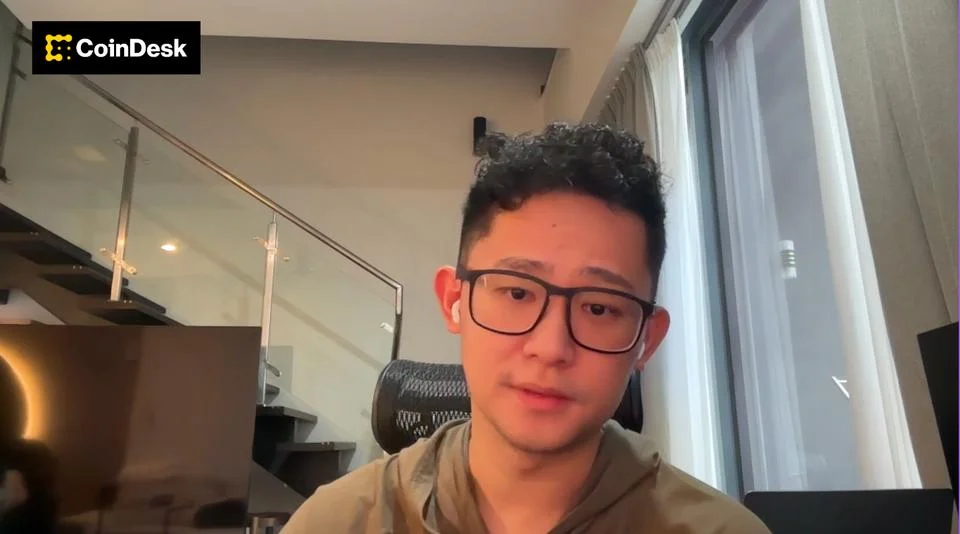



Jansen Teng, co-founder of Virtuals, said the company is moving beyond its gaming-agent roots to build infrastructure for an emerging "agent society," a long-term vision in which autonomous AI systems participate in a permissionless economy with limited human oversight. Virtuals is now organized around five pillars: digital agents, physical agents and robots, agent coordination, capital formation, and governance systems for those agents.
Teng described these systems as "autonomous economic actors" capable of controlling wallets, trading with one another, hiring other agents, and potentially employing humans. The framing borrows directly from the Bitcoin and Ethereum playbook: agents operating entirely on-chain could avoid identity requirements until they interact with traditional financial services or banking infrastructure, at which point KYC becomes unavoidable.
Why it matters
The agent economy is no longer a chatbot thesis. Virtuals is one of the more concrete bets that wallets, escrow standards, and reputation systems will eventually underwrite AI-to-AI commerce at scale, the same way smart-contract infrastructure underwrites DeFi. Teng's argument is that capital access is the missing primitive: once agents can hold and move money, behaviour patterns like hiring, coordination, and specialised task fulfilment unlock on their own.
Virtuals is also working with robotics startups, universities, and Balaji Srinivasan's Network School ecosystem to test real-world humanoid applications, though the company says it is focused on software, commercialisation, and data collection rather than robot hardware.
Market impact
Teng identified three major failure modes for autonomous agents: incorrect user intent, failures in service fulfilment, and outright scams. Virtuals is building mitigations around intent verification, escrow-based transaction standards, and reputation frameworks, with the long-term view that economic staking will eventually determine how much trust and capital any single agent is allowed to manage. The open question is whether on-chain reputation can scale fast enough to match the rate at which new agents are being deployed.


Frequently asked questions
-
What is Virtuals building now?
Virtuals is reorganising around five pillars: digital agents, physical agents and robots, agent coordination, capital formation, and governance systems for autonomous AI actors.
-
What are "autonomous economic actors"?
Co-founder Jansen Teng uses the term for agents that can control wallets, trade with one another, hire other agents, and pursue goals with growing independence from their creators.
-
How is Virtuals addressing agent risk?
Teng named three failure modes: incorrect user intent, failures in service fulfilment, and outright scams. The company is building intent verification, escrow-based transaction standards, and reputation frameworks.
-
How does Virtuals compare to Bitcoin and Ethereum?
Teng compared the agent-economy approach to how Bitcoin and Ethereum created alternative financial and computing systems, with on-chain agents able to skip identity requirements until they touch traditional finance.
-
What is Virtuals doing in robotics?
Virtuals is working with robotics startups, universities, and Balaji Srinivasan's Network School on humanoid applications, but says it focuses on software, commercialisation, and data collection rather than building robot hardware.
 CoinTelegraph
 Crypto News
 WatcherGuru
 TheBlock
 CryptoSlate