








 CoinDesk

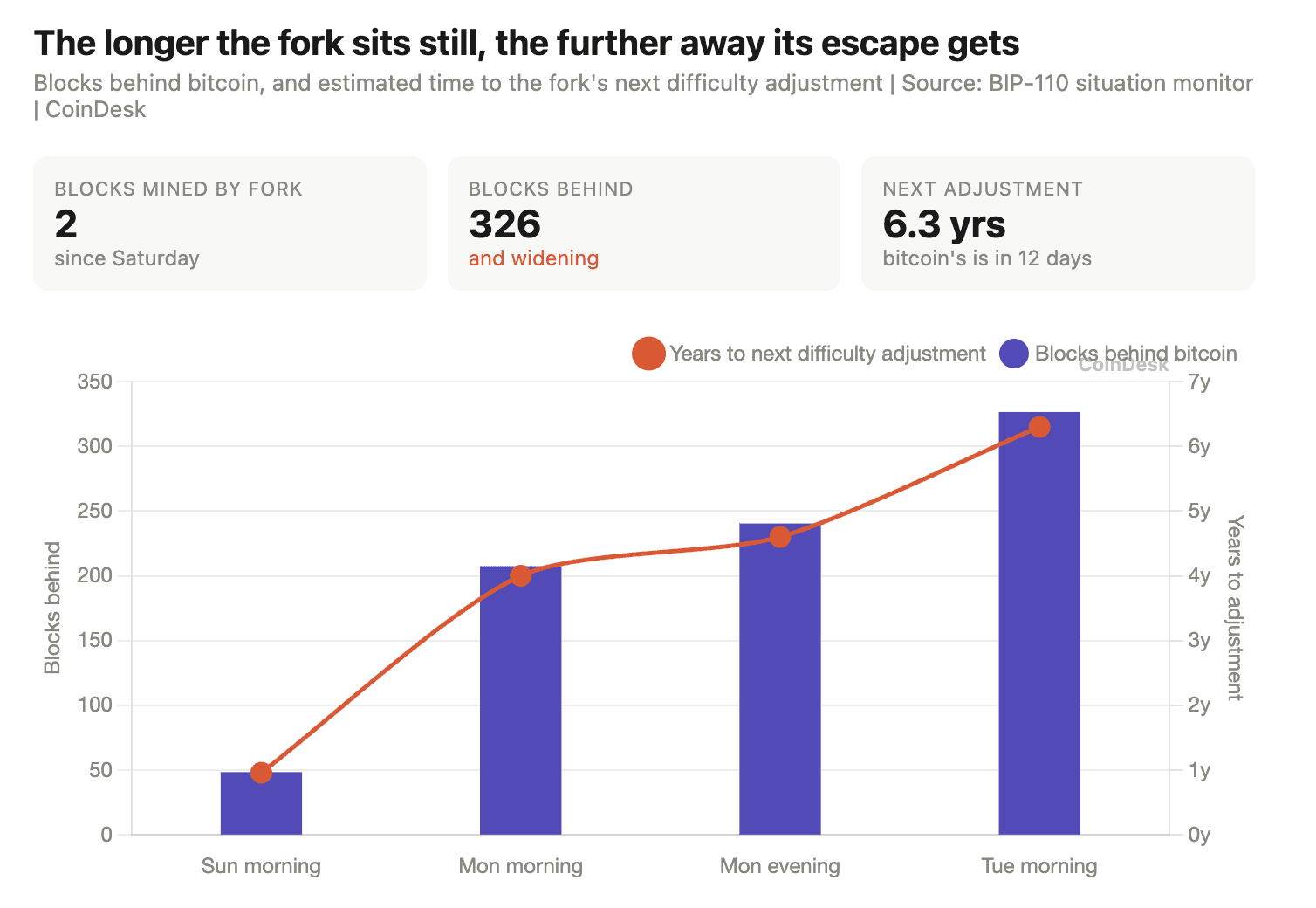


A proposed Bitcoin rule change known as BIP-110 triggered a chain split on Saturday when its software began rejecting any block not carrying a miner support mark. The breakaway chain produced two blocks before stalling, while the main Bitcoin network has since climbed to block 961,959. The fork is now 326 blocks behind and cannot recalibrate its mining difficulty until it completes 2,016 blocks, a milestone now estimated more than six years away.
Why it matters
BIP-110 was an effort to block storing pictures, text and other non-payment data in Bitcoin transactions for a year, targeting the Ordinals and BRC-20 activity that bloats the chain. To pass, the proposal needed 55% of blocks over a two-week stretch to carry a miner signal. It peaked at roughly 2.6%.
Rather than accept the rejection, BIP-110 shipped a second route: at block 961,632, nodes running the new software began rejecting every block that did not carry the mark, splitting the chain regardless of what miners had decided. Almost no blocks carried it, so the BIP-110 nodes rejected the work of nearly all of Bitcoin's mining power and started following a chain made only of marked blocks.
The economics are brutal. Both chains inherited the same difficulty at the split, but miners on the BIP-110 fork are paid in a coin with no market, no exchange listing and no buyers. The fork cannot lower its own difficulty until it completes 2,016 blocks at its current pace. A live monitor now estimates that recalibration at 6.3 years away, up from 350 days on Sunday, and every idle hour pushes the number further out.
Market impact
Bitcoin itself continues producing blocks on its normal ten-minute cadence, with the next difficulty adjustment due in 12 days. The fork's collapse does not affect BTC's market structure, but it offers a clean demonstration of how economic incentives, not code, guard Bitcoin's consensus. A contentious proposal without miner buy-in cannot survive the difficulty hurdle no matter how its supporters engineer the split.

Frequently asked questions
-
What is BIP-110 and why did it split the Bitcoin chain?
BIP-110 was a proposal to block non-payment data, including Ordinals and BRC-20 inscriptions, from Bitcoin transactions for a year. After failing to win 55% miner support, its software split the chain by rejecting unmarked blocks regardless of miner votes.
-
Why is the BIP-110 fork stuck 326 blocks behind Bitcoin?
The fork inherited Bitcoin's full mining difficulty while its coin has no market value, no exchange listing and no buyers, giving miners no economic incentive to extend it.
-
How far away is the BIP-110 fork's difficulty reset?
The chain cannot lower its mining difficulty until it mines 2,016 blocks. A live monitor now estimates that milestone at 6.3 years away, up from 350 days on Sunday, and every idle hour pushes the number further out.
-
Does the BIP-110 fork affect Bitcoin's price or block production?
No. Bitcoin continues producing blocks on its normal ten-minute cadence with the next difficulty adjustment due in 12 days. The fork runs on a separate chain with negligible hashrate and no market impact on BTC.
-
Is the BIP-110 fork officially dead?
Not according to everyone. Arch co-founder Himanshu Sahay told CoinDesk it is too early to call it a failure, noting that rule changes depend on coordination across miners, developers and the wider ecosystem.
 WatcherGuru
 Crypto News
 CryptoSlate
 CoinTelegraph
 TheBlock