


 CryptoSlate
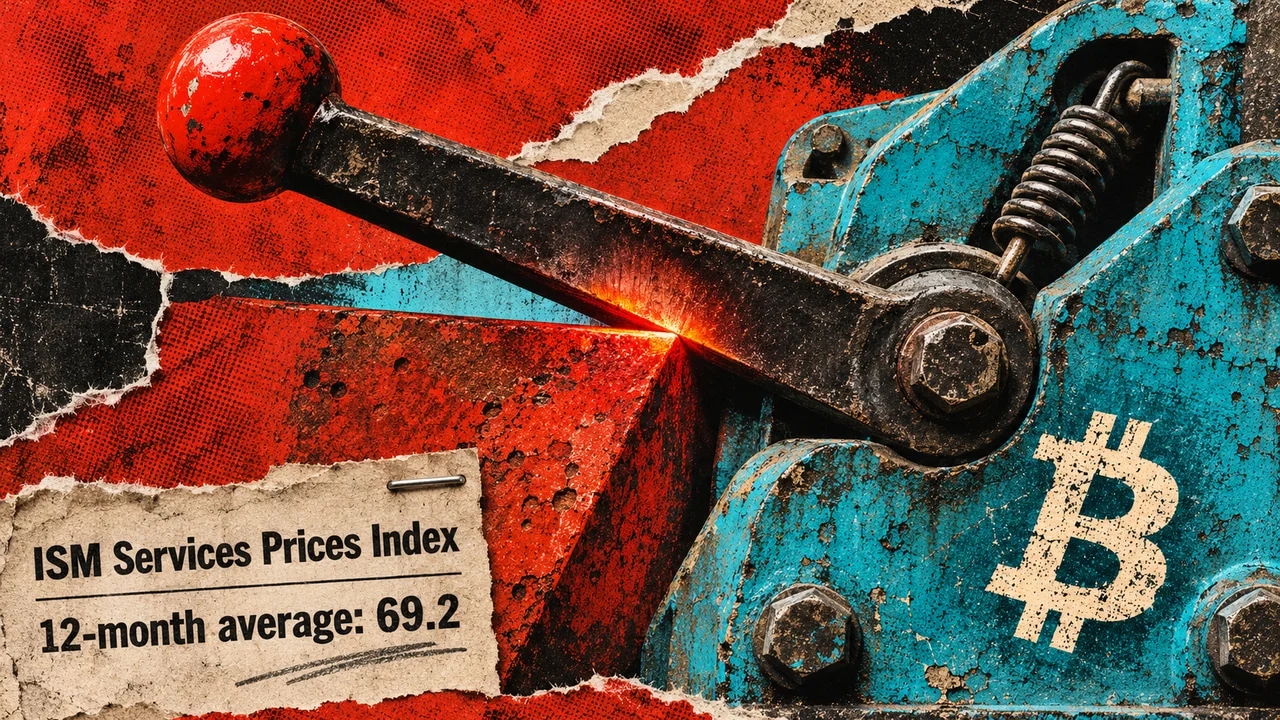

US services growth slowed in October, but a longer-term measure of price pressure hit its highest level since April 2023, complicating the case for rate relief that could support Bitcoin. The Institute for Supply Management's services PMI fell to 54.5 from 54.9, while its prices index eased to 73 from 74. The prices index's 12-month average rose to 69.2.
The headline PMI remained above 50, indicating continued expansion. Business activity and new orders eased to 53.8 and 55.9, respectively, while the employment index rose to 51.4.
Why it matters
The prices index measures the direction and breadth of reported changes, not the percentage rate of inflation. Its rolling average points to sustained cost pressure even as the monthly reading retreats.
ISM said tariffs and fuel costs were the most frequently cited supply-chain issues. Some respondents had not yet passed higher costs to customers, leaving the eventual effect on consumer inflation uncertain.
Market impact
The Federal Reserve held its target rate range at 3.75%-4% on Oct. 28 and described inflation as elevated. Persistent services costs complicate the path to easier policy expectations, which can affect investors' willingness to hold risk assets such as Bitcoin.
An IMF working paper published in August 2023 found that US monetary tightening reduced a common crypto-price factor through investors' appetite for risk. That historical relationship does not establish how Bitcoin reacted to this survey. The October employment report, due Nov. 6, is the next scheduled checkpoint for the policy outlook.

Frequently asked questions
-
What did the October services PMI indicate about US activity?
The ISM services PMI fell to 54.5 from 54.9, but remained above 50, indicating that services activity was still expanding.
-
How did the monthly and 12-month services prices measures differ?
The monthly prices index eased to 73 from 74, while its 12-month average rose to 69.2, the highest since April 2023.
-
Does the ISM prices index measure the inflation rate?
No. The index measures the direction and breadth of reported price changes, rather than the percentage size of those changes.
-
What supply-chain costs did ISM respondents cite most often?
ISM said tariffs and fuel costs were the most frequently cited issues. Some respondents had not yet passed higher costs to customers.
-
What is the next scheduled US policy checkpoint?
The October employment report is due Nov. 6. It follows the Federal Reserve's Oct. 28 decision to hold its target rate range at 3.75%-4%.
 WuBlockchain
 TheBlock
 WatcherGuru
 CoinTelegraph
 Benjamin Cowen
 Crypto News
 CoinDesk