


 CryptoSlate

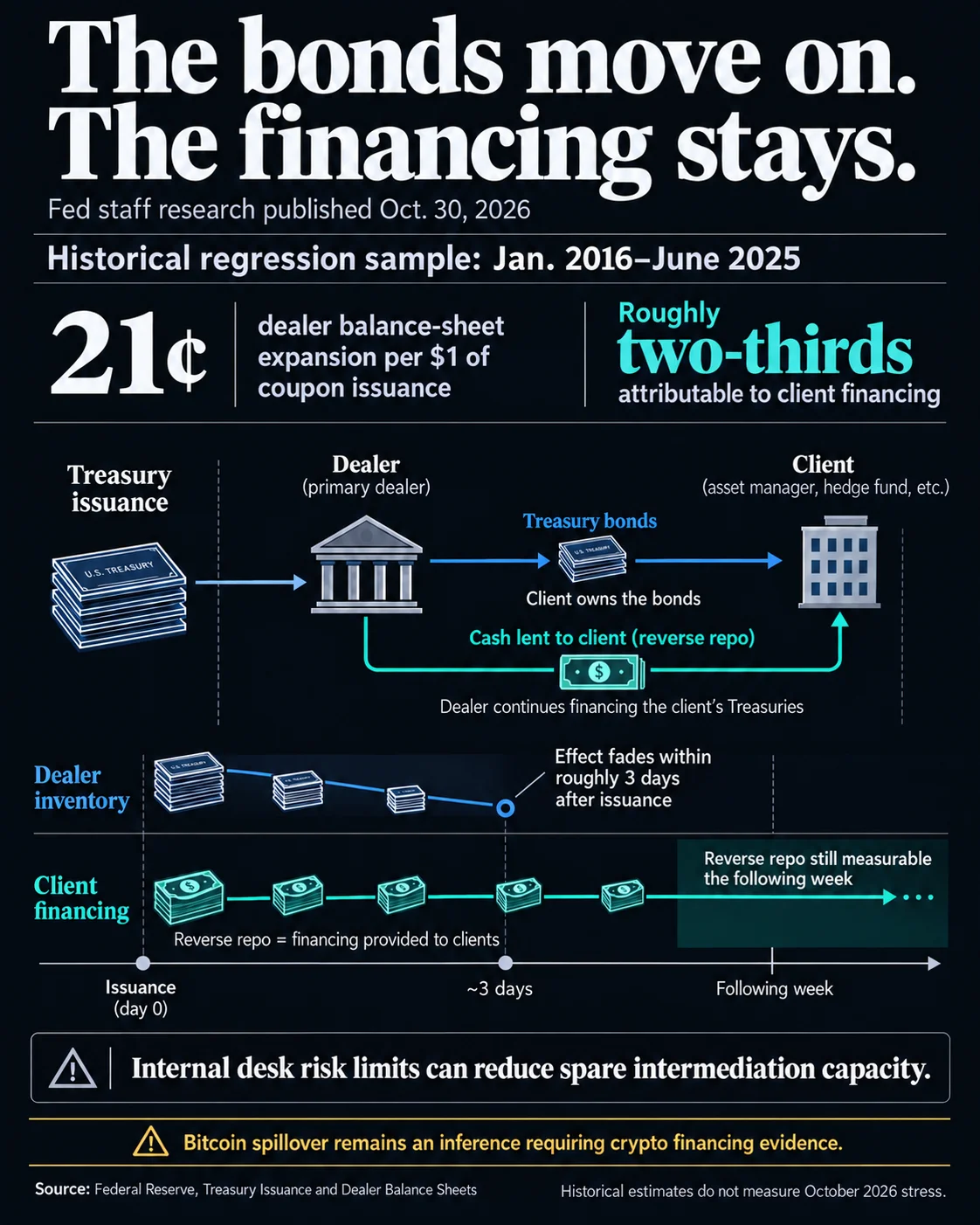

Federal Reserve staff research published Oct. 30 finds Treasury dealers can keep financing clients after their own bond inventories have largely cleared. In estimates covering eight large bank-affiliated dealers from January 2016 through June 2025, each dollar of Treasury coupon issuance expanded dealer balance sheets by about 21 cents, with roughly two-thirds tied to client financing.
The distinction matters because dealers can sell Treasuries while continuing to lend against them through repo. The study finds issuance-related effects on dealers’ long positions fade within about three days, while the increase in financing provided to clients remains measurable during the following week. These are historical estimates, not a measure of stress in October 2026.
New York Fed observations put SOFR between 3.92% and 3.95% from Oct. 23 through Oct. 29, with the latest reading at 3.94%. The Federal Home Loan Bank of New York described financing conditions as tranquil, citing Treasury supply and calendar effects behind SOFR trading above the 3.90% interest rate on reserve balances.
Any Bitcoin spillover remains unproven. It would require evidence that constrained intermediaries are reducing crypto financing; persistent repo pressure alongside worsening crypto borrowing or rollover terms would strengthen that case. Futures basis and perpetual funding measure different market dynamics, so neither alone establishes a link.

Frequently asked questions
-
How long can dealer financing persist after Treasury inventory effects fade?
The study finds effects on dealers’ long positions fade within roughly three days after issuance, while increased client financing remains measurable during the following week.
-
What balance-sheet effect did the study estimate for Treasury coupon issuance?
Each dollar of coupon issuance expanded dealer balance sheets by about 21 cents, with roughly two-thirds of the increase attributable to client financing.
-
What did SOFR do from Oct. 23 through Oct. 29?
SOFR ranged from 3.92% to 3.95% across the five business days, and the latest reading in that window was 3.94%.
-
Did the Fed research find that Treasury financing pressure affected Bitcoin credit?
No. A Bitcoin spillover is an inference, not an observed result of the study. Establishing it would require evidence connecting constrained intermediaries to reduced Bitcoin financing.
-
What evidence would strengthen the case for a Treasury-to-crypto financing spillover?
Persistent repo pressure alongside worsening comparable crypto borrowing or rollover terms would strengthen the case. Stable crypto credit terms would weaken it.
 CoinDesk
 WuBlockchain
 WatcherGuru
 CoinTelegraph
 Crypto News
 TheBlock