








 WuBlockchain
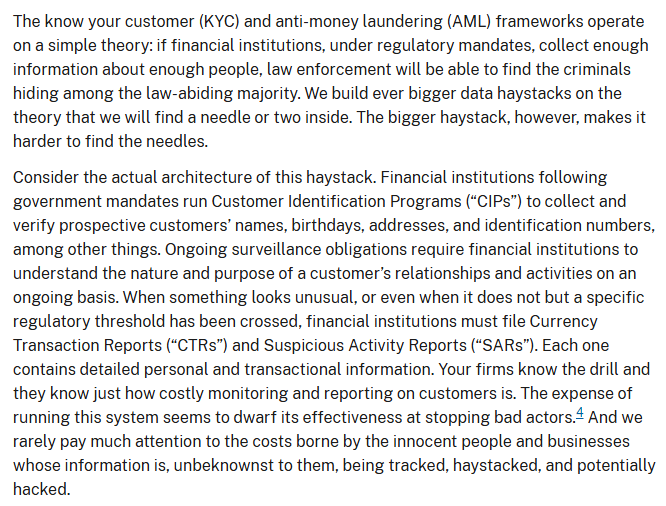
SEC Commissioner Hester Peirce called for zero-knowledge proofs and attribute-based credentials to verify compliance without repeatedly collecting or storing users’ sensitive personal data. She criticized current KYC/AML practices for creating ever-larger “data haystacks” with limited effectiveness and turning finance into a “panopticon.”
Why it matters
The approach would shift compliance toward proving that a user meets required conditions without exposing personal information. Peirce also pointed to the SEC’s Innovation Exemption as a temporary pathway for tokenized securities to trade through automated market makers, and as a bridge to longer-term rules.
Market impact
Peirce said the exemption could help prevent overseas markets from monopolizing tokenized exposure to U.S. equities. The proposal links privacy-focused compliance tools with a route for tokenized securities to reach decentralized trading venues.
Frequently asked questions
-
How would zero-knowledge proofs change KYC/AML checks?
They could verify that users meet compliance requirements without collecting or repeatedly storing their sensitive personal data.
-
What did Peirce criticize about current KYC/AML practices?
She said the model creates ever-larger data haystacks with limited effectiveness and described its effect on finance as a panopticon.
-
What role could the SEC Innovation Exemption play?
Peirce described it as a temporary pathway for tokenized securities to trade through automated market makers and a bridge to longer-term rules.
-
Why does Peirce support a temporary route for tokenized securities?
She said it could help prevent overseas markets from monopolizing tokenized exposure to U.S. equities.
-
What are attribute-based credentials intended to verify?
They are among the tools Peirce cited for verifying compliance without repeatedly collecting or storing sensitive personal information.
 CoinDesk
 CryptoSlate
 Crypto News
 CoinTelegraph