








 CoinDesk
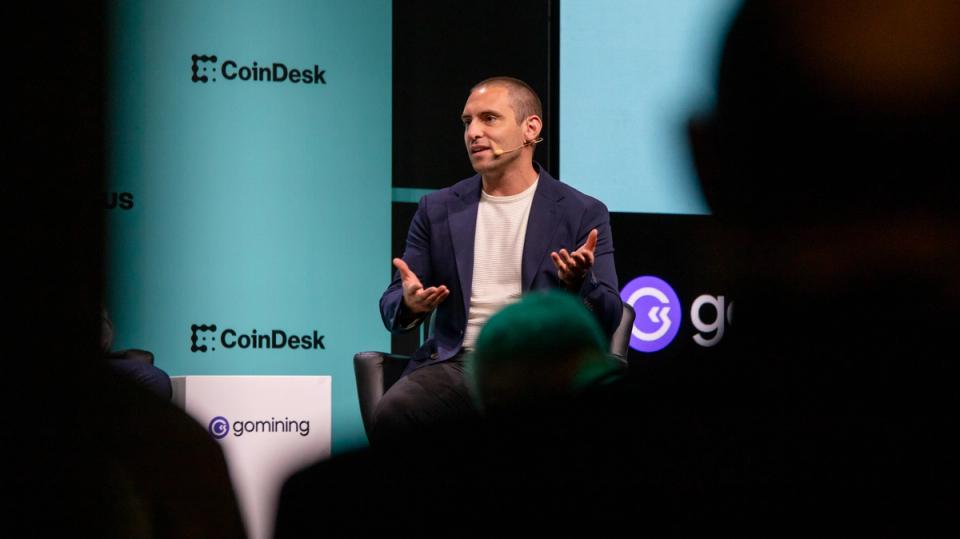


At Consensus 2026 in Miami, executives from Two Prime, Ledn and Lygos Finance said institutional bitcoin borrowers are increasingly walking away from complex DeFi lending structures and toward products that look and behave like traditional credit — transparent custody, standardized contracts, and clearly identifiable counterparties.
Two Prime founder and CEO Alexander Blume framed the shift bluntly: "The moment you start trying to explain how any of this stuff works, they're just like, No... We'll pay more. Don't lose my money." The panel — Blume, Ledn co-founder and CEO Adam Reeds, and Jay Patel, co-founder and CEO of Lygos Finance — argued that future growth in crypto credit depends less on decentralization and more on operational simplicity that institutions can defend to their boards and risk committees.
Why it matters
The discussion is a direct aftershock of the 2022 lending collapses at Celsius, Voyager and BlockFi, where opaque leverage, aggressive rehypothecation and weak risk controls triggered a credit crisis across the industry. Rehypothecation — the practice of reusing customer collateral to generate additional yield — was singled out by Patel as "the biggest point in my mind." Reeds pushed the same line one level earlier in the chain: "The most important thing to ask... is where is your Bitcoin stored."
The deeper read is structural: DeFi evolved around permissionless access, composability and capital efficiency; institutional finance evolved around predictability, legal accountability and identifiable intermediaries. Blume distilled the divide into a single line — "Our whole financial system is set up to have someone else to blame" — arguing that institutions will keep preferring intermediaries they can sue over autonomous systems they cannot.
Market impact
The market implication is a repricing of what institutional credit on bitcoin is actually buying. Lenders who can deliver auditable custody, standard documentation and named counterparties can charge for the trust premium; lenders who cannot will keep losing flow to TradFi-style competitors.

Frequently asked questions
-
Why are bitcoin lenders moving toward TradFi-style structures?
Executives from Two Prime, Ledn and Lygos Finance told Consensus 2026 that institutional borrowers now prioritize transparent custody, standardized contracts and identifiable counterparties over complex DeFi products, in direct response to the 2022 collapses at Celsius, Voyager and BlockFi.
-
What did Two Prime's Alexander Blume say about institutional borrowers?
Blume said institutional borrowers often reject crypto-native lending structures not because they oppose bitcoin, but because operational complexity is hard to defend to boards and risk committees. He added: "The moment you start trying to explain how any of this stuff works, they're just like, No... We'll pay more.…
-
Why is rehypothecation central to the discussion?
Rehypothecation — the reuse of customer collateral to generate additional yield — was one of the defining risks exposed during the 2022 lending collapse. Lygos Finance CEO Jay Patel called it "the biggest point in my mind," and Ledn CEO Adam Reeds urged borrowers to first ask where their bitcoin is stored.
-
How are DeFi and institutional finance fundamentally misaligned on risk?
DeFi evolved around permissionless access, composability and capital efficiency, while institutional finance evolved around predictability, legal accountability and identifiable intermediaries. Blume framed the divide: "Our whole financial system is set up to have someone else to blame."
-
What does the shift mean for the bitcoin-backed lending market?
Lenders who can deliver auditable custody, standardized documentation and named counterparties can charge a trust premium, while lenders who cannot will continue losing flow to TradFi-style competitors. Borrowers accept lower capital efficiency in exchange for products that survive a stress scenario without forcing a…
 CoinTelegraph
 Lookonchain
 CryptoSlate
 TheBlock
 Altcoin Daily