








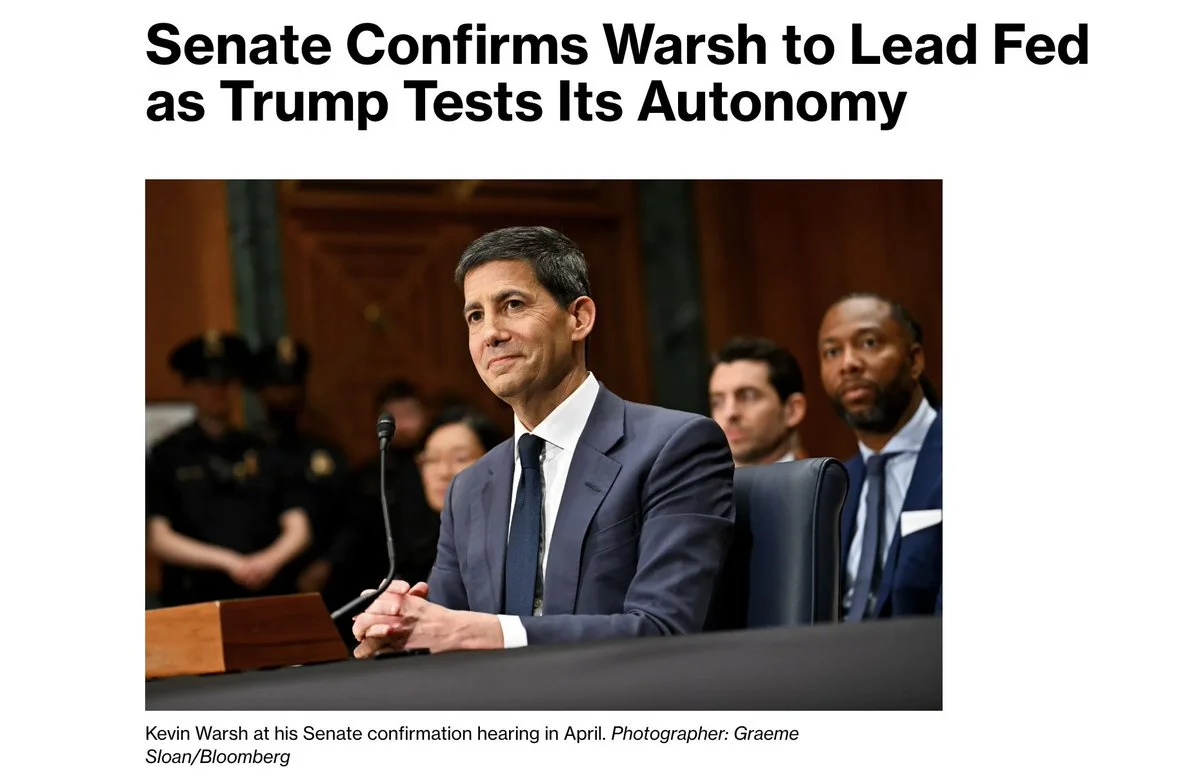

The U.S. Senate confirmed Kevin Warsh as Federal Reserve Chair on a 54-45 vote, the narrowest confirmation margin ever for a Fed chair, according to Bloomberg. The thin majority immediately puts Warsh's independence pledge under pressure, since Donald Trump has publicly demanded aggressive interest rate cuts.
Why it matters
A Fed chair confirmed by a single-vote margin enters the job with visibly less political cover than predecessors who sailed through with broad bipartisan support. Warsh told his confirmation hearing the Fed's monetary policy would remain "strictly independent," but the vote itself signals how contested that independence has become inside the chamber. Markets read narrow confirmations as a leading indicator of political pressure on the central bank, particularly around the rate path.
Market impact
The confirmation keeps the rate-cut question at the center of macro pricing. Traders will watch Warsh's first public statements for any softening toward Trump's cut demand; a hawkish opening, by contrast, would tighten financial conditions into an already-skeptical market. Crypto and risk assets trade the Fed's reaction function first, and a politically constrained chair is read as a more reactive function — not a structural dovish tilt, but a higher-volatility one.
Frequently asked questions
-
How close was the Senate vote to confirm Kevin Warsh as Fed Chair?
The Senate confirmed Warsh 54-45, the narrowest confirmation margin ever recorded for a Federal Reserve chair, according to Bloomberg.
-
Why does the narrow margin matter for Fed policy?
A thin confirmation majority signals less bipartisan cover for the incoming chair, which markets read as heightened political pressure on the central bank's rate path and reaction function.
-
Did Warsh commit to Fed independence during his confirmation hearing?
Yes. Warsh stated that the Fed's monetary policy would remain "strictly independent," even as President Trump has publicly demanded aggressive interest rate cuts.
-
How does a politically constrained Fed chair affect markets?
Traders typically price in higher volatility rather than a structural dovish tilt, since a chair with thin political cover is read as more reactive to administration pressure on rates.
-
What will investors watch from Warsh after confirmation?
His first public statements and any early FOMC communications are the key signals, particularly any softening toward Trump's rate-cut demands or a hawkish reaffirmation of Fed independence.

 CoinTelegraph
 WatcherGuru
 Crypto News
 Benjamin Cowen
 CoinDesk