








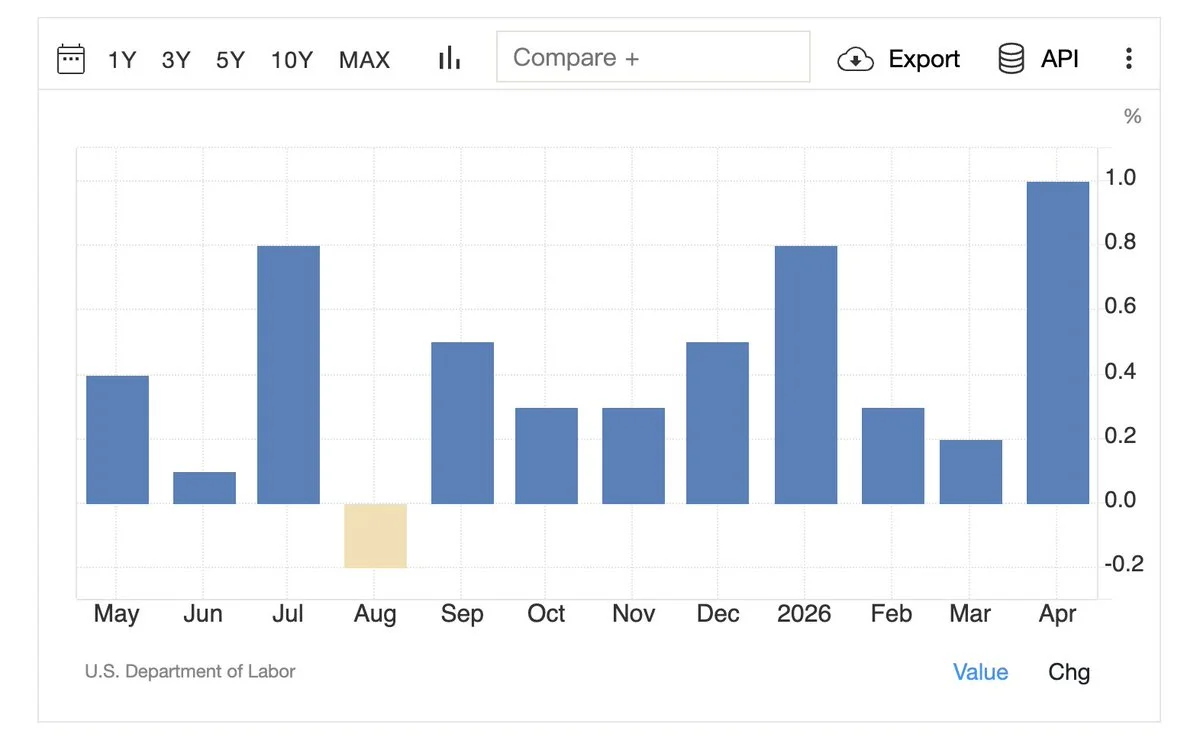

US core producer prices rose 1% month-over-month in April 2026, the steepest monthly gain since March 2022 and well above the 0.3% advance markets had expected. March's reading was revised up to 0.2%.
Why it matters
Core PPI strips out volatile food and energy components and is the cleanest read on pipeline price pressure feeding into consumer inflation. A 1% monthly print is the kind of figure the Fed does not want to see into a rate-cutting cycle — it implies wholesale-stage prices are still pushing higher at an annualized pace above 12%, and the year-over-year rate jumped to 5.2% from 4%, a sharp reacceleration rather than the glide path economists had penciled in.
Market impact
Treasury yields and rate-cut pricing typically move first on a surprise like this. The bigger read is what it does to the Fed's reaction function: with core CPI still sticky and now wholesale prices accelerating, the case for holding rates higher for longer — or skipping any 2026 cut — gets a fresh data point. Crypto and risk assets trade as macro-beta in this window, so the more important follow-through is the 10-year yield and dollar move in the next session, not the knee-jerk cash session reaction.
Source: [United States Producer Prices Final Demand Less Foods and Energy MoM](https://tradingeconomics.com/united-states/core-producer-prices-mom)
Frequently asked questions
-
What did the April 2026 US core PPI report show?
Core producer prices rose 1% month-over-month in April 2026, the steepest monthly gain since March 2022. March was revised up to 0.2%, and the year-over-year core rate jumped to 5.2% from 4%.
-
How did core PPI compare to market forecasts?
The 0.3% monthly advance economists had expected was more than tripled by the actual 1% print. The 4.3% year-over-year consensus was also beaten, with the actual reading landing at 5.2%.
-
Why does core PPI matter for inflation and the Fed?
Core PPI excludes volatile food and energy components and tracks pipeline price pressure that eventually flows into consumer inflation. A 1% monthly print annualises above 12% and is the kind of figure that complicates the Fed's disinflation case.
-
How could this PPI report affect Fed rate-cut expectations?
A core PPI surprise of this size argues for holding policy restrictive for longer, or potentially skipping a 2026 cut entirely. Markets typically reprice Treasury yields and rate-cut probability first, with the dollar following.
-
Why does a US inflation print matter for crypto markets?
Crypto trades as macro-beta in inflation windows: hotter-than-expected prints tend to push yields and the dollar higher, which weighs on risk assets in the cash session. The 10-year yield reaction and dollar move in the next session are the more relevant follow-through.

 WatcherGuru
 TheBlock
 CoinTelegraph
 CryptoSlate
 CoinDesk