


 CryptoSlate
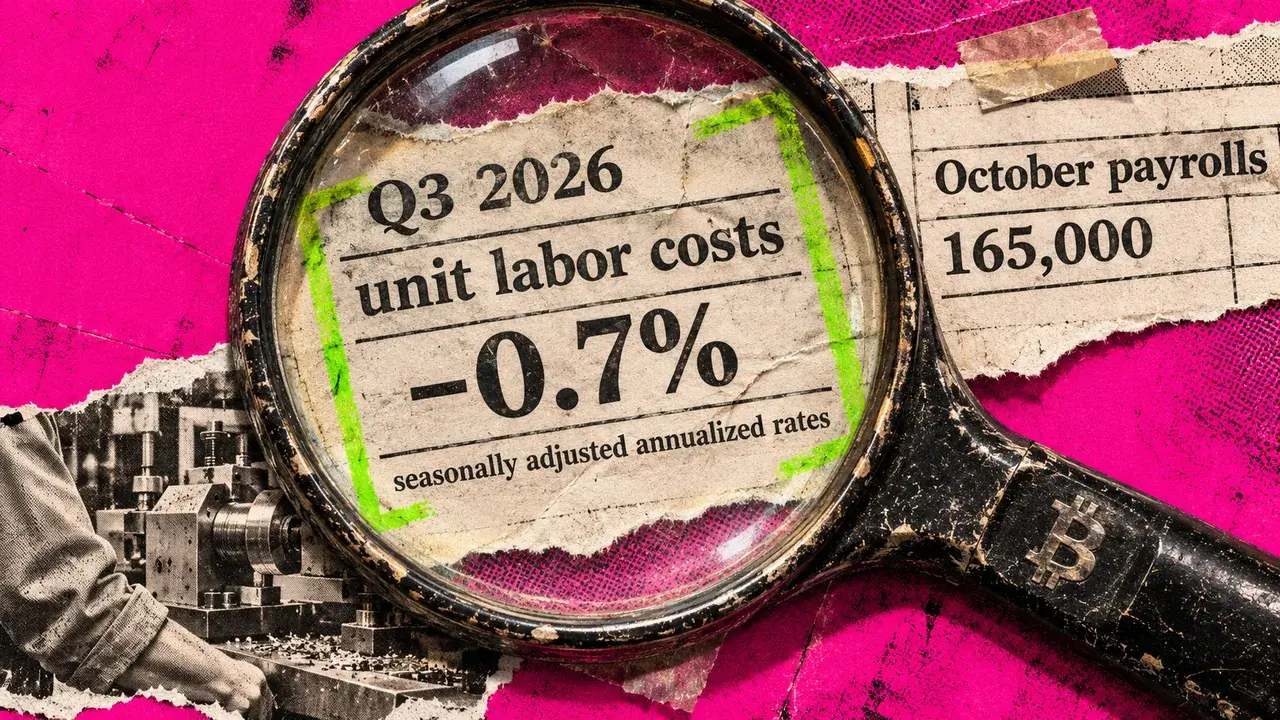

US nonfarm businesses produced more per hour in the third quarter, letting labor costs per unit of output fall even as hourly compensation rose. Preliminary Bureau of Labor Statistics data showed productivity up 3.6% on an annualized basis as output rose 3.7% and hours worked ticked up just 0.1%. Hourly compensation increased 2.9%, which allowed unit labor costs to decline 0.7%.
The productivity print complicates a bearish reading of the October jobs report, where payrolls jumped 165,000 against a prior 12-month average monthly gain of 48,000 and average hourly earnings rose 0.4% over the month. Strong hiring and higher pay alone do not settle the question of wage-driven inflation when each hour worked is producing more output.
Why it matters
Unit labor costs track compensation relative to output. When productivity rises, businesses can pay workers more without incurring higher labor costs for each unit produced, which blunts one channel of cost-push inflation. That matters for the Federal Reserve's policy path: the FOMC held its target range at 3.75% to 4.00% in a 10-2 vote on October 28, describing productivity growth as strong even while calling inflation elevated. Governors Lisa Cook and Beth Hammack preferred a quarter-point increase.
The tension is unresolved. Nonfarm business unit labor costs were still 2.4% higher than a year earlier, and the durability of the quarterly improvement remains an open question ahead of potential revisions.
Market impact
For Bitcoin, the financing channel runs through rate expectations. A sustained decline in inflation pressure could ease a potential rates headwind by bringing lower expected short-term rates, cheaper borrowing terms and a more favorable backdrop for non-yielding assets. Persistent inflation or upward labor-cost revisions would weaken the case for that relief.

Frequently asked questions
-
Why did US unit labor costs fall in Q3 despite wages rising?
Productivity rose 3.6% annualized, meaning each hour worked produced more output. Businesses could raise hourly compensation 2.9% without paying more in labor costs for each unit produced, so unit labor costs fell 0.7% annualized.
-
How do falling unit labor costs matter for Bitcoin?
Lower labor-cost pressure could help cool inflation and bring down expected interest rates. Lower expected rates reduce funding costs and ease a macro headwind for Bitcoin as a non-yielding asset.
-
Did the October jobs report signal wage-driven inflation?
Not on its own. October payrolls rose 165,000 with hourly earnings up 0.4% monthly, but the Q3 productivity data shows output per hour rising fast enough to offset higher pay, leaving labor costs per unit unanswered by the jobs print alone.
-
What did the Federal Reserve decide in October?
The FOMC held its target range at 3.75% to 4.00% on October 28 in a 10-2 vote, with Lisa Cook and Beth Hammack preferring a quarter-point increase. The statement called productivity growth strong while describing inflation as elevated.
-
What could undermine the case for Bitcoin rates relief?
Unit labor costs were still 2.4% higher year over year. Persistent inflation, upward revisions to labor-cost data, or a reversal of the Q3 productivity improvement would weaken the argument for lower expected rates and cheaper financing.
 CoinTelegraph
 CoinDesk
 Altcoin Daily
 WatcherGuru
 WuBlockchain
 Crypto News