


 CoinDesk
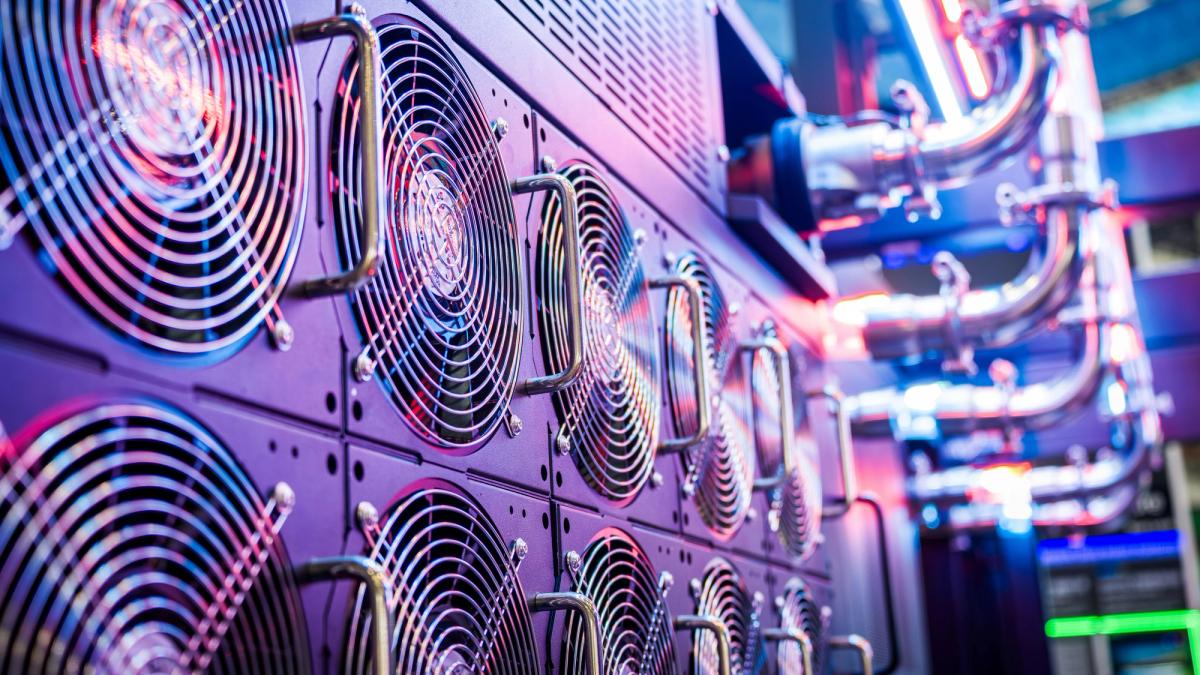


Companies including GoMining, KuMining and Sazmining are selling individuals access to industrial-style Bitcoin mining as large operators pursue AI data-center business. But the network’s hashrate, recently about 1.09 ZH/s versus 1.13 ZH/s a year ago, has not fallen significantly, and the next block-reward halving is expected to make mining less profitable.
Why it matters
A shift by large miners toward AI does not automatically make Bitcoin mining easier for individuals. If equipment is sold to another mining operator rather than removed from the network, it can keep competing for the same rewards. Hashrate has risen over the past two months, according to the seed’s cited data, despite the pivot attracting attention.
Access services also do not remove the economics of mining. Sazmining says its board, developed by Block, costs $4,187, with electricity and maintenance adding $153 a month and a 15% management fee on mined Bitcoin. The company estimates annual output of 0.035 BTC per board.
Market impact
At an assumed BTC price of $83,000, that output would generate about $2,905 in gross annual revenue. After stated operating costs and the management fee, roughly $633 would remain toward the equipment cost, implying more than six years to recoup the initial outlay if price, output and costs stay unchanged. The next halving, which cuts the block reward to 1.5625 BTC, would extend that timeline.
KuMining’s example also shows how electricity changes the calculation: its S23 XP Hyd estimate is 23 months to break even with free power and 29 months at 4 cents per kilowatt-hour, before other expenses. Regular Bitcoin payouts are not the same as recovering the full investment, and the operators say returns are not guaranteed.

Frequently asked questions
-
Why might large miners moving into AI not make Bitcoin mining easier?
If mining equipment is sold to another operator instead of leaving the network, it can continue competing for the same Bitcoin rewards. Hashrate was recently about 1.09 ZH/s and has risen over the past two months.
-
What does a Sazmining board cost, including its listed monthly charges?
The board costs $4,187. Electricity and maintenance add $153 a month, and Sazmining charges a 15% fee on the Bitcoin mined.
-
How does Sazmining estimate the board’s payback period?
At an assumed BTC price of $83,000 and annual output of 0.035 BTC, gross revenue is about $2,905. After operating costs and the management fee, roughly $633 remains annually toward the equipment cost, implying more than six years to recoup it if assumptions hold.
-
How will the next Bitcoin halving affect mining economics?
The halving will cut the block reward to 1.5625 BTC. The source says this is expected to extend the time needed to recover mining equipment costs.
-
How much does electricity affect KuMining’s break-even estimate?
KuMining estimates 23 months to break even for an S23 XP Hyd machine with free electricity and 29 months with power costing 4 cents per kilowatt-hour, before other expenses.
 CryptoSlate
 Lookonchain
 CoinTelegraph
 WatcherGuru
 TheBlock
 Benjamin Cowen
 WuBlockchain