








 CryptoSlate
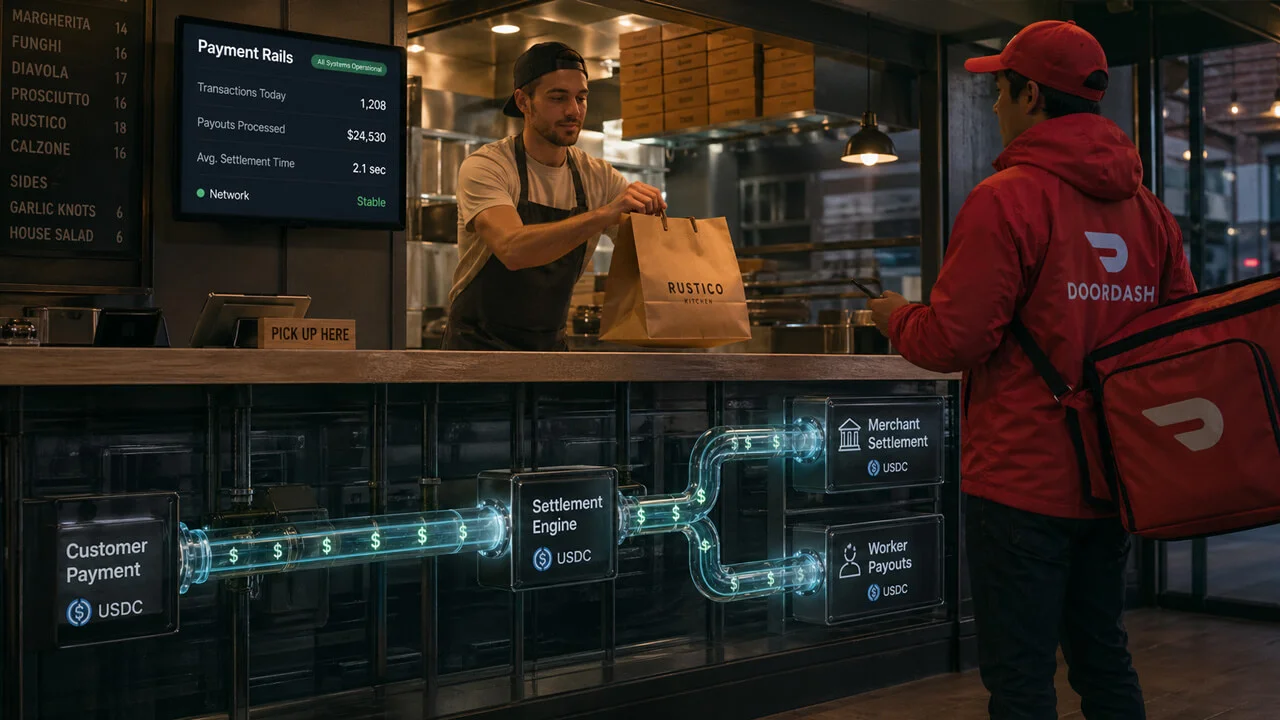
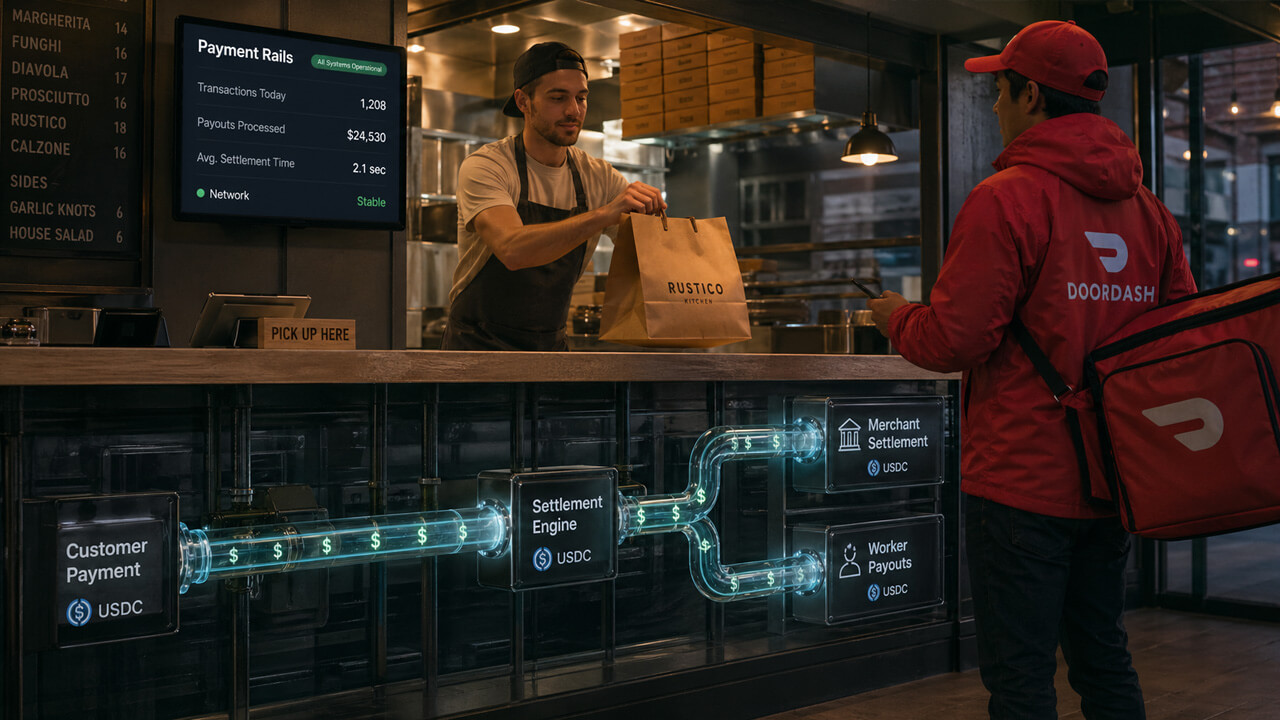

DoorDash is wiring stablecoin-powered payouts into its marketplace through Stripe-backed Tempo, extending the reach of digital-dollar rails across the more than 40 countries where the delivery platform operates. Co-founder Andy Fang framed the appeal in operational terms — faster, cheaper payouts for merchants and Dashers — rather than as a crypto experiment, with Tempo's partner roster already including Deutsche Bank, Visa, Shopify, OpenAI, and Revolut alongside Stripe and Paradigm as the chain's builders.
Why it matters
The pitch is unglamorous and that is exactly why it matters. Stablecoins have cycled through several narrative phases — DeFi settlement, exchange collateral, agent-economy plumbing — but each has run into the same ceiling: volume that doesn't quite map onto the way real businesses actually move money. A delivery marketplace with contractors, merchants, fragmented local banking partners, and cross-border FX exposure is the kind of operational mess that exposes whether a rail works or merely demos well. DoorDash's pressure points are concrete: Dashers waiting on payouts during fuel-price spikes, merchants whose settlement timing feeds directly into payroll and inventory decisions, and a platform itself that just rolled out gas-relief programs in the US and Canada to absorb that exact friction.
Market impact
Tempo's design — payments-focused Layer 1, sub-second finality, stablecoin-native fees, partner list anchored by Stripe and Paradigm — was always pointed at this thesis, and the DoorDash commitment is the first test of whether the thesis survives contact with a marketplace of this scale. CryptoSlate noted that bots already drove 76% of the $28 trillion in stablecoin transaction volume recorded in Q1, a reminder that digital dollars move at enormous scale when they serve a concrete operational need. DoorDash extends that pattern from machine-to-machine settlement into consumer-facing platform economics, where the test isn't throughput but whether a hybrid chain-and-fiat backend can deliver faster money movement without adding compliance or redemption risk the underlying business can't absorb.

Frequently asked questions
-
What is DoorDash actually doing with stablecoins?
DoorDash is working with Stripe-backed Tempo to introduce stablecoin-powered payouts across its marketplace of merchants and Dashers in more than 40 countries, with the stated goal of faster and cheaper settlement for workers and sellers.
-
Why is the DoorDash move seen as a milestone for stablecoins?
Unlike a crypto-native app, DoorDash operates a global marketplace with fragmented local banking, FX exposure, and millions of contractors — the kind of operational complexity that tests whether stablecoin rails actually improve settlement or only work in narrow demos.
-
What is Tempo and who is behind it?
Tempo is a payments-focused Layer 1 blockchain built by Stripe and Paradigm, designed for high throughput, sub-second finality, and stablecoin-native fees. Its partner list includes Deutsche Bank, Visa, Shopify, OpenAI, Revolut, Coastal Bank, and ARQ.
-
How does this fit into the broader stablecoin adoption story?
CryptoSlate reported that bots drove 76% of the $28 trillion in stablecoin transaction volume recorded in Q1, showing digital dollars already move at enormous scale for operational use cases. DoorDash extends that pattern from machine-to-machine settlement into consumer-facing platform economics.
-
What are the open risks for DoorDash's stablecoin integration?
DoorDash has not published a full technical breakdown of which flows move on-chain first, how much of the process runs on Tempo versus hybrid fiat conversion, or how compliance and redemption risk will be handled — all of which matter for whether the integration scales beyond pilot.
 CoinDesk
 TheBlock
 CZ Binance
 CoinTelegraph