








 CoinDesk
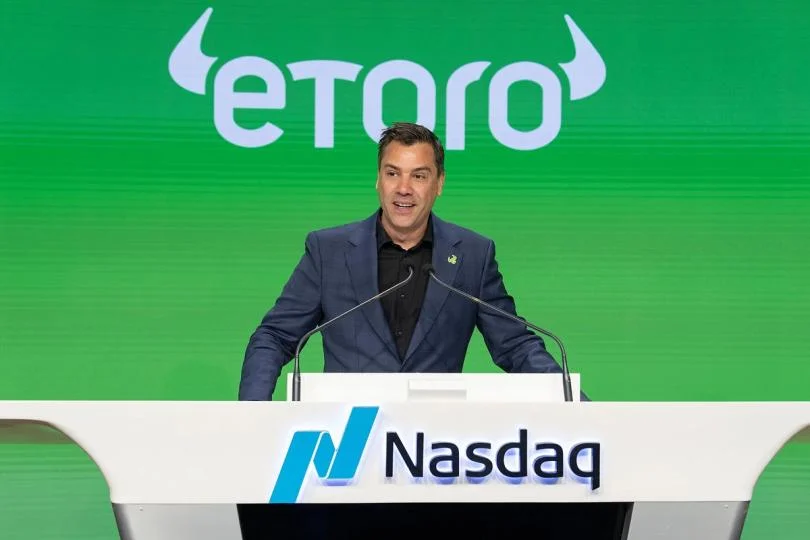


eToro (ETOR) reported a 38% year-over-year drop in first-quarter revenue tied to crypto assets, with the figure landing at $2.15 billion even as overall net income rose 37% to $82.4 million. Net trading income from crypto derivatives fell 57% to $33.4 million, and the slowdown extended into April: total crypto trades slid 32% year-over-year while the average amount invested per trade dropped 22%.
Undeterred, CEO Yoni Assia used the earnings release to double down on the platform's crypto thesis, telling CNBC he expects digital assets to climb back toward all-time highs later this year. The company activated its long-held BitLicense to begin trading in New York, three years after the license was first granted, and closed its $70 million acquisition of self-custodial wallet provider Zengo on April 30.
Why it matters
The headline print frames a familiar early-2026 setup: retail crypto engagement cooled alongside price action, but the platforms that survived the cycle are using the lull to widen their moats. eToro's data, Assia noted, shows retail investors on the platform buy the dip when markets fall — a behavioral signal that supports the platform's case for leaning in rather than retrenching. The Zengo deal is the clearest read: self-custody is the wedge eToro wants to use to bridge its traditional-finance user base into on-chain infrastructure, prediction markets, perpetuals, and the broader crypto ecosystem.
The BitLicense activation is the second structural move. Holding the license for three years without using it suggested either regulatory caution or a wait for the right product mix; flipping it on now puts eToro inside the most scrutinized US crypto market at exactly the moment retail activity is rebuilding from a low base.
Market impact
ETOR slipped 0.61% in pre-market trading on Wednesday as investors digested the mixed print — softer crypto flows offset by rising overall net income and two credibility-building strategic moves. The reaction is consistent with how the market has historically treated platform earnings during crypto drawdowns: the directional read is the activity numbers, but the multi-cycle read is the infrastructure spend.

Frequently asked questions
-
How much did eToro's Q1 crypto revenue fall year over year?
eToro reported Q1 revenue tied to crypto assets of $2.15 billion, down 38% from the year-earlier quarter. Net trading income from crypto derivatives fell 57% to $33.4 million over the same period.
-
What did eToro CEO Yoni Assia say about the crypto outlook?
Assia told CNBC he expects digital assets to climb back toward all-time highs later this year and pointed to platform data showing that retail investors on eToro buy the dip when markets fall.
-
Why did eToro activate its BitLicense now after holding it for three years?
The BitLicense was first granted to eToro roughly three years ago but went unused. Management activated it alongside the Q1 earnings release, opening trading in New York at a moment when retail crypto activity is rebuilding from a cyclical low.
-
What is the Zengo acquisition and how much did eToro pay?
eToro closed its $70 million acquisition of Zengo, a self-custodial crypto wallet provider, on April 30. CEO Yoni Assia framed the deal as a bridge between the platform's traditional-finance user base and on-chain infrastructure, prediction markets, and perpetuals.
-
How did eToro stock react to the Q1 earnings report?
ETOR slipped 0.61% in pre-market trading on Wednesday as investors weighed softer crypto flows against a 37% rise in overall net income to $82.4 million and two strategic moves — the BitLicense activation and the Zengo close.
 Crypto Rank News
 CoinTelegraph
 WatcherGuru
 TheBlock
 WuBlockchain
 Crypto Capital Venture