








 WatcherGuru
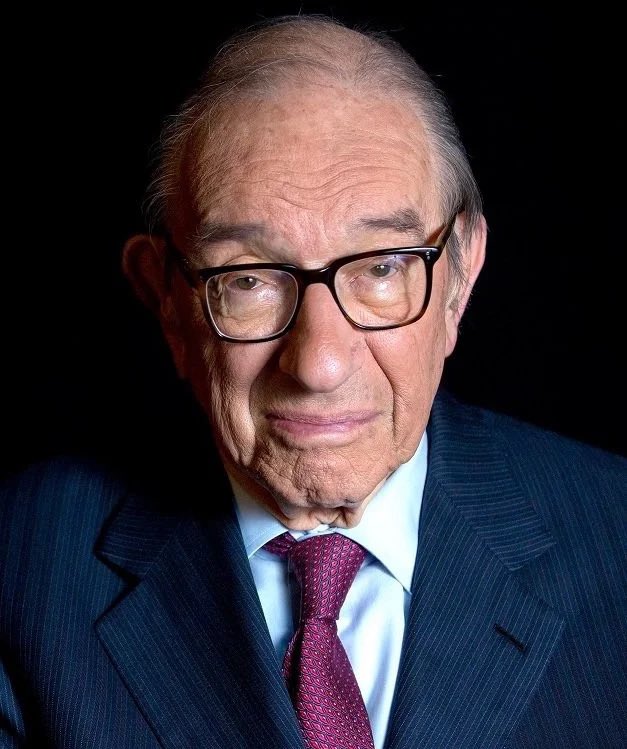
Alan Greenspan, who served as Federal Reserve chairman from 1987 to 2006, has died at age 100. A protégé of economist Ayn Rand before becoming one of the most consequential central bankers in US history, Greenspan presided over the Fed across four presidential administrations.
Why it matters
Greenspan's tenure spanned the 1987 Black Monday crash, the dot-com boom and bust, the 2001 recession, and the early years of the housing expansion that ended in the 2008 financial crisis. His 1996 "irrational exuberance" remark, his reluctance to directly regulate mortgage derivatives, and the rate cuts that followed 9/11 all shaped the policy debates that define the modern Fed.
Market impact
Bond and equity futures showed no immediate reaction. Greenspan had been out of public office for nearly two decades and had no operational influence on current Fed policy, though markets and historians will revisit his legacy of low-rate, liquidity-driven markets that became the template for the post-2008 era.

Frequently asked questions
-
Who was Alan Greenspan?
Greenspan served as chairman of the Federal Reserve from 1987 to 2006, the 13th person to hold the role. He led US monetary policy under presidents Reagan, George H.W. Bush, Clinton, and George W. Bush.
-
How long did Greenspan chair the Federal Reserve?
Nearly 19 years, making his tenure one of the longest in the Fed's history. He was appointed by President Reagan in 1987 and succeeded by Ben Bernanke in February 2006.
-
What crises did Greenspan manage as Fed chair?
The 1987 Black Monday stock market crash, the 1998 LTCM crisis, the dot-com boom and bust, the 2001 recession, and the early phase of the housing expansion that ended in the 2008 financial crisis.
-
What did Greenspan think of Bitcoin?
Greenspan was a vocal skeptic. In 2013 he called Bitcoin a "bubble" and said it could not function as a stable store of value without government backing, though he acknowledged the underlying blockchain technology had appeal.
-
How is Greenspan's legacy viewed now?
He was widely celebrated during his tenure as "the maestro," but later drew sustained criticism for his deregulatory stance, particularly around mortgage derivatives, which many economists argue enabled the 2008 financial crisis.
 Crypto News
 CoinTelegraph
 CoinDesk
 WuBlockchain
 TheBlock