


 CryptoSlate
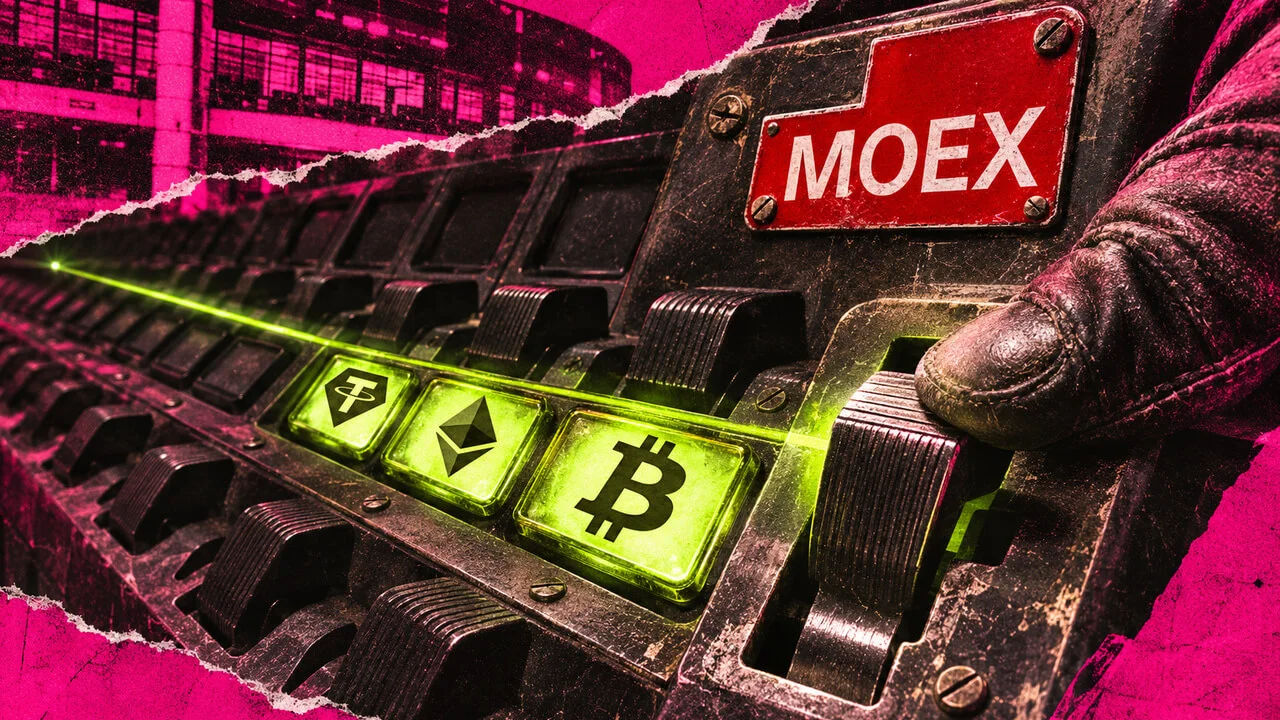

Bitcoin, Ether and USDT will be the first assets Moscow Exchange plans to trade when it enables digital-currency transactions on Dec. 1, 2026, following pilot trades and a gradual participant rollout. The launch follows the Bank of Russia's Nov. 6 directive, effective Nov. 17, which lets non-qualified investors buy those three assets through intermediaries, subject to a 300,000-ruble annual cap per intermediary and mandatory testing. Qualified investors can access any cryptoasset without the restricted list or cap, while testing and risk familiarization still apply to both groups.
Why it matters
Russia is separating legal asset eligibility from the operational rollout of a trading venue. From Nov. 17, exchanges may admit Bitcoin, Ether and USDT to public circulation, but Dec. 1 is Moscow Exchange's planned pilot start rather than a universal retail launch date. Participants will join as they are ready, and testing availability has no announced date.
Moscow Exchange plans to use its stock-market technology and include transactions in National Clearing Centre clearing, giving the planned market a defined execution and settlement setup. The central bank selected the restricted assets using market capitalization, average daily trading volume and foreign-market pricing history of at least five years.
Market impact
For crypto markets, the clearest effect is the creation of a rule-based Russian trading channel rather than a one-day listing event. By using established exchange technology and central clearing, Moscow Exchange is building a path for local investors to gain exposure to Bitcoin and Ether within a regulated market framework.
Access is segmented. Non-qualified investors face the 300,000-ruble ceiling for each intermediary, calculated on acquisition costs for completed purchases and orders under consideration, so headroom can tighten during the calendar year. Qualified investors have broader asset access. The December pilot begins with both investor regimes already in place, making initial participation the key indicator to watch.


Frequently asked questions
-
Why do Russian crypto trading rules have two separate start dates?
Nov. 17 is when the Bank of Russia directive takes effect and exchanges may admit the approved assets. Dec. 1 is Moscow Exchange's planned pilot start, with participants joining gradually as they are ready.
-
What limits apply to non-qualified investors buying Bitcoin, Ether and USDT?
Purchases are capped at 300,000 rubles annually through each intermediary. The cap covers acquisition costs for completed purchases and orders under consideration, and investors must complete testing before transacting.
-
Can qualified investors trade cryptoassets outside the restricted retail list?
Yes. Qualified investors can access any cryptoasset without the restricted list or purchase cap. They must still complete testing and familiarize themselves with crypto investment risks before any transaction.
-
Is Moscow Exchange's Dec. 1 start a universal retail launch date?
No. The date is the exchange's planned start for pilot trades and gradual participant onboarding. Other access routes operate under the Nov. 17 rules, while testing availability has no announced date.
-
What criteria did the Bank of Russia use to select liquid cryptoassets?
The central bank used market capitalization, average daily trading volume and a foreign-market pricing history of at least five years. Those criteria explain the restricted list for non-qualified investors.
 WuBlockchain
 CoinTelegraph
 CoinDesk
 Crypto News