


 WuBlockchain
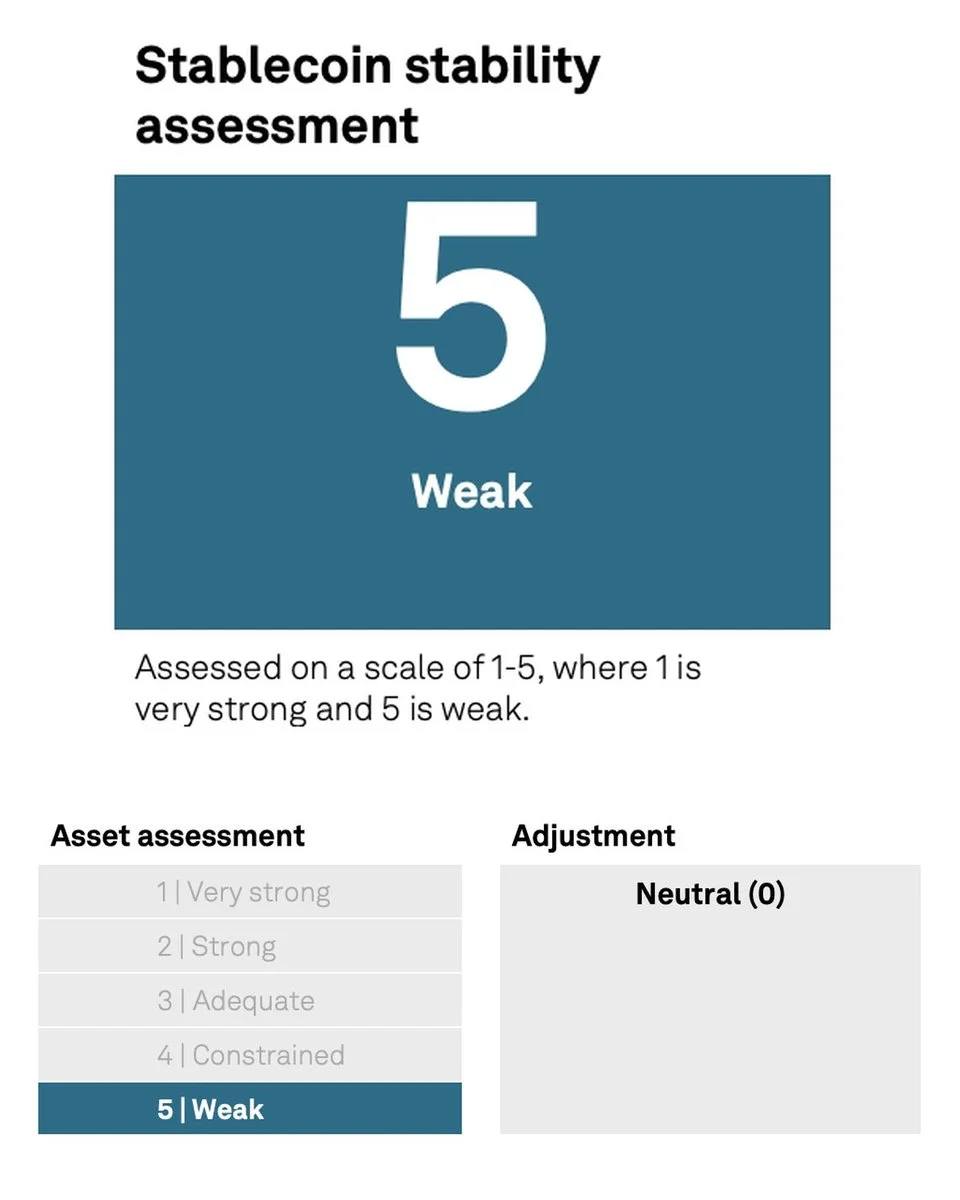
S&P Global Ratings kept Tether's USDT at 5, or weak, the lowest level on its five-point stablecoin stability assessment scale. The agency said higher-risk assets were equivalent to 28% of USDT in circulation as of September 30, up from 24% a year earlier.
Why it matters
The assets identified by S&P include gold, Bitcoin, equities and loans. Their increased exposure raised concerns at the ratings agency about potential undercollateralization of the world's largest stablecoin.
S&P also cited limited disclosure concerning audited financial statements, reserve segregation and custodians. Tether rejected the assessment, saying the problem lies with S&P's framework rather than its reserves.
Market impact
The assessment focuses attention on the composition and disclosure of assets backing USDT, a stablecoin designed to maintain a stable value. S&P's concerns center on potential collateral shortfalls, while Tether disputes the framework used to assess that risk.
Source: [Stablecoin Stability Assessment: Tether (USDT) | S&P Global Ratings](https://www.spglobal.com/ratings/en/regulatory/delegate/getPDF?articleId=3662851&type=COMMENTS&defaultFormat=PDF)

Frequently asked questions
-
What assets did S&P classify as higher risk in its USDT assessment?
S&P identified gold, Bitcoin, equities and loans among the higher-risk assets. It said these assets were equivalent to 28% of USDT in circulation as of September 30.
-
How did USDT's higher-risk asset exposure change?
S&P said the exposure rose to the equivalent of 28% of USDT in circulation as of September 30, from 24% a year earlier.
-
What collateral risk did S&P flag for USDT?
S&P said the increased exposure to higher-risk assets raised concerns about potential undercollateralization.
-
What disclosure issues did S&P cite?
The agency cited limited disclosure concerning audited financial statements, reserve segregation and custodians.
-
How did Tether respond to S&P's assessment?
Tether rejected the assessment, saying the problem lies with S&P's framework rather than its reserves.
 TheBlock
 Crypto Rank News
 CoinDesk
 WatcherGuru