What an "RWA operator key" actually controls
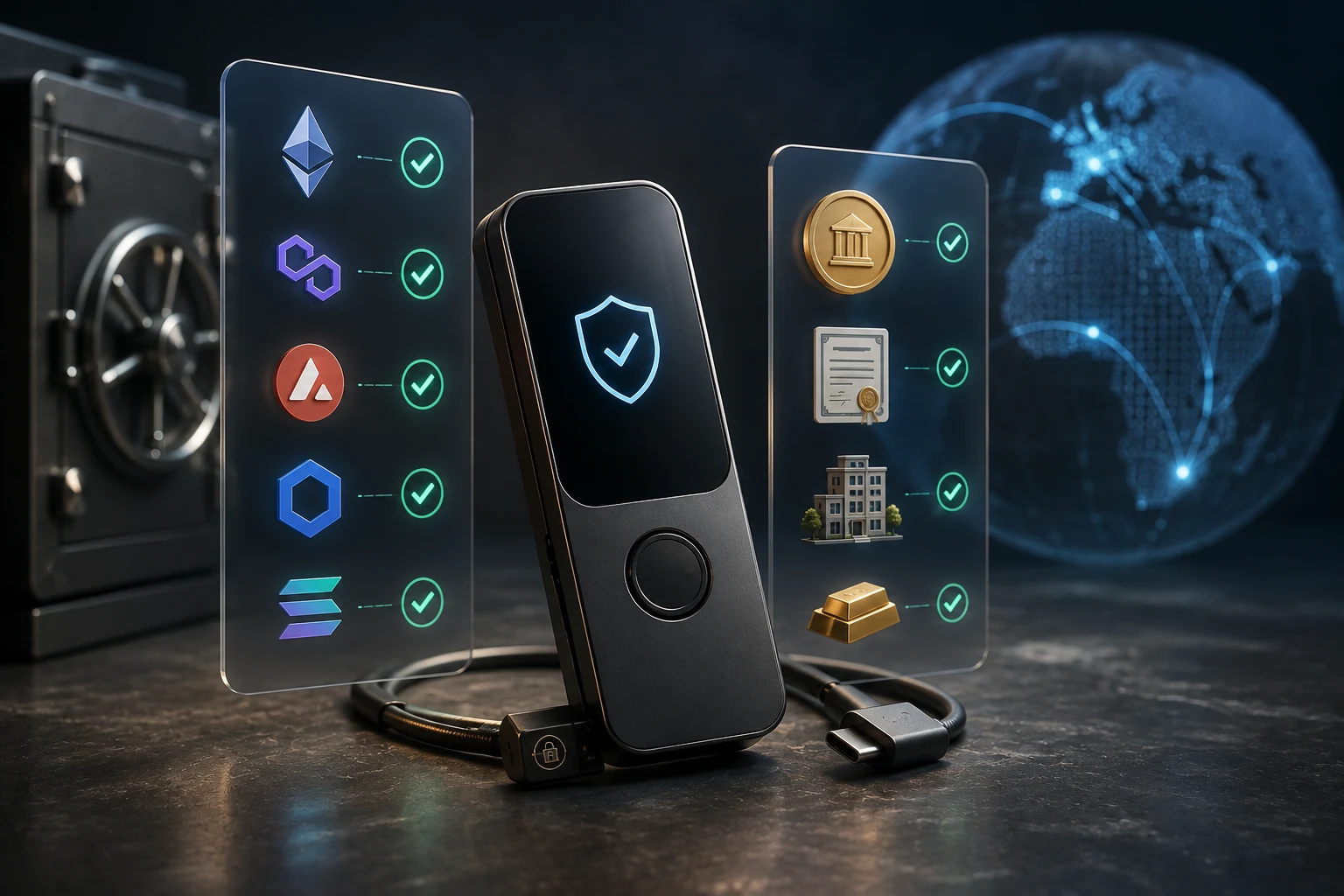
In a tokenized real-world asset (RWA), the on-chain token is only the surface. Underneath sits an upgradeable smart contract, and on top of that sits one or more signing keys held by the issuer, the fund administrator, or a specialized technology provider. These keys, sometimes called the operator key, compliance key, or upgrade key, are what make the token legal, not just technical.
What does that key actually do? On most tokenized-asset contracts modeled on the ERC-1404 or ERC-3643 standards, the operator key can add or remove addresses from a KYC allowlist, freeze balances of flagged holders, upgrade the contract logic itself, pause all transfers during an incident, and in some cases mint or burn tokens. That is a lot of authority sitting behind a single cryptographic signature.
For a treasury evaluating a tokenized money-market fund such as BUIDL, a tokenized U.S. Treasury product, the operator key is what enforces that only verified investors can hold the token. The key is also what would let the issuer freeze your balance if regulators came calling or a sanction hit your wallet. It is the enforcement arm of the legal structure, and that is precisely why compromising it is so dangerous.
You should think of the operator key as analogous to the master key at a vault that holds bearer instruments. If the bearer instrument is the token, the master key is what lets someone change who is allowed to walk in. Lose the master key, and the attacker does not need to steal the bearer instruments; they can simply rewrite the guest list.
Why a compromised operator key is the worst-case scenario for an RWA
Most readers underestimate how catastrophic an operator-key compromise can be in a tokenized-asset system. To see why, compare it to the failure modes people already understand.
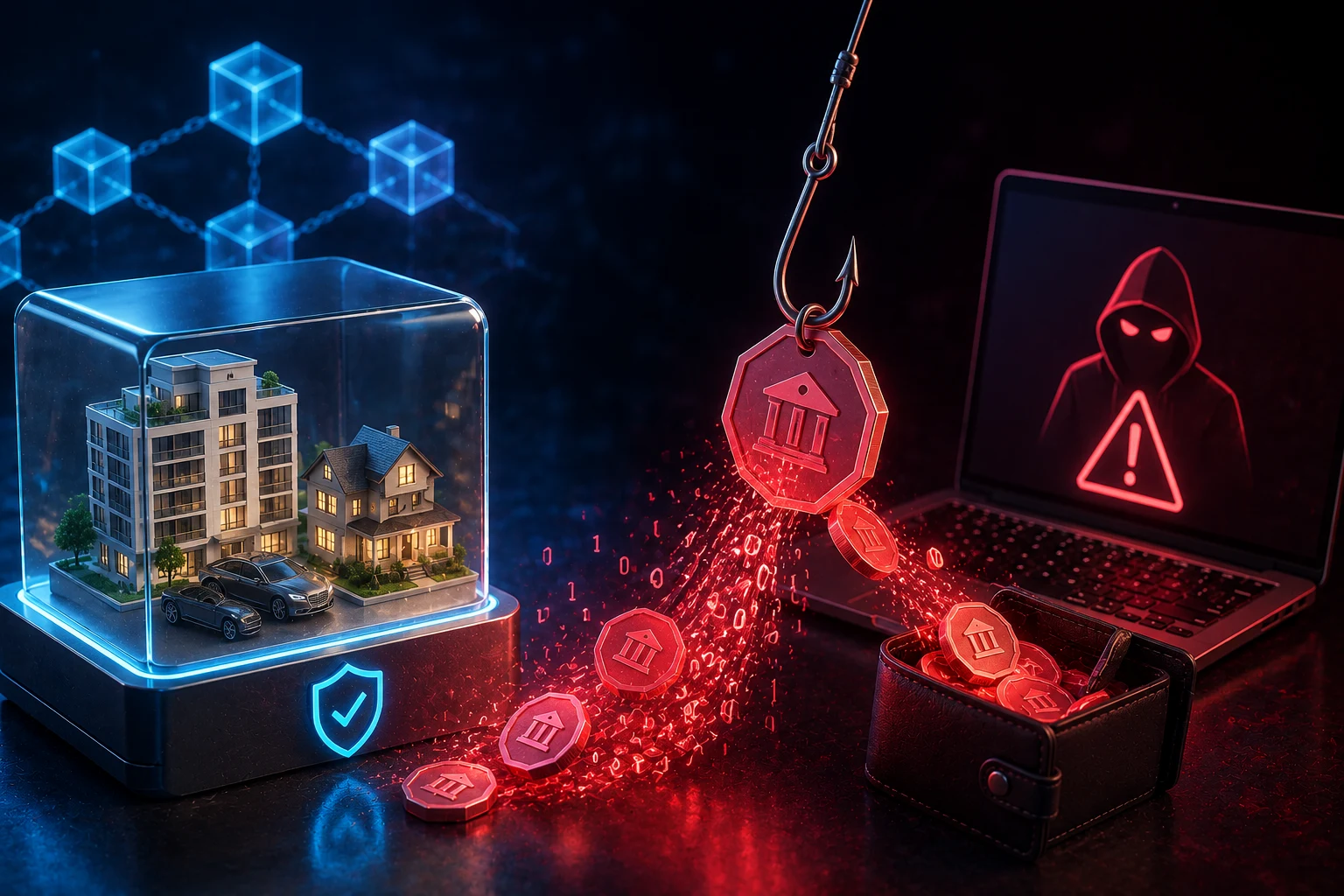
In a regular DeFi protocol, a private-key compromise often lets the attacker drain a pool. The loss is large but bounded by the protocol's total value locked. In an RWA, the loss is potentially unbounded in two directions. First, the attacker can use the upgrade function to redefine what the token is, what it can do, and who is allowed to hold it. Second, because RWAs typically claim a 1:1 backing against off-chain assets, a loss of investor confidence can trigger a redemption run that the underlying fund cannot honor in time.
Historical incidents make this concrete. The Ronin bridge compromise in 2022 saw an attacker obtain five of nine validator keys on a bridge securing play-to-earn game assets, draining roughly $625 million. The Harmony Horizon bridge suffered a similar two-of-five multisig compromise later that year, losing about $100 million. In the Wormhole exploit, an attacker used a deprecated signature path to mint wrapped assets without collateral, extracting roughly $320 million. Each of these involved keys, not bugs in pure token logic.
The pattern that should worry an RWA allocator is not the protocol that lost funds in a hack. It is the protocol that lost the upgrade key without anyone noticing for hours or days. Admin-key abuse is one of the most common attack vectors in the wider crypto space, and there is no reason to expect tokenized-asset contracts to be immune. In fact, they may be more attractive targets because the off-chain legal claims often translate into dollars that are easier to launder through regulated venues.
How a realistic compromise would unfold
Most operators do not hold a single key on a single laptop. The standard design is a multisig such as a 3-of-5 or 4-of-7 Safe (formerly Gnosis Safe), often with hardware wallets, geographically distributed signers, and sometimes a hardware security module (HSM) for high-value operations. Even so, realistic compromises still happen. Here is a worked example of how a compromise might play out in a tokenized-asset context.
The attacker gains a foothold through one of several well-trodden paths. They could phish a signer who approves transactions on a routine basis. They could compromise a third-party service the signers rely on, such as a custody platform, a KYC vendor, or a legal-ops dashboard that happens to hold an API key with signing privileges. They could exploit a vulnerability in the multisig software itself, as happened with the Wintermute and Parity incidents. Or they could social-engineer the operator team during a high-pressure event when a hot patch is being rushed through.
Once the attacker controls enough signers, they submit a transaction that calls the contract's upgrade function. The new implementation can be anything, including a version that simply lets the attacker transfer any holder's balance to themselves, or one that disables the allowlist check entirely. With the allowlist disabled, the attacker can launder the token through any DEX that lists it, because the on-chain code no longer enforces KYC.
The defender's window is the timelock delay, if one exists. A timelock forces any proposed upgrade to wait a fixed period, often 24 to 72 hours, before it can execute. That delay is supposed to give the community time to spot a malicious upgrade and coordinate a response. In practice, the timelock only helps if the upgrade is observable, if off-chain operators can be reached quickly, and if there is a credible fork-and-redeploy option. None of those are guaranteed for tokenized assets, where the legal counterparty is often a regulated entity that cannot legally participate in a same-day fork.
Mitigations: what timelocks, multisigs, and pause switches really do
The standard mitigations are widely discussed and widely misunderstood. Each has trade-offs that are visible only when something goes wrong.
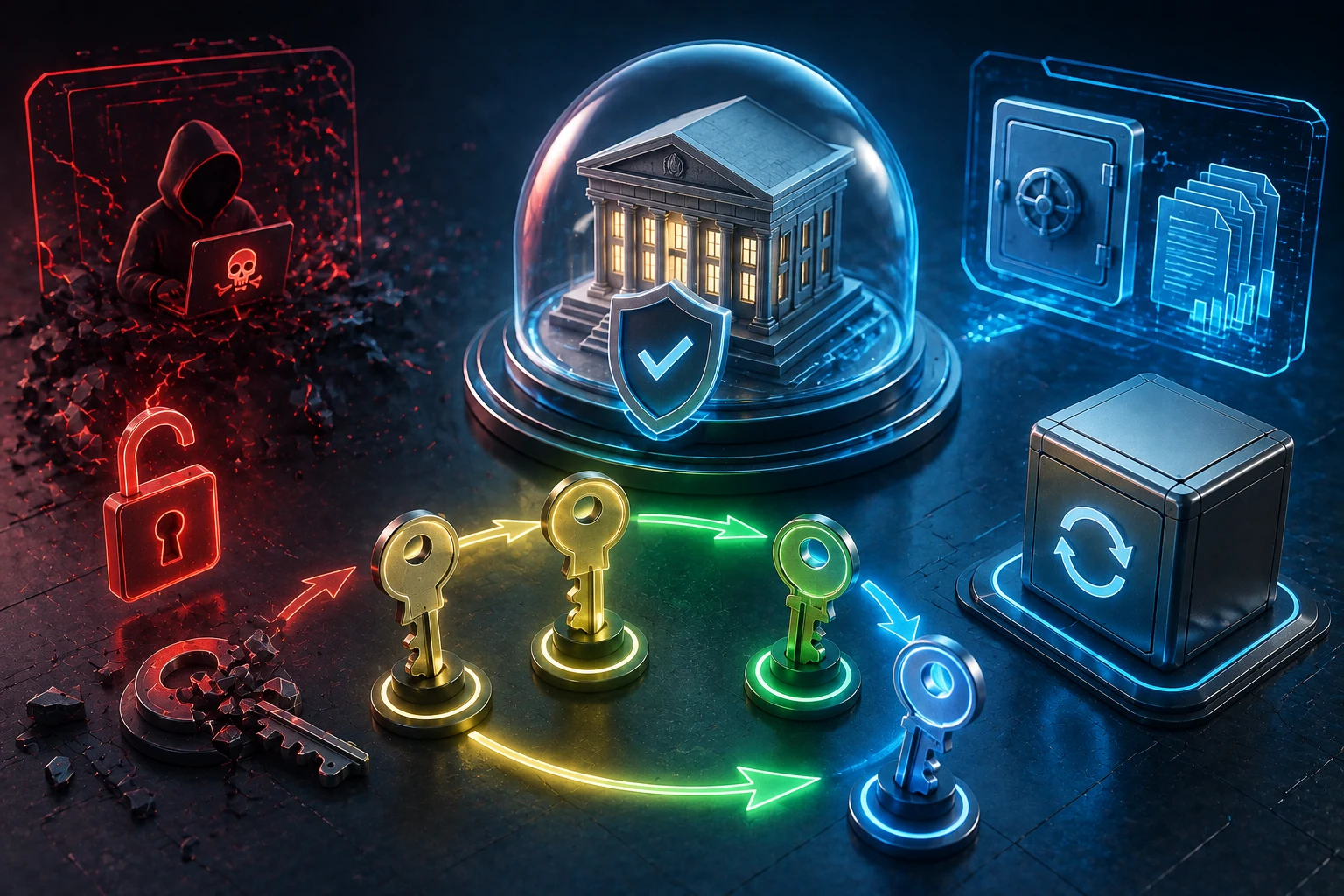
Multisigs raise the cost of compromise by requiring multiple independent signers to collude. A 4-of-7 multisig is meaningfully safer than a 2-of-3, but it also means an upgrade requires seven people to coordinate. In a real incident, that coordination delay can be a feature or a bug. It is a feature when it stops the attacker. It is a bug when the legitimate team needs to pause the contract urgently and cannot gather enough signers in time.
Timelocks convert an immediate exploit into a delayed one. The attacker must broadcast the malicious transaction and wait out the delay, during which defenders can prepare. The downside is that the timelock also delays legitimate upgrades, which means operators are sometimes tempted to use shorter delays, admin overrides, or "emergency" functions that bypass the timelock. These overrides are themselves an attack surface, and they have been abused in the past.
Emergency pause functions let a designated key freeze all transfers instantly. This is the single most useful tool for stopping a live exploit, but it concentrates power in exactly the key you are worried about. If the pause key is compromised, the attacker can pause the system and extort the issuer, or worse, pause it while they execute a different attack path. Pause authority also creates legal risk: holders who cannot move tokens during a pause may have a cause of action against the issuer.
Hardware signers and HSMs reduce the chance a key is extracted from a device, but they do nothing if the human at the device is tricked into signing the wrong transaction. Several major incidents in the past few years started with a compromised frontend that displayed legitimate transaction details while asking the user to sign a malicious one. The hardware wallet cannot tell the difference.
Independent monitors and watchtowers are an underappreciated layer. A third-party monitoring service can watch every upgrade transaction, alert off-chain stakeholders, and trigger coordinated responses. This is closer to a "detect and respond" model than a "prevent" model, and it scales poorly to long-tail tokenized-asset contracts. The bigger, more liquid RWA products such as BUIDL, JAAA (a tokenized Janus Henderson money-market product), and similar instruments can afford it; smaller issuances usually cannot.
How RWA chains differ on key governance
Not all RWA chains treat operator keys the same way. The differences matter more than most allocators realize.
Canton Network (CC) is built around the Digital Asset Modeling Language (Daml) and is designed for institutional workflows. Its model is fundamentally different from a public ERC-20. Most Canton assets are governed through a privacy-preserving sub-network where validators enforce transfer rules at the consensus layer rather than in a single upgradeable contract. The trade-off is that the operator trust shifts to the validators, and Canton validators are permissioned entities, not anonymous stakers. An investor's exposure to a key compromise is therefore a function of how many validators they trust, not how many signers hold one multisig.
Provenance Blockchain (HASH) hosts the Figure family of lending and securitization products. Provenance uses a Cosmos-style architecture where validators are permissioned and known. The operator keys that matter are those held by the issuing entity, typically Figure, and by independent service providers such as KYC vendors and transfer agents. Provenance has historically emphasized compliance controls over decentralized trust minimization, which is appropriate for a regulated securitization chain but should be understood explicitly by allocators.
Ethereum-based RWA tokens, including products like BUIDL and EUTBL (the Hashnote short-duration Treasury product), run on public Ethereum under upgradeable contracts. The advantage is the largest validator set in crypto and the deepest liquidity for hedging or exiting. The disadvantage is that the entire governance model is encapsulated in a single contract address with an upgrade key controlled by a small multisig. If you buy one of these tokens, you are taking direct exposure to the quality of that multisig's operational security.
Other RWA-focused chains such as Plume, MANTRA, and several newer Layer-1 and Layer-2 networks have taken varying approaches, but they generally fall into one of two camps: they delegate governance to a foundation multisig, or they delegate it to a permissioned validator set. Neither eliminates operator risk; they just move it.
What this means for treasurers and allocators
If you are allocating to tokenized assets, the question is not whether operator risk exists. It exists on every tokenized-asset platform you will encounter. The question is whether the design makes a compromise survivable.
Pressure-test the following before sizing an allocation. How many signers are on the upgrade multisig, and what is the threshold? Where are the keys held, and what is the geographic distribution? Is there a timelock on upgrades, and how long is it? Is there an independent pause key held by a different party? Is there a third-party monitor? Has the project ever exercised the pause or upgrade path on a real incident, and how did it go? Is there a published incident-response plan, including a fork option?
For smaller issuances, the answer to several of these questions is often "we have not thought about that." That is a data point, not a dealbreaker, but it should set your position size accordingly. For larger issuances such as BUIDL and JAAA, the answer is usually more reassuring, but it should still be verified directly with the issuer rather than taken on faith from marketing materials.
You should also factor in the legal layer. The on-chain compromise is only half the story. The other half is whether the off-chain issuer, fund administrator, and custodian have contractual obligations that survive a hack. If the smart contract is drained but the issuer remains solvent and willing to honor redemptions against the off-chain register, holders may be made whole. If the issuer relies on the contract as its sole source of truth, a compromise can be a total loss.
How to track RWA key governance the smart way
RWA key management failures rarely make headlines before the loss is already booked. The interesting signal is in the operational details: a signer rotation that quietly happens, a timelock delay that gets shortened, a pause function added to a contract that did not have one before. Zippfeed surfaces RWA headlines with sentiment scoring (bullish, neutral, or bearish) and an importance rating, so you can see governance changes alongside market moves and react before a structural risk becomes a headline loss.





 CoinDesk
 TheBlock