What does Solana DeFi vs Base DeFi vs Arbitrum DeFi really compare?
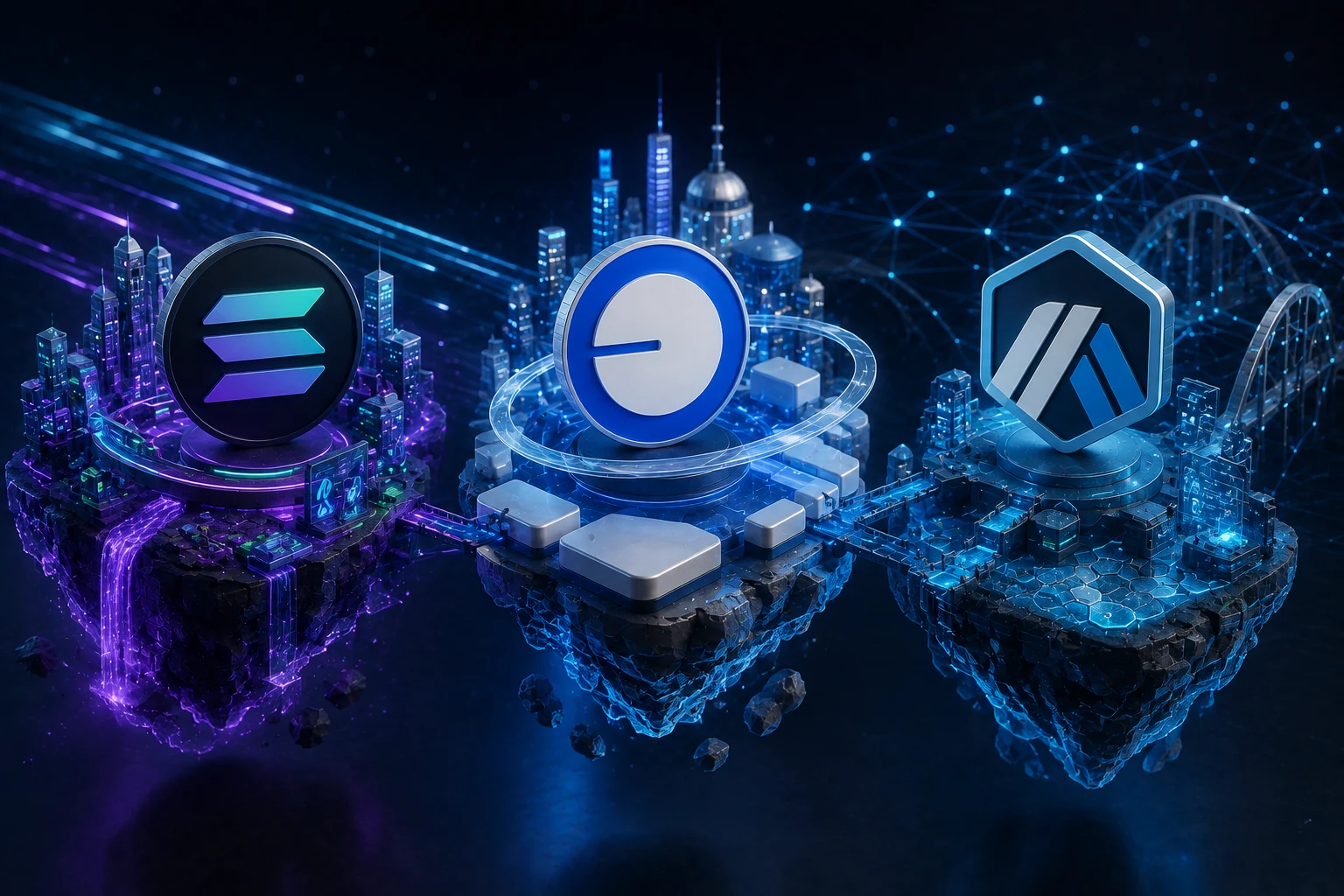
DeFi on a chain is not a single product. It is a stack made up of the base network, wallets, bridges, exchanges, lending markets, derivatives venues, liquid staking tokens, oracles, governance systems, and the people who provide liquidity. Comparing Solana, Base, and Arbitrum therefore means comparing three different operating environments, not just three transaction fee schedules.
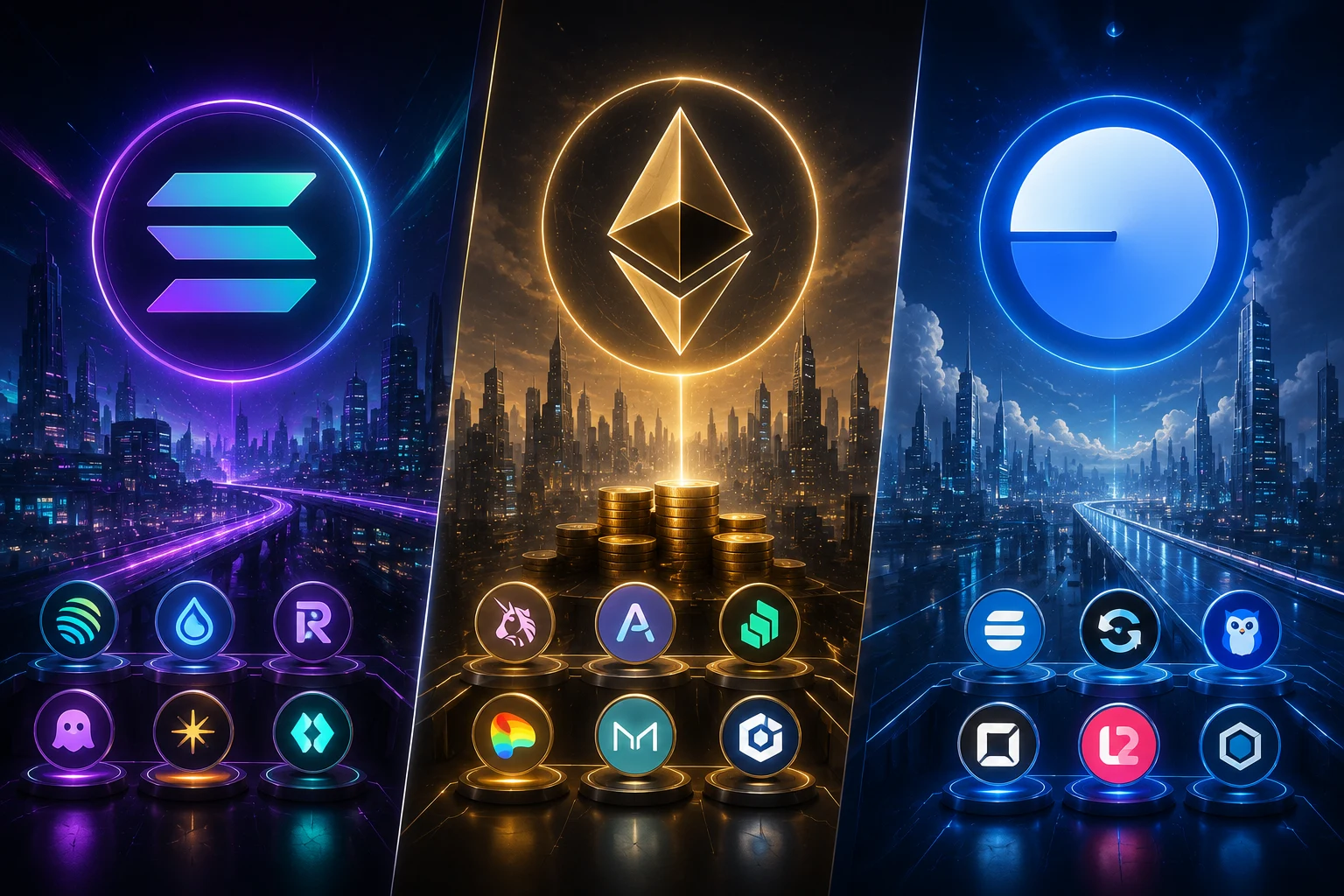
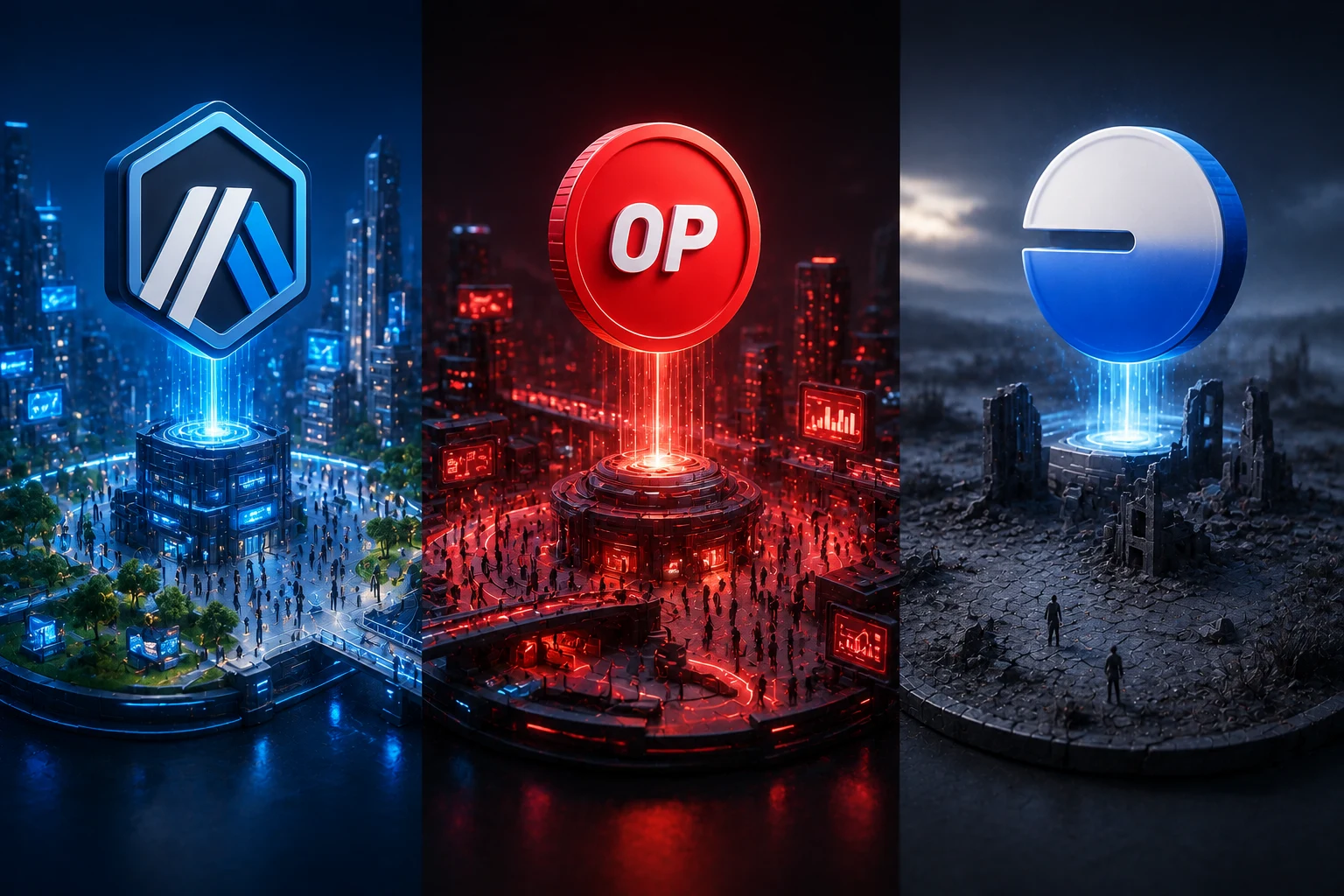
The headline distinction is easy to state. Solana is optimized for high-throughput activity on its own virtual machine and has developed a strong trading and memecoin culture. Base is an Ethereum layer 2 linked to Coinbase distribution, with a growing consumer and trading ecosystem. Arbitrum is also an Ethereum layer 2, but it has a longer DeFi history, a deep Ethereum-native application base, and a more established market for collateral and derivatives.
Those labels hide important differences. A swap routed through Jupiter on Solana, a trade through Uniswap or Aerodrome on Base, and a transaction on Arbitrum may look similar in a wallet. Underneath, they rely on different liquidity pools, execution assumptions, bridges, sequencers, oracles, and governance processes. A user choosing a chain is really choosing a bundle of dependencies.
This comparison uses the ecosystems and incident patterns visible through the period leading into 2026. Liquidity, applications, fees, and security conditions can change quickly. A ranking based on one day of total value locked, trading volume, or token price can be less useful than understanding how each stack behaves when markets are stressed.
Risks come before yield and convenience
The first risk is contract risk. A token deposited into a lending market, liquid staking protocol, or automated market maker can be lost through a coding error, a faulty upgrade, a bad price feed, or an economic attack. Audits reduce some risks, but they do not prove that a protocol is safe. A large pool can also make an exploit more attractive, not less.
The second risk is infrastructure. Solana has experienced repeated periods in which congestion, spam, or validator problems made transactions fail or delayed execution. Base and Arbitrum use centralized sequencers in important parts of their current operating models. A sequencer outage can prevent normal users from posting transactions even when the underlying Ethereum settlement layer is working. Recovery is not the same as uninterrupted access.
Bridge risk is separate from chain risk. Moving assets from Ethereum to Base or Arbitrum normally involves a canonical bridge or another bridge provider, while moving assets to Solana may involve a different bridge, wrapped asset issuer, or centralized exchange. The bridge can be attacked, paused, misconfigured, or exposed to a compromised key. The Wormhole exploit in February 2022, which affected a Solana bridge, remains a clear reminder that a reputable destination chain does not make a bridge claim risk-free.
There are also market risks that do not look like hacks. A stablecoin can lose its peg, a liquid staking token can trade below its reference asset, an oracle can report a price that is stale or manipulable, and a leveraged position can be liquidated during a brief price move. DeFi users may also underestimate approval permissions, wallet phishing, fake tokens, and governance proposals that change a contract after capital has arrived. Treat any yield as payment for bearing risk, not as free income.
How the dominant trading stacks diverged
Solana’s main retail trading anchor is Jupiter. It is an aggregator, meaning it searches across available liquidity venues and routes a swap rather than acting as just one pool. Jupiter became central to how users access Solana liquidity, particularly for long-tail tokens and fast-moving launches. That convenience can improve execution, but it also makes token verification, slippage settings, and route review important. A routed trade can still interact with risky pools or a malicious token.
Base has a more visibly Ethereum-connected application culture. Uniswap is a major anchor because users already know its interface, contracts, and pool model. Aerodrome became an important Base-native liquidity venue, with incentives and voting dynamics that can attract capital quickly. Those incentives can create useful depth, but they can also make volumes look stronger than durable user demand if liquidity providers are mainly responding to token rewards.
Arbitrum has a broad collection of Ethereum-native protocols and does not depend on one retail trading application to define the entire network. Uniswap is present, alongside other exchanges, lending markets, stablecoin venues, and derivatives applications. That breadth can help users find established collateral and familiar risk controls. It can also make the system harder to evaluate, because a bridge, oracle, token wrapper, and application may each have a separate failure mode.
Liquidity is not perfectly portable between these ecosystems. A USDC balance on Base is not the same operational object as a USDC balance on Solana or Arbitrum, even when the ticker is identical. Pools can have different depth, fee tiers, incentives, and price impact. Before swapping, a user should check the token contract, route, expected price impact, and whether the asset is native, canonically bridged, or issued by a third party.
Perpetuals show the culture gap more clearly
Perpetual futures, usually called perps, are leveraged contracts with no fixed expiry. They are among the clearest examples of how chain choice changes the experience. Solana’s Drift is a major reference point for on-chain perps and offers a more native Solana trading environment. Traders still face liquidation, funding-rate, oracle, and smart-contract risks, even when the interface feels similar to a centralized exchange.
Hyperliquid is often included in comparisons of perps liquidity, but it is not simply a Solana, Base, or Arbitrum application. It operates its own network and should be treated as a separate venue when comparing execution, custody, and settlement assumptions. Its presence matters because it competes for the same active traders and can influence what users expect from on-chain derivatives.
Aevo is another useful comparison point. It is associated with an Ethereum layer 2 trading environment and has focused on derivatives, rather than representing the whole Base or Arbitrum stack. Arbitrum users also encounter venues such as GMX and other derivatives protocols, each with different collateral, oracle, liquidation, and governance designs. The correct question is not which chain has the highest perps volume. It is which venue’s risk engine and withdrawal process you understand.
Perps can amplify small operational errors. A congested network can delay a close, a stale oracle can affect liquidation, and a sudden funding-rate change can make a position expensive to hold. Cross-margin systems may let one position affect the rest of an account. Isolated margin can limit some losses but does not remove contract or oracle risk. Never infer safety from an attractive interface, a large leaderboard, or a high advertised yield.
Liquid staking and restaking are different bets on each chain
Liquid staking tokens, or LSTs, represent a claim on staked assets while remaining usable in DeFi. On Solana, JitoSOL is a prominent example. It combines exposure to SOL staking with additional economics linked to validator transaction activity and the Jito network. That can make the token useful as collateral, but its value and liquidity depend on staking operations, market demand, validator behavior, and the applications accepting it.
Base does not have a native proof-of-stake asset comparable to SOL because it settles to Ethereum. Its LST and liquid restaking token, or LRT, landscape is therefore largely built from Ethereum assets deployed through bridges or native integrations. EtherFi is one important name in the broader Ethereum LRT market, though a user on Base must still assess the token’s issuer, bridge route, redemption terms, and local liquidity. A token that is liquid on Ethereum can be thinly traded on Base.
Arbitrum has a similar Ethereum-aligned structure, but its longer DeFi history has produced a wider mix of wrapped ETH, Ethereum LSTs, and LRT deployments. EtherFi and other restaking products may be accessible there, while protocols such as Rocket Pool, Lido, Renzo, and others can have different representations and risk assumptions across applications. Arbitrum-native integrations may improve convenience, but they do not turn an Ethereum LST or LRT into a risk-free dollar substitute.
Restaking adds another layer of dependency. The token may represent staked ETH, a strategy that delegates to additional services, and an application that prices the resulting receipt. Slashing, operator failure, withdrawal queues, depegging, contract bugs, and liquidity fragmentation can all matter. The most important question is what the token can actually redeem for, on which chain, through which contracts, and after what delay.
Memecoins, MEV, and the cost of speed
Solana’s memecoin launch culture is one of its strongest sources of activity and one of its sharpest risk signals. Low fees and fast confirmation make it easy for teams and users to create and trade tokens. Launchpads and social trading can generate intense volume, but many tokens have concentrated ownership, weak liquidity, hidden transfer controls, or no durable use. A chart that rises quickly can still be a distribution event in which early holders sell into late demand.
Solana users also need to understand validator-MEV exposure. MEV, or maximal extractable value, is the value that block producers and specialized searchers can capture by ordering, inserting, or combining transactions. On Solana, validator relationships and specialized infrastructure can influence how transactions are prioritized. Priority fees, sandwich attempts, failed transactions, and competition around new launches can all affect the price a trader receives. Jito’s infrastructure can make some ordering and tip mechanics more visible, but it does not eliminate execution risk.
Base has a different cultural mix. Coinbase distribution, social applications, stablecoin payments, and memecoin activity can bring users who are less familiar with DeFi’s operational risks. Aerodrome incentives and low-cost Ethereum transactions can support rapid token launches. The main danger is not that Base has memecoins. It is that a familiar Coinbase-adjacent brand may cause users to treat an unaudited token or third-party application as if it carried Coinbase’s reputation.
Arbitrum’s culture has historically leaned more toward Ethereum-native DeFi, governance, lending, and derivatives, although speculative token activity exists there too. That may reduce some launch frenzy in particular pockets, but it does not remove scams or manipulation. On every chain, check liquidity ownership, contract permissions, upgrade controls, holder concentration, oracle sources, and whether the team can withdraw pooled funds.
What past incidents reveal about resilience
Solana’s history includes several high-profile performance incidents. The network saw major disruption in September 2021 after transaction volume overwhelmed available processing capacity, and it experienced further congestion and outages during later periods of heavy demand. A February 2024 incident halted finalization for several hours after a software bug related to a transaction feature. These events do not prove that Solana cannot improve, but they show why fast execution is not the same as guaranteed execution when the network is under stress.
Solana has also seen application and bridge failures. The Wormhole exploit in 2022 involved the creation of unauthorized wrapped assets, while the Mango Markets exploit later that year showed how oracle design, market liquidity, and governance can combine into a severe loss. The lessons are broader than the individual protocols. A chain can keep producing blocks while a major application’s pricing or collateral assumptions fail.
Base’s risk profile is shaped by its layer 2 architecture. Its sequencer can provide fast and inexpensive user experience, but users depend on that operator for ordinary transaction inclusion. Base has experienced periods of sequencer disruption and transaction delays, and its operation is also exposed to Ethereum conditions and the broader OP Stack design. A sequencer outage may not destroy funds, but it can prevent a user from rebalancing, repaying, or exiting at the moment that matters.
Arbitrum has likewise experienced sequencer interruptions and severe congestion, including a widely noted December 2023 incident associated with a surge in inscription-style activity. The network recovered, but the event highlighted that a mature DeFi ecosystem can still be constrained by shared execution infrastructure. Earlier bridge and application incidents across the Ethereum layer 2 environment also show why canonical bridging does not eliminate application-level risk. Arbitrum’s longer track record is evidence of operating experience, not a safety guarantee.
Oracle and sequencer responses deserve separate attention. When an oracle stops updating, a responsible protocol may pause borrowing, disable new positions, widen safeguards, or wait for verified prices. When a sequencer stops accepting transactions, the chain may recover through operator intervention, a forced-inclusion path, or a software fix. The timing and clarity of those responses matter. Users should read incident reports and pause policies rather than assuming that an outage will be handled in the same way on every chain.
How to choose a chain without pretending it is a ranking
Start with the position, not the brand. A spot swap, a lending deposit, a liquid staking token, a concentrated liquidity position, and a leveraged perp have different failure modes. The best environment for a fast, small swap may be a poor environment for collateral that must be withdrawn during a network outage.
For Solana, examine SOL and token liquidity, validator and priority-fee behavior, Jupiter’s route, the application’s oracle, and the history of congestion around the strategy you plan to use. For Base, check whether assets are canonical, how the sequencer and withdrawal path work, whether Aerodrome incentives are temporary, and whether a Coinbase association is being mistaken for protocol insurance. For Arbitrum, evaluate the specific Ethereum-native application, its sequencer assumptions, bridge route, token representation, oracle design, and governance controls.
Use a smaller test transaction before moving a meaningful amount. Confirm the destination chain, contract address, token decimals, approval scope, and withdrawal route. Keep enough native gas token for an exit, and avoid placing all capital in one application, bridge, stablecoin, or LST. Hardware wallets and transaction simulation can reduce some wallet risks, but they cannot protect against a malicious contract that you approve deliberately.
Monitoring is part of the position. Watch for changes in total liquidity, collateral utilization, oracle status, bridge health, governance proposals, validator or sequencer incidents, and withdrawal queues. If your thesis depends on one app remaining available, then you do not have just chain exposure. You have concentrated application exposure. This is education, not financial advice, and no comparison can determine whether deploying capital is appropriate for you.
Follow the differences, not just the narratives
Solana DeFi, Base DeFi, and Arbitrum DeFi can change faster than a static comparison page. Tracking application incidents, bridge conditions, liquidity shifts, oracle warnings, sequencer interruptions, and market sentiment manually is difficult. Zippfeed brings the relevant headlines together with sentiment scoring marked bullish, neutral, or bearish, plus an importance rating, so you can distinguish a meaningful infrastructure event from routine ecosystem noise.
Use that signal as a research aid, not a trading instruction. Read the underlying report, verify which chain and contract are affected, and reassess your own exposure before acting. In DeFi, knowing that a story is important is useful. Knowing exactly what can fail is more important.


 Lookonchain
 WuBlockchain
 TheBlock
 CoinTelegraph