Why "always redeemable 1:1" is a marketing line, not a legal guarantee
Every major stablecoin advertises redemption at par in fiat. The fine print, buried in the issuer's legal terms and reserve attestations, tells a more complicated story. A stablecoin is a token on a blockchain that represents a claim against an issuer, not a deposit at a bank. Deposits in US banks are FDIC insured up to a cap and sit ahead of most other creditors in a failure. Stablecoin tokens, by contrast, are usually structured as unsecured contractual claims against a private company.
That distinction matters because the issuer's home jurisdiction dictates the legal framework a bankruptcy court will apply. In the United States, Chapter 11 reorganization and Chapter 7 liquidation set strict priority rules. In the British Virgin Islands, where Tether is incorporated, the regime is different and largely untested for crypto firms. In the Cayman Islands, where many offshore issuers sit, the rules look familiar but the courts have less crypto-specific precedent.
For a holder, the practical question is simple: if the issuer runs out of cash and files for bankruptcy, do I get my dollars back, and on what timeline? The honest answer is that you get whatever the bankruptcy code, the issuer's corporate documents, and the bankruptcy judge allow. That is rarely the same thing as "1:1 on demand."
Where stablecoin holders actually sit in the creditor queue
Bankruptcy law is a seniority contest. Secured creditors with collateral get paid first. Then come administrative expenses, employee wages, and certain tax claims. Only after those buckets are satisfied do general unsecured creditors receive anything, and they typically recover cents on the dollar, sometimes nothing at all.
Stablecoin holders, in most published legal structures, sit in that last bucket. The issuer's reserve assets are usually owned by the issuer itself, not held in trust for token holders. That means reserves are part of the bankruptcy estate and subject to the same priority waterfall. If the issuer owes money to a bank, a bondholder, or a vendor, those creditors have a legal claim on the same dollars you were promised.
This is the part that surprises most readers. The "backing" in "fully backed" refers to assets on the issuer's balance sheet, not segregated property held for your benefit. The legal opinion letters that issuers publish, often from firms like Torykian or with in-house counsel, generally state that holders are unsecured creditors, sometimes euphemistically phrased as "holders rank pari passu with other general unsecured creditors."
The two structural exceptions that change this analysis are real trust structures and money-transmitter-style custodial arrangements. Paxos, issuer of USDP and PYUSD, holds customer assets in segregated trust accounts under New York banking law. That gives its holders a stronger legal claim than most. TrustToken, the early issuer of TrueUSD, claimed a similar structure. In both cases, segregation has not yet been tested in a major bankruptcy, so the theory remains a theory.
The SVB scare of March 2023 and the $3.3B USDC exposure
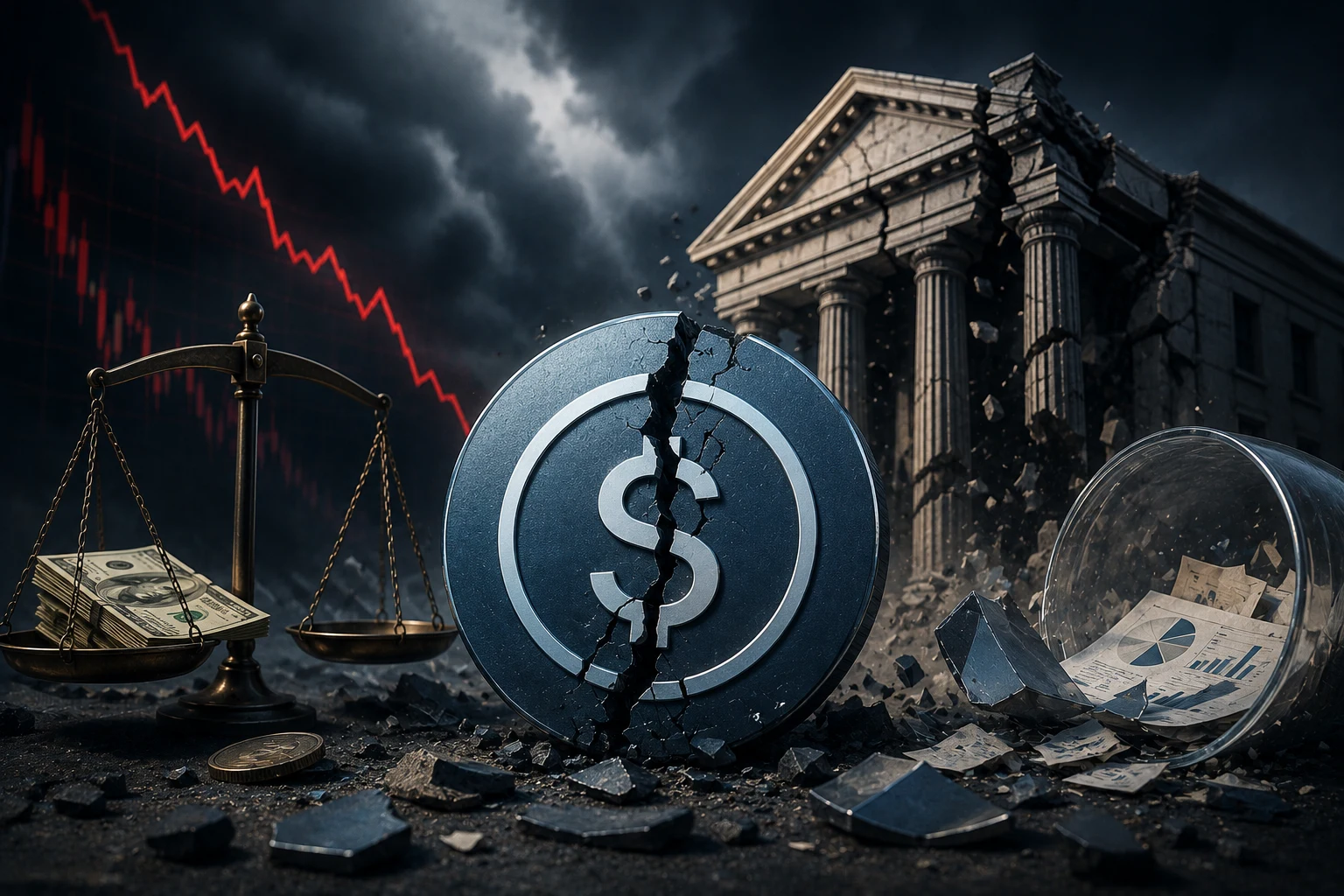
The closest thing to a real-world stress test happened in March 2023 when Silicon Valley Bank collapsed. Circle, the issuer of USDC, disclosed that approximately $3.3 billion of USDC reserves sat at SVB. Because the FDIC only insures deposits up to $250,000 per depositor, that uninsured cash was at risk of haircuts or delays in a bank failure.
USDC, normally priced at $1.00, traded as low as about $0.87 on certain venues within hours. Curve's 3pool, where USDC, USDT, and DAI trade against each other, saw its balance skew heavily toward USDT and DAI as holders rushed to exit. Circle temporarily paused automatic redemption. Within days the FDIC confirmed all SVB deposits would be made whole, USDC returned to parity, and the crisis passed. But the episode exposed exactly the failure mode that bankruptcy-law skeptics had warned about.
Notice what the SVB case was not. SVB itself did not go bankrupt in a way that triggered a stablecoin issuer bankruptcy. The bank was placed into FDIC receivership, which is a different legal process with different priorities. FDIC insurance was extended by exception, not by law. If a smaller bank had held a similar exposure and the FDIC had not intervened, USDC holders would have waited in line behind every other unsecured creditor of Circle while the estate was administered.
USDC, USDT, and DAI: three very different legal structures
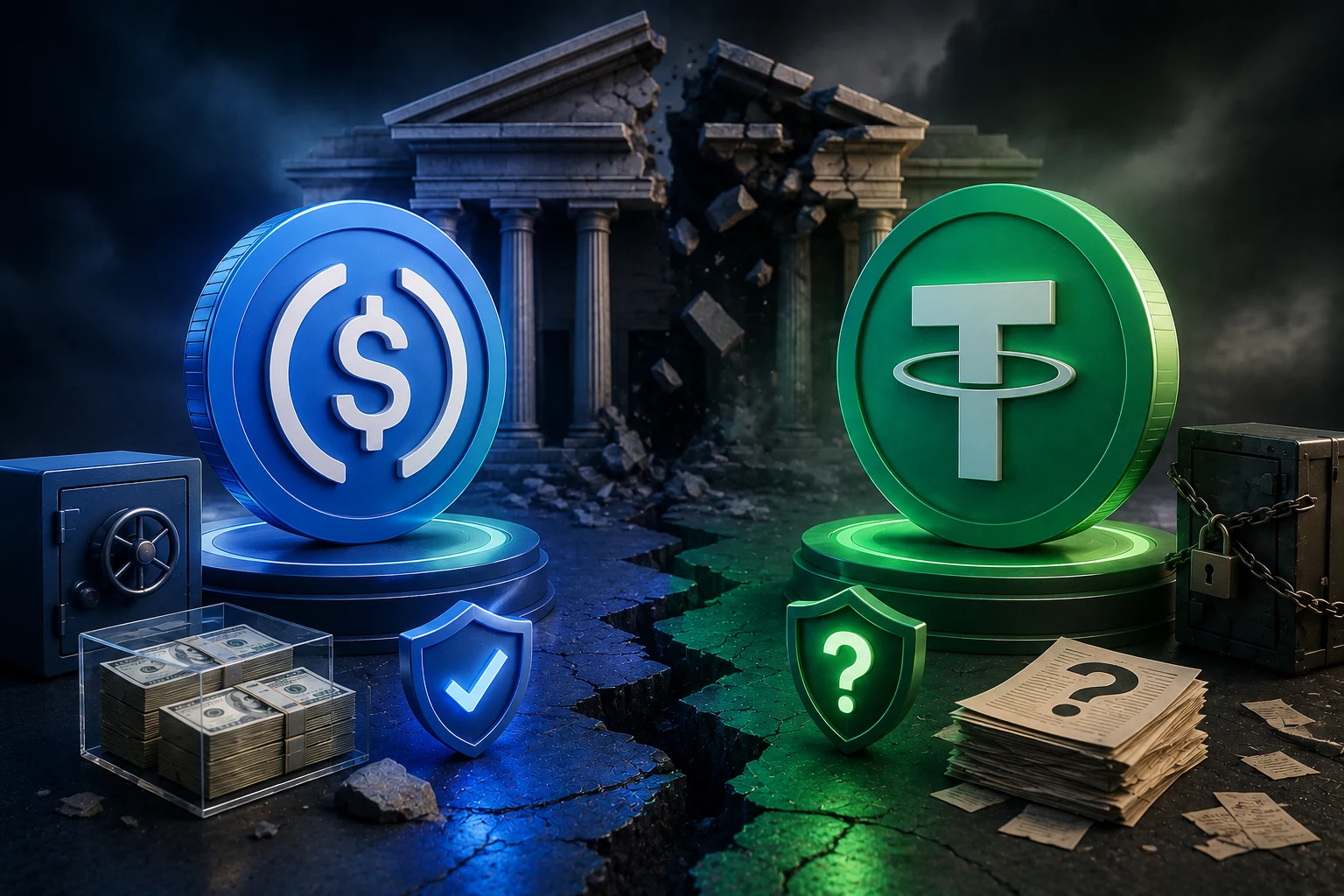
USDC is issued by Circle Internet Financial, a US-incorporated company headquartered in Boston. Its terms of service and reserve attestations describe holders as unsecured creditors. The reserves are held in cash at US banks, short-dated US Treasuries, and repurchase agreements, but those assets remain on Circle's balance sheet. A US bankruptcy filing would follow Chapter 11 or Chapter 7 and apply US bankruptcy law to all holders globally.
USDT is issued by Tether Limited, incorporated in the British Virgin Islands. Tether's terms explicitly say USDT is not backed by a deposit insurance regime and that redemptions may be suspended in cases of insolvency. The legal opinion Tether publishes, from a BVI firm, describes holders as unsecured creditors of a BVI company. A Tether bankruptcy would unfold under BVI law, with creditors competing against each other in a jurisdiction that has handled very few cases of this scale. The reserves are reportedly held across a mix of cash, Treasuries, and other instruments, with disclosure standards notably less granular than Circle's.
DAI, now branded as part of the Sky protocol, is the outlier. DAI is not issued by a centralized company holding dollar reserves. It is minted when users lock collateral into MakerDAO vaults and burned when that collateral is withdrawn. There is no traditional corporate issuer, no reserve pool managed by a single legal entity, and no "DAI Inc." to file for bankruptcy. The closest analog to an issuer bankruptcy would be a catastrophic failure of the DAO's smart contracts or the governance token losing value to the point where the system cannot defend its peg. Both scenarios are theoretical, but neither involves a bankruptcy court.
USDP and PYUSD, both issued by Paxos Trust Company under New York Department of Financial Services supervision, use a different model. Paxos holds customer assets in segregated trust accounts, which under New York banking law gives holders a claim against those specific assets rather than against Paxos's general balance sheet. Whether this survives a real test in court is uncertain, but the legal posture is materially stronger than USDC's or USDT's.
The graveyard of failed stablecoin projects
Several issuers have already exited, and their failures are useful evidence. Basis Cash raised more than $130 million in 2019 and shut down before launch because US regulators signalled that its algorithmic design looked like a security. Investors were reportedly made whole in stablecoin form, but only because the founders chose to refund voluntarily. There was no bankruptcy proceeding to test the legal structure.
TrustToken rebranded and changed legal structure multiple times before TrueUSD was acquired by a new operator in 2024. The early TrustToken entity was reorganized under BVI law, illustrating how easily an issuer can move its legal home, and its legal exposure, across jurisdictions.
TerraUSD (UST), the algorithmic stablecoin from Terraform Labs, collapsed in May 2022 and wiped out roughly $40 billion in value. Its failure was not a traditional bankruptcy in the corporate sense; it was a death spiral in which the mint-burn mechanism failed and the linked token LUNA hyperinflated. Holders had no bankruptcy court to petition. They had a smart contract that had ceased to function.
The pattern across these cases is consistent. Few issuers face a traditional corporate bankruptcy because the structures are deliberately lightweight, often offshore, and frequently abandoned before a court test. When a stablecoin does fail at scale, it is usually through a mechanism failure, not a courtroom process.
What a real issuer bankruptcy would actually look like
Suppose a major issuer with US banking relationships and large institutional holders files for Chapter 11 in New York. The filing would trigger an automatic stay, meaning all redemption requests and transfers would pause immediately. A bankruptcy trustee or debtor-in-possession would take control of reserves and operations. The bankruptcy court would set a claims bar date, after which holders would have to file a formal proof of claim stating how many tokens they held and when.
Secured creditors, usually the issuer's banks, would negotiate priority or roll over their positions. Administrative creditors and employees would be paid first under the priority rules. Holders would then compete with trade suppliers, contract counterparties, and any subordinated debt for whatever remained. Realistic recoveries for unsecured creditors in distressed bankruptcies often fall between zero and fifty cents on the dollar, with payouts stretched over years.
If the issuer sat in the BVI, the process would be slower and less familiar. BVI courts can appoint liquidators and administer estates, but they have limited crypto-specific expertise and a smaller bench. Cross-border enforcement, especially for reserves held in US banks or custodians, would add complexity. Holders would likely wait longer for less money.
The honest summary is that holders would recover less than they expected, later than they expected, with the legal outcome determined by lawyers and judges rather than by code or marketing copy.
How to think about this as a holder
For retail holders, the practical lesson is that diversification across issuers and structures is more than a yield strategy. Holding USDC, USDT, and DAI is also a legal diversification, because each sits in a different jurisdiction and a different claim regime. Concentration in a single issuer, especially one with weak disclosure or an opaque structure, concentrates legal risk as well as price risk.
For institutional holders, the response is closer diligence. Review the issuer's terms of service for the word "unsecured." Read the reserve attestation and check whether the auditor is a reputable firm. Look for segregation language and trust structures where they exist. Treat any claim of "fully backed" as a description of balance-sheet accounting, not as a guarantee of payout in a bankruptcy.
None of this is investment advice. Nothing here tells you which stablecoin to hold or whether stablecoins are a good idea. The goal is to make sure that if you hold these tokens, you hold them with a clear understanding of where you would stand if things went wrong.
How to follow stablecoin risk the smart way
Stablecoin issuer risk moves quietly most of the time and then moves violently when a bank fails or an attestation goes missing. Tracking which issuer holds reserves at which bank, who audits the books, and which jurisdictions govern redemption requires more than a casual Twitter check. Zippfeed surfaces stablecoin headlines with sentiment scoring (bullish, neutral, or bearish) and an importance rating, so you can spot a reserve change or a regulatory filing the moment it breaks, not the morning after a depeg.





 CryptoSlate
 CoinDesk
 Crypto News
 CoinTelegraph