More than just a bag of coins
Many people start in crypto by buying a coin, then another, then a few more during moments of excitement — and end up with a random pile of holdings they have never really thought about as a whole. A crypto portfolio is that whole, considered deliberately. Treating your holdings as a portfolio rather than a collection of impulse buys is one of the biggest mindset shifts toward investing sensibly instead of gambling.
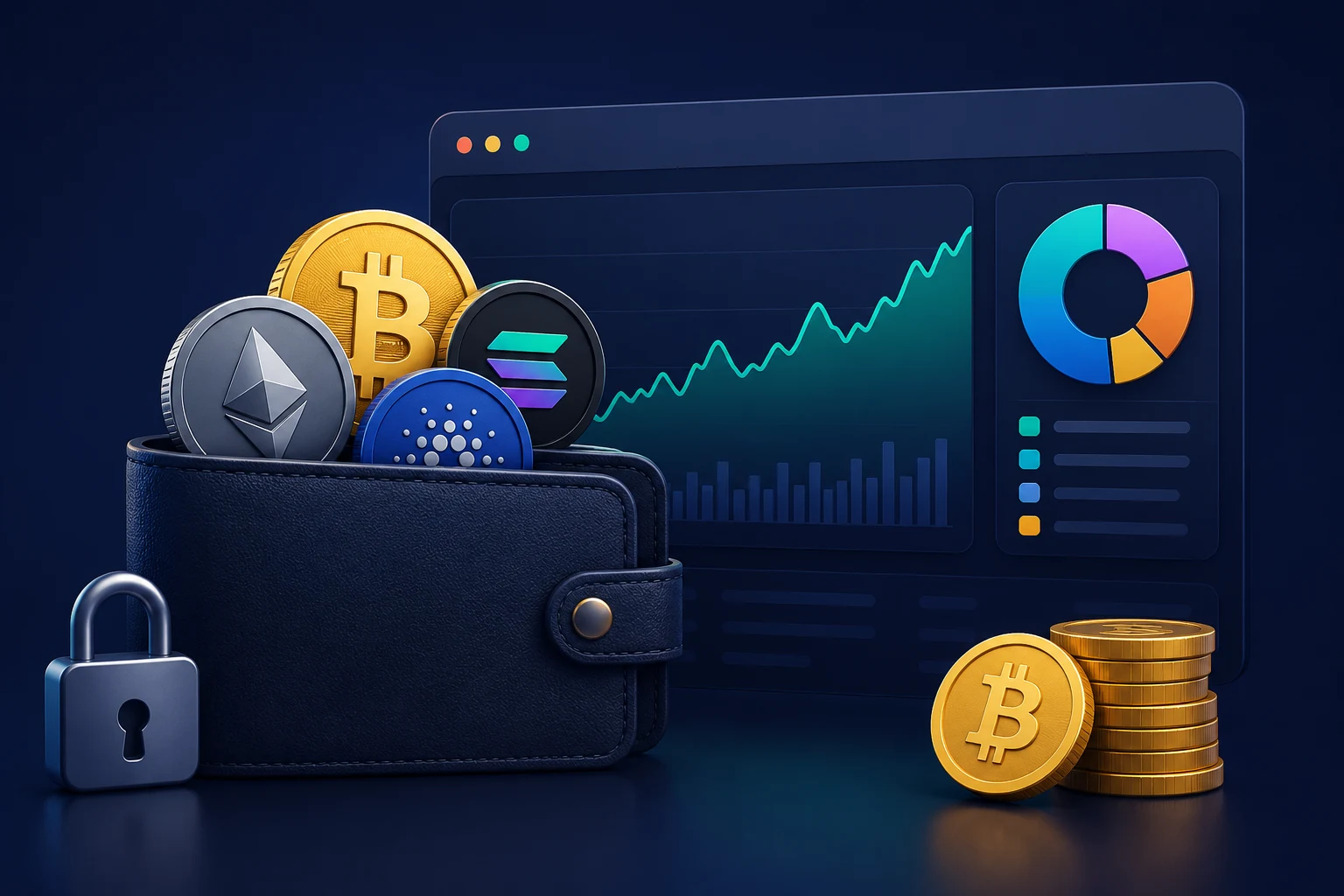
A crypto portfolio is the total collection of cryptocurrencies and crypto-related assets you own, together with how your money is distributed across them — your "allocation." The key word is *managed*: a portfolio is something you shape intentionally based on your goals and risk tolerance, not just whatever you happened to buy.
The core ideas of portfolio thinking
Allocation
Allocation is how you divide your money across different assets. A portfolio that is 90% in one volatile altcoin is very different in risk from one spread across Bitcoin, Ethereum, and a few others. Your allocation reflects your bets and your risk — and is worth deciding deliberately rather than by accident.
Diversification
The old wisdom of not putting all your eggs in one basket applies, with caveats. Spreading holdings across different assets can reduce the impact of any single one collapsing. But crypto diversification has a catch: crypto assets often move together, especially in downturns, so holding ten coins is not as diversified as it might feel. True diversification may mean holding assets outside crypto entirely — and remember, diversification reduces some risk but never eliminates it.
Risk and position sizing
How much you put into any single asset — and into crypto as a whole — is arguably more important than which coins you pick. The cardinal rule, repeated because it is repeatedly ignored: never invest more than you can afford to lose entirely. Crypto is volatile and high-risk, and position sizing is your main defense.
A common-sense way to structure a portfolio
There is no single "correct" portfolio, and this is not investment advice — but a few principles guide most sensible approaches:
- Anchor with the established. Many portfolios weight more heavily toward larger, more established assets like Bitcoin vs Ethereum, reserving smaller allocations for riskier bets.
- Size risk by quality. The more speculative an asset (a meme coin, a tiny altcoin), the smaller its share should be. You can take a small swing without betting the portfolio.
- Match it to your goals and timeline. A long-term holder and a short-term trader should hold very different portfolios.
- Keep a clear head about why you own each asset. If you cannot explain why something is in your portfolio, that is a signal.
Managing a portfolio over time
A portfolio is not "set and forget." Good management includes:
- Tracking. Know what you hold, what it is worth, and how it is performing. Portfolio trackers help.
- Rebalancing. Over time, winners grow and losers shrink, drifting your allocation away from your plan. Periodically adjusting back toward your intended allocation is a discipline that enforces "buy low, sell high" mechanically.
- Reviewing your reasons. Markets and projects change. Periodically ask whether your original reasons for holding still apply.
- Minding taxes. Remember that selling and rebalancing can trigger taxable events — see our crypto taxes guide.
Common portfolio mistakes
- Over-concentration in a single asset or in hyped coins.
- Chasing pumps and abandoning any allocation plan during euphoria.
- Ignoring security. A great portfolio stored carelessly is at risk — read how to store crypto securely.
- No exit thinking. Having no plan for when or why you would sell.
- Investing money you need. The fastest route to forced selling at the worst time.
Manage with clear information
A portfolio is only as good as the decisions behind it, and good decisions need a clear read on the market rather than reactive emotion. Zippfeed tracks crypto news with sentiment and importance scoring across your assets' ecosystems, so you can stay informed about what's affecting your holdings and make calmer, better-grounded portfolio decisions instead of reacting to whatever headline is loudest.