Dogecoin in context
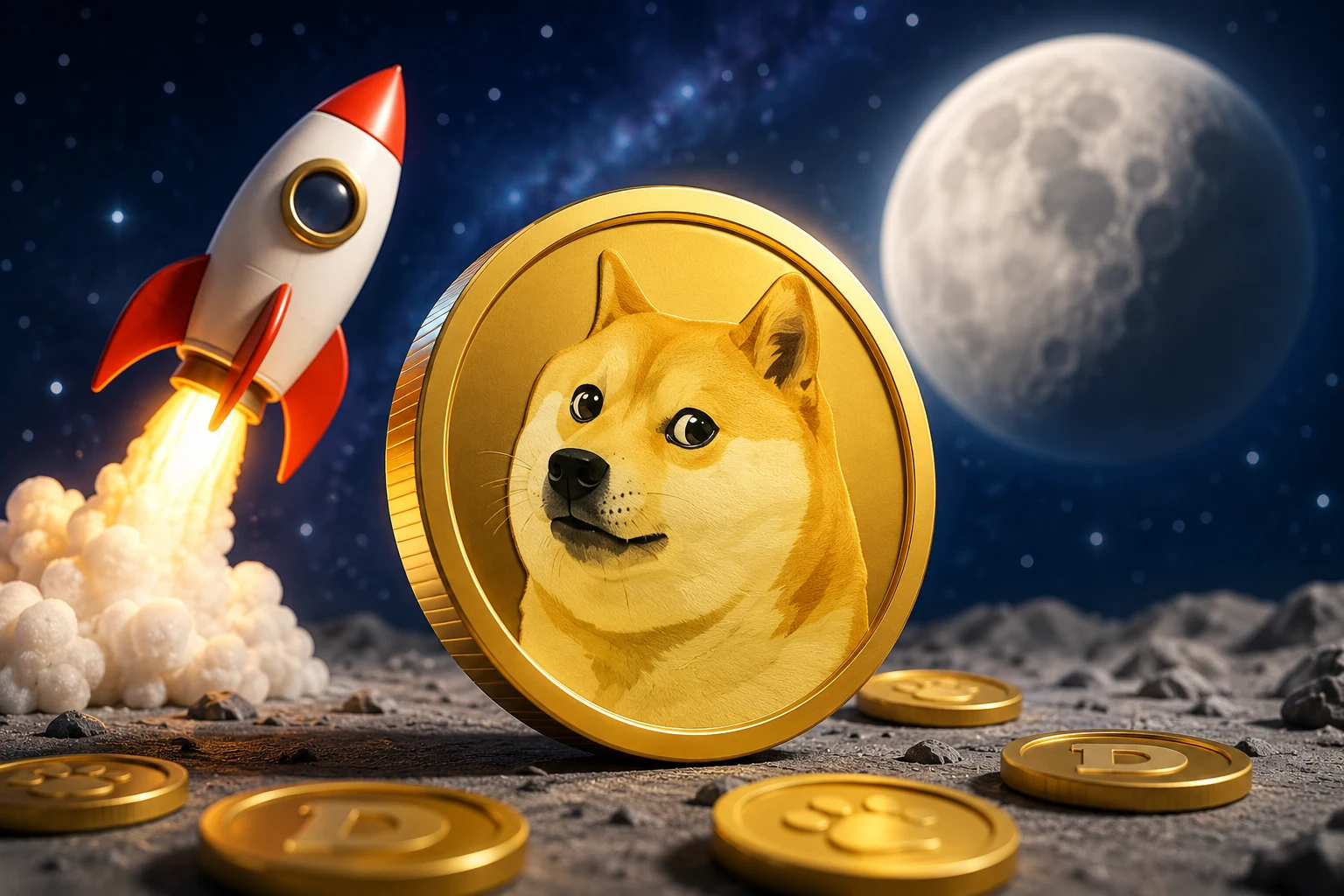
In December 2013, software engineers Billy Markus and Jackson Palmer launched Dogecoin as a parody of the proliferating altcoin scene. The logo was a Shiba Inu meme; the brand voice was deliberately silly. The intent was almost satirical — a coin to make fun of how seriously the early crypto industry took itself.
It was not supposed to last. Twelve years later, Dogecoin is consistently a top-ten cryptocurrency by market cap, accepted by some major merchants and has lived through multiple speculative cycles. It is one of the strangest accidental success stories in crypto.
How Dogecoin works
Core innovation: a friendly Bitcoin-Litecoin clone
Technically, Dogecoin is a Litecoin fork — which itself is a Bitcoin fork. It uses scrypt proof-of-work mining, the same algorithm Litecoin uses, and runs blocks about every minute. That fast block time was a deliberate choice to make DOGE feel snappier for small payments.
For years, Dogecoin has been merge-mined with Litecoin, meaning miners can produce blocks on both chains simultaneously. This shares hashpower between the two networks and is one of the reasons DOGE has remained secure without a dedicated mining base.
Permanently inflationary supply
This is the most important technical fact about Dogecoin. Unlike Bitcoin's 21 million cap or Litecoin's 84 million, DOGE has no maximum supply. About 10,000 new DOGE are minted every block, which works out to roughly five billion new DOGE per year forever.
That's a deliberate design choice, not a flaw. The original idea was that an unlimited, low-friction supply would discourage hoarding and encourage spending and tipping. In practice it means DOGE has built-in inflation: every year there are roughly 5 billion more coins, and unless demand grows in step, that puts downward pressure on price.
What the DOGE token is for
DOGE has three real uses:
- Tipping and small payments. The original use case — small, fast, low-cost transfers between users.
- Merchant payments. Some major merchants accept DOGE directly or via payment processors.
- Speculation. Honestly, the dominant use today. Most DOGE volume is people trading the price.
There's no native staking, no DeFi ecosystem, no smart contracts. DOGE is intentionally simple — pay or trade, nothing else.
The ecosystem
Dogecoin's "ecosystem" is mostly cultural and community-driven, not technical.
- Payment integrations. BitPay, NOWPayments and similar processors support DOGE; some large merchants accept it.
- The community. The Dogecoin community is one of crypto's oldest and most active — fundraisers, charity drives, sports sponsorships.
- Elon Musk. Tesla briefly accepted DOGE for merchandise, X (Twitter) added DOGE-themed icons during Musk's first months and SpaceX accepted DOGE for the DOGE-1 satellite mission. His tweets reliably move price.
- Layer 2 attempts. There have been several attempts to bring smart contracts to Dogecoin via sidechains, none of which has reached broad usage.
Dogecoin vs Bitcoin: honest comparison
This is the most common question and the comparison reveals what DOGE actually is.
Bitcoin has a fixed 21 million supply, a sophisticated narrative around being a hedge against monetary debasement and the largest institutional investor base in crypto. DOGE has permanently expanding supply, no comparable monetary narrative and a market cap driven by social-media sentiment.
On payments, the gap is smaller. DOGE confirms in about a minute with very low fees — comparable to Bitcoin via Lightning for everyday spending. Where DOGE wins is brand recognition for tipping; where Bitcoin wins is settlement assurance, ecosystem depth and the institutional trust to underpin large transactions.
None of this is investment advice — it's framing. DOGE is closer to a cultural phenomenon backed by a network than to a tech bet on superior infrastructure.
The risks worth knowing
- Elon Musk concentration risk. A single person's social posts have been a primary price catalyst for years. That is unusual and creates real volatility you cannot model.
- Permanent inflation. Five billion new DOGE per year forever means demand must grow continuously just to hold price flat.
- Limited utility. Beyond payments and speculation, DOGE doesn't do much. No smart contracts, no native DeFi, no staking rewards.
- Whale concentration. A small number of addresses hold a large fraction of supply — a single seller can move the market.
- Volatility. Multi-hundred-percent moves in days are normal for DOGE. Position size accordingly.
If you are new to crypto, this is not the asset to learn on. Start with how to buy crypto safely and understand the basics before touching a meme coin.
Following Dogecoin without the hype cycle
Dogecoin is the clearest example of a crypto where sentiment drives price more than fundamentals — which means you need a way to track sentiment honestly, not get pulled into it. Zippfeed surfaces DOGE headlines with sentiment scoring (bullish, neutral or bearish) and importance rating, so you can see whether a Musk tweet is being amplified by real news or just by social-feed reaction. That's the difference between reading the signal and being part of the noise.

 WuBlockchain
 TheBlock
 CoinDesk