What is the WLFI token, in plain terms
World Liberty Financial describes itself as a decentralized finance platform built on Ethereum and BNB Chain. The WLFI token is the project's native governance token. In theory, holders vote on decisions such as fee parameters, treasury spending, and partnerships. In practice, the project's marketing has leaned heavily on its political associations, which is why a lot of readers arrive at the topic through news headlines rather than through crypto-native channels.
It is worth separating two things that often get blurred. The first is the project itself, which includes a lending product, a liquidity layer, and a dollar-pegged stablecoin called USD1. The second is the token, which is sold to investors as a way to participate in that project's direction. Holding WLFI does not give you a share of company profits, a dividend, or a guaranteed claim on assets. It gives you voting weight, and voting weight is only worth as much as the underlying treasury and protocol usage.
The reason this distinction matters is that governance tokens in crypto have a mixed track record. Some, like Uniswap's UNI or Aave's AAVE, became valuable because the protocols they govern earn real fees from real users. Others, including a long list of politically themed or celebrity-adjacent launches, traded on narrative and faded once the narrative cooled. Which category WLFI ends up in is the only question that matters for someone considering exposure.
Real risks for WLFI holders before anything else
Before going further into the mechanics, it helps to put the failure modes on the table. Governance tokens that double as political memorabilia carry risks that pure-utility tokens do not.
Concentration risk. Presale documents and on-chain analysis suggest a small number of wallets hold a large share of the WLFI supply. When a token has heavily concentrated ownership, a single decision by a few insiders can swing market sentiment. This is true of many tokens, but it is more acute when the token has limited utility and depends on secondary demand.
Regulatory risk. WLFI's marketing has made its political associations part of its brand. That cuts both ways. Proponents argue it gives the project access and visibility. Critics, including several U.S. legislators, have raised conflict-of-interest concerns. Either way, regulators around the world have shown growing interest in token sales that resemble unregistered securities, and a politically exposed project invites a level of scrutiny that an anonymous protocol rarely attracts.
Token unlock risk. Even when trading does open, tokens sold in presales often sit under lockup or vesting schedules. When those cliffs release, supply expands suddenly. The classic pattern is a quiet market while insiders wait, followed by heavy selling the moment vesting ends. Anyone buying WLFI on a secondary market needs to know the unlock calendar, because the people who got in at a fraction of a cent per token have very different economics from a public market buyer.
Reputational and liquidity risk. Tokens tied to a single public figure tend to trade on news cycles about that figure. If the news flow turns negative, liquidity often thins at exactly the wrong moment. Holders may find that bids disappear when they want to exit.
How the WLFI presale actually worked
World Liberty Financial ran two main rounds of token sales. The first was a private sale offering tokens at $0.015 each, and the second raised the price to $0.05. In total, the project publicly reported raising around $550 million across both rounds, although the exact composition between cash, commitments, and stated token amounts has been the subject of clarification and correction during 2025.
Most of the supply was not sold to the general public. The early rounds were structured for accredited investors, institutional participants, and certain non-U.S. buyers who met local eligibility rules. Reports from outlets that reviewed early offering documents suggested that a meaningful share went to a relatively small number of wallets, including those associated with the project's founders, advisers, and affiliated entities.
This structure is common in token sales, but it sets up a specific dynamic. A retail buyer who later picks up WLFI on a secondary market is almost always paying a higher price than the insiders who funded the presale. The insiders are also typically subject to lockups or vesting, which delays but does not eliminate the moment when their tokens become sellable. Anyone evaluating WLFI should treat the difference between the presale price and the public market price as the insiders' paper profit, and assume that profit can become selling pressure.
Governance-only, and what that actually means
At launch, WLFI was distributed as a non-transferable token. Holders could see their balance in a compatible wallet, they could connect that wallet to the project's governance interface, and they could vote on proposals that the team put forward. They could not send WLFI to another wallet, list it on a decentralized exchange without the project's approval, or sell it on the open market.
The project has signalled plans to make the token transferable in stages, subject to regulatory review. Until that happens, there is no continuous public price. Quotes circulating on price-tracking sites reflect either presale reference prices, OTC trades, or synthetic instruments rather than a deep, liquid spot market.
Governance-only status is often presented as a feature. In a bull case, it means the team can ship a working product before letting speculative trading distort incentives. In a bear case, it means the project's only liquidity event is whatever the team later decides to allow, on terms the team later decides to set. There is no neutral reading. The same feature is a shield against mercenary capital in one framing, and a gatekeeping tool in another.
The USD1 stablecoin connection
USD1 is the dollar-pegged stablecoin issued by World Liberty Financial. It is fully reserved and reportedly backed by short-dated U.S. Treasuries and cash equivalents, with attestations published by an independent accounting firm. The pitch is that USD1 is a transparent, conservative dollar token aimed at institutional and cross-border use.
The connection to WLFI is the project's main claimed cashflow story. Stablecoin issuers typically earn yield on the reserves backing their tokens. A portion of that yield, under the right structure, can flow to a project treasury. If governance token holders ultimately control that treasury, then the value of WLFI is tied to how much USD1 mints, holds, and earns over time.
There are two problems with treating this as a clean investment thesis. The first is that WLFI holders do not have a contractual claim on USD1 revenue. Any yield transfer to the treasury, and any treasury spend, is subject to governance votes that the core team and large token holders can influence. The second is that USD1 competes with USDT and USDC, two stablecoins with years of liquidity, exchange listings, and audited reserves. Standing up a serious dollar token from a standing start is hard even for a well-funded, politically neutral team.
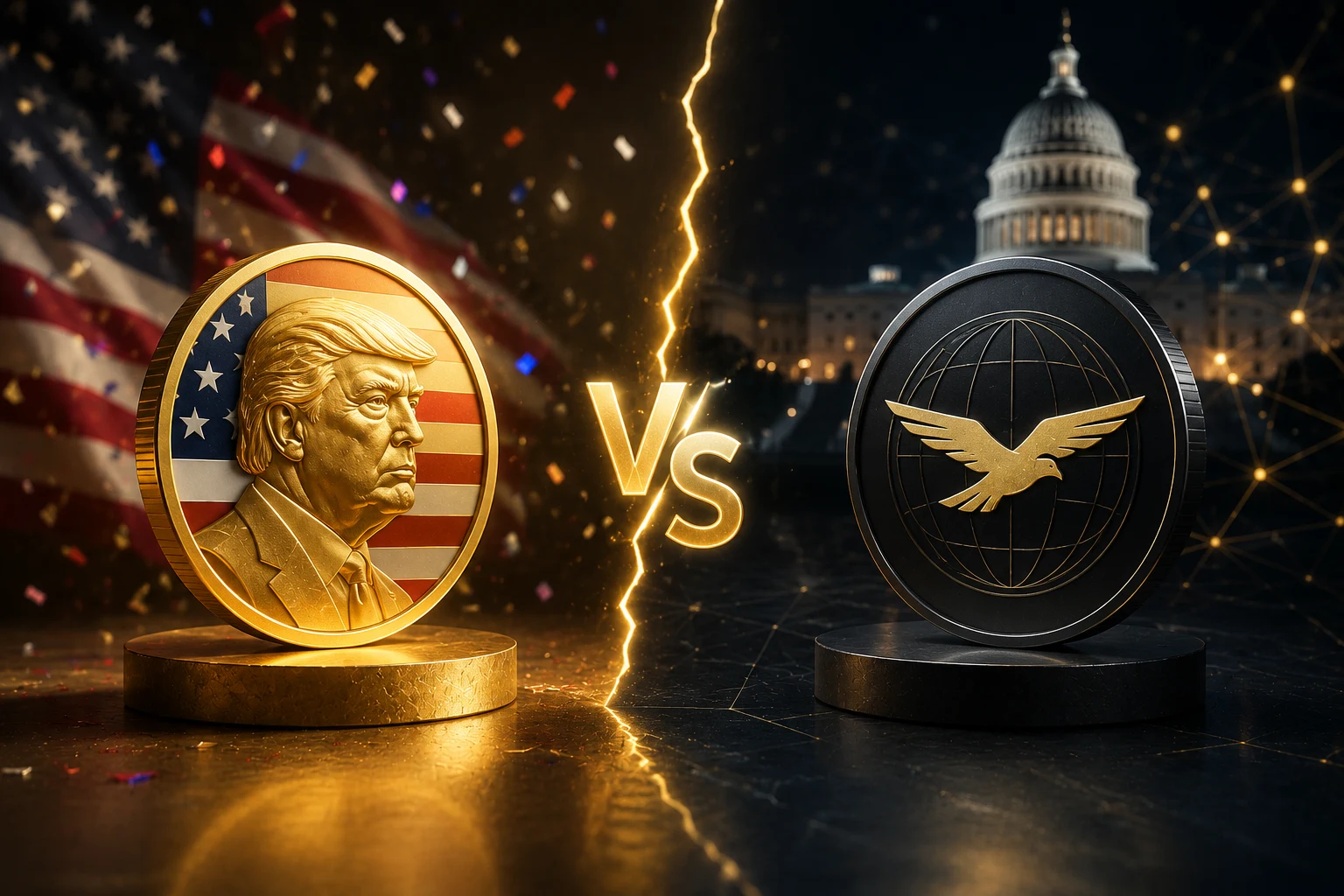
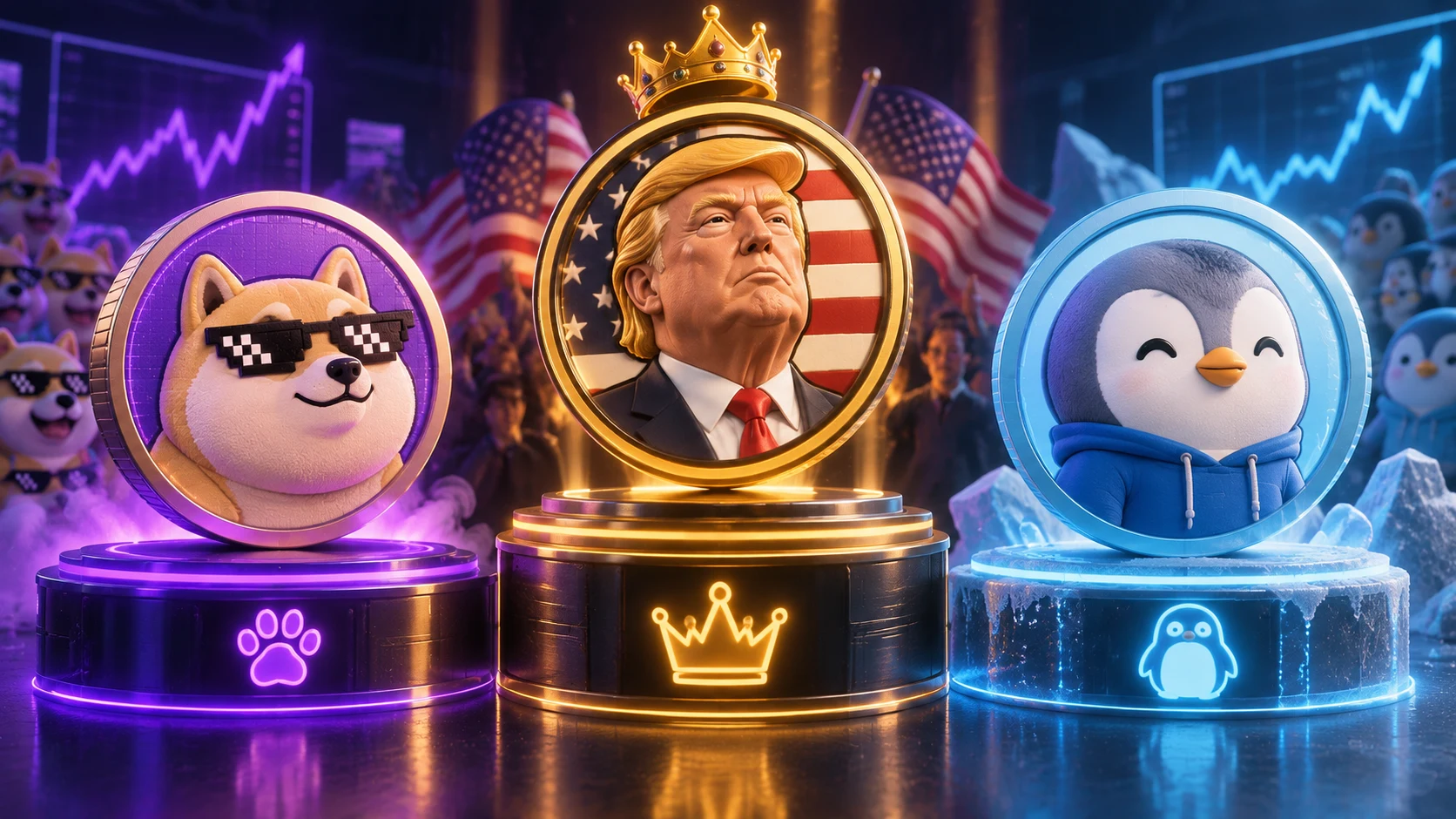
How WLFI compares to the TRUMP memecoin
The TRUMP memecoin launched in early 2025 as a Solana-based token with no utility, no presale, and no governance function. It was distributed partly to the founding team and partly to a wide group of early buyers, with a small share reserved for public trading from day one. It traded as a pure attention asset, with price driven by social media mentions, listings, and news cycles.
WLFI is structurally different in three ways. It is on Ethereum and BNB Chain, it claims governance rights, and it ties itself to a revenue-generating stablecoin. In every other way that matters for a price chart, however, WLFI behaves like a thematic or memecoin asset. Demand depends on enthusiasm for the brand, on media coverage, and on a small group of holders. There is no cash dividend, no earnings report, and no fundamental metric that can be updated quarterly the way a public company updates them.
The honest framing is this: WLFI is a governance token with memecoin-style demand drivers. The TRUMP memecoin is a memecoin with no governance layer. Neither structure guarantees a return, and neither protects a buyer from the same basic risk, which is paying a price that depends on what the next buyer is willing to pay.
What lockup and vesting really look like
Lockup and vesting schedules are where token economics get real. A presale token with a long vesting cliff and a long tail of unlocks is, economically, very different from a token that unlocks all at once. The first creates a slow supply expansion that markets can absorb. The second creates a wall of supply that markets often cannot.
World Liberty Financial has published parts of its distribution and has updated the public on certain lockup extensions. The headline picture, as of late 2025, is that insiders and early investors remain restricted from selling a meaningful portion of their tokens until specific dates, and that further unlocks will continue beyond that. A retail buyer who enters the market after trading opens should map out the unlock calendar before sizing a position.
There is also a subtler risk: vesting schedules can be amended by governance vote. A token holder base that includes the core team and aligned insiders is unlikely to vote against changes that benefit insiders. This is not unique to WLFI. It is a structural feature of governance tokens with concentrated ownership. Buyers should treat the published schedule as a baseline, not as a guarantee.
How to follow World Liberty Financial WLFI the smart way
WLFI moves on a combination of crypto news, political news, and stablecoin industry developments, and the relevant signals change quickly. Manually tracking each thread, from governance forum posts to USD1 minting data to U.S. legislative hearings, is impractical for most holders. Zippfeed surfaces World Liberty Financial headlines with sentiment scoring (bullish, neutral, or bearish) and an importance rating, so you can separate noise from the updates that actually affect your position.

 WuBlockchain
 CoinTelegraph