








 CoinDesk
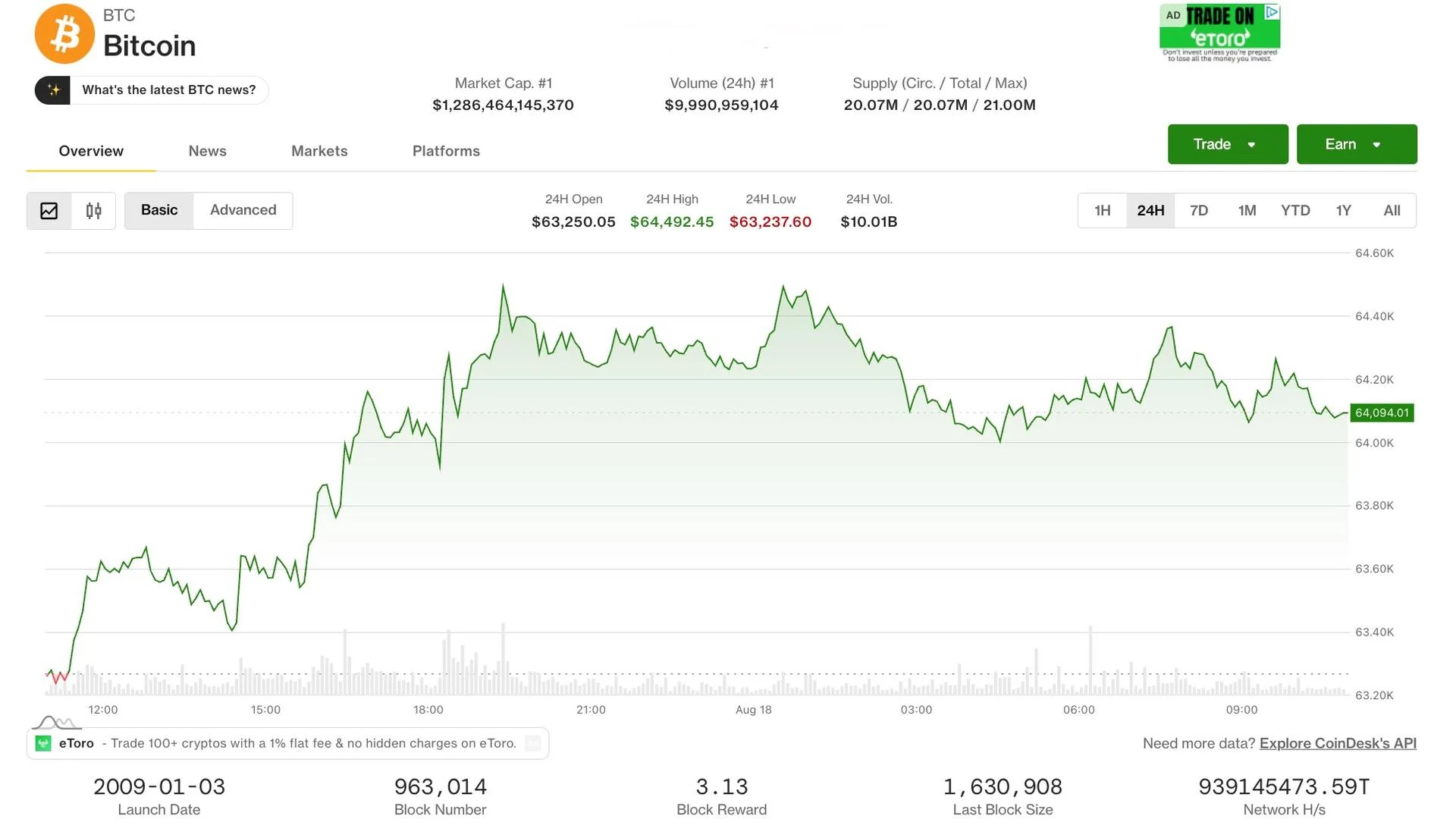



BTC paused at $64,000 on Tuesday, down 0.6% since midnight UTC, as Nasdaq 100 futures slipped 1.1% and Brent crude returned to $94 a barrel after a 60-day US-Iran ceasefire expired Monday without a deal. Rising bond yields added to the pressure ahead of a stacked Wednesday calendar: the Federal Reserve's July FOMC meeting minutes drop the same morning President Trump is expected to meet crypto industry executives at the White House.
Why it matters
The macro drag is the obvious read, but BTC's own derivatives tape tells the opposite story. The long-short taker volume ratio on crypto futures flipped decisively from neutral to bullish, with longs accounting for more than 51% of flow as BTC outperformed US equities on Monday. Perpetual funding rates surged to a 20-month high, indicating futures are trading at a clear premium to spot. Open interest has held near 750,000 BTC for weeks, suggesting the bullish positioning is sticky rather than reactive.
The divergence between BTC's internal bid and the macro tape is the trade going into Wednesday. Two consecutive softer inflation prints have markets uneasy about what the Fed minutes will reveal, and a $94 handle on Brent adds an energy-inflation layer the committee will have to weigh.
Market impact
The bullishness is concentrated in BTC, not the broader market. ETH, SOL, LTC, LINK and DOGE all show negative 24-hour cumulative volume deltas, meaning the bid is selective rather than sector-wide. XLM is the cleanest bearish setup: down 3% to 15 cents since midnight, OI up 3.5% to its highest since June 4, and annualized funding rates at minus 28%, pointing to aggressive shorting via market orders.
Volatility is unusually compressed. BTC and ETH 30-day implied volatility indexes sit at the year's lows, and TDX Strategies is positioning for December optionality across BTC and select altcoins. On Deribit, the $70,000 BTC call expiring September 25 was the most-traded option over 24 hours, suggesting traders are paying for upside rather than hedging against a breakdown. The spread between a complacent volatility market and a heavily long futures book is the tension Wednesday's catalysts will resolve.





Frequently asked questions
-
Why is BTC stalling at $64,000?
BTC is down 0.6% since midnight UTC as Nasdaq 100 futures slipped 1.1% on rising bond yields. Brent crude returned to $94 a barrel after a 60-day US-Iran ceasefire expired without a deal, adding inflation uncertainty ahead of Wednesday's Fed minutes.
-
Why are BTC perpetual funding rates at a 20-month high?
Funding rates have surged as longs dominate flow after BTC outperformed US equities on Monday. The long-short taker volume ratio flipped decisively bullish, with longs accounting for over 51% of flow, per CryptoQuant data. Positive funding means futures trade at a premium to spot.
-
What will the Fed's July FOMC minutes reveal?
The minutes from the Fed's July 28-29 meeting will be released Wednesday. Markets are uneasy about what they will show after two consecutive softer inflation prints, with rising bond yields reflecting positioning for a hawkish read.
-
Why is XLM the cleanest bearish setup?
XLM dropped nearly 3% to 15 cents since midnight, its lowest since May 27. Open interest rose 3.5% over 24 hours to its highest level since June 4, with annualized funding rates at minus 28%, pointing to aggressive shorting via market orders.
-
What is the White House crypto meeting about?
President Trump is expected to meet with crypto industry executives at the White House on Wednesday. US policy has been a key driver of recent price action, contributing to bitcoin's stop-start range-bound performance.
 WatcherGuru
 CryptoSlate
 CoinTelegraph
 TheBlock