








 WatcherGuru

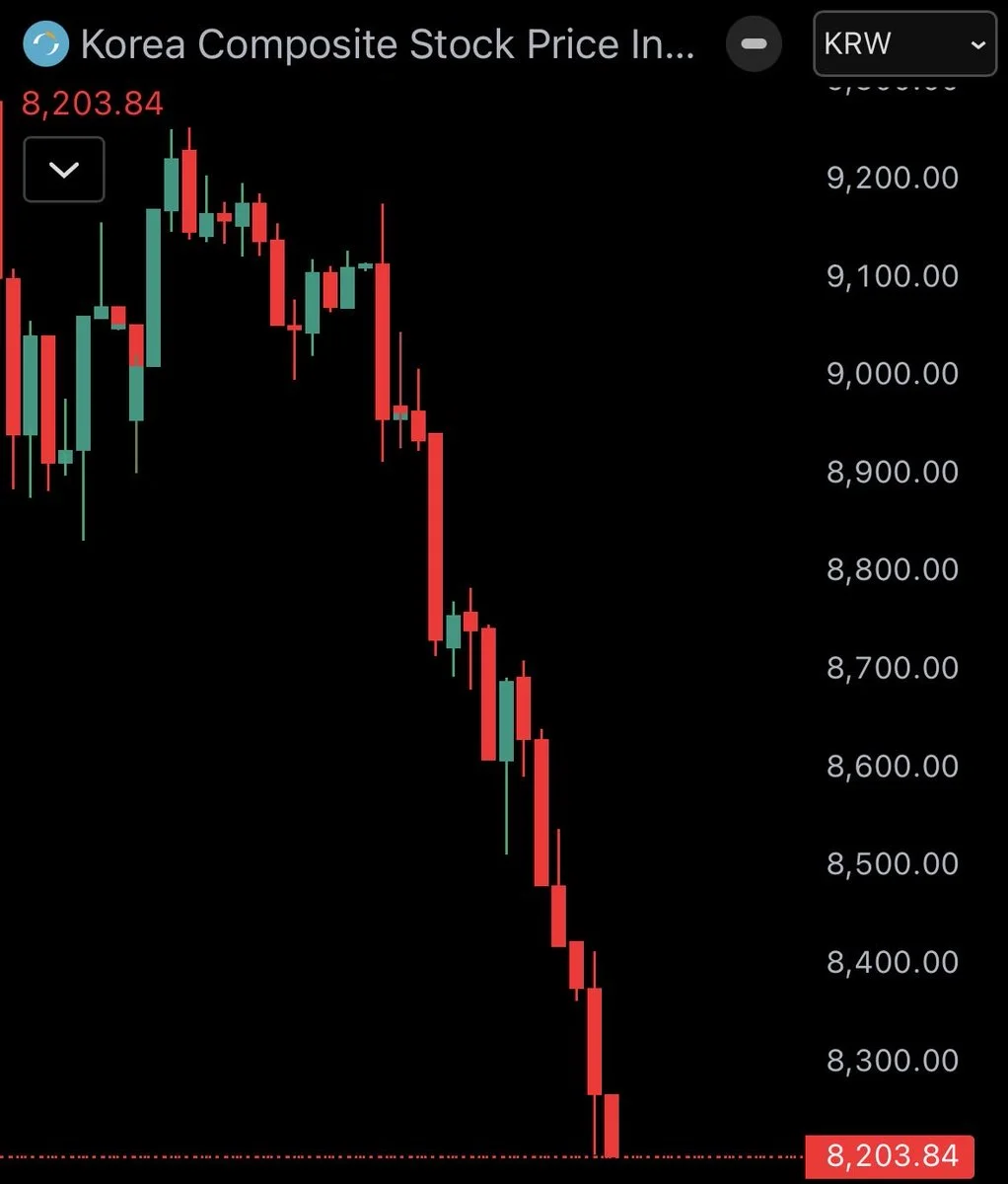
South Korea's benchmark KOSPI index plunged roughly 10% in a single session, marking one of the steepest single-day declines in the index's history and reigniting a global risk-off pulse across Asian markets. The selloff extends a stretch of heavy outflows from Korean equities, with the won also under pressure as foreign investors unwind positions.
Why it matters
KOSPI is a heavyweight in the MSCI Emerging Markets index and a key barometer for global risk appetite. A 10% single-session drop of this magnitude tends to cascade into Hong Kong, Tokyo, and European opens, while forcing a sharp repricing of Korean won-denominated credit. Korea's export-heavy economy makes the index a proxy for global trade sentiment, not just domestic flows.
Market impact
Crypto markets historically treat sharp Asian equity routs as a liquidity event first and a sentiment event second. Watch the KRW/USD cross, won-stablecoin volumes, and the timing of US-session opens for confirmation. A forced unwind by Korean institutions with offshore exposure can drag BTC and alt majors in the first hours, even when the underlying trigger is purely equity-side.

Frequently asked questions
-
What happened to the KOSPI index today?
South Korea's benchmark KOSPI plunged roughly 10% in a single session, one of the steepest single-day declines in the index's history, reigniting a global risk-off pulse across Asian markets.
-
Why does a KOSPI crash matter for global markets?
KOSPI is a heavyweight in the MSCI Emerging Markets index and a proxy for global trade sentiment because of Korea's export-heavy economy. Sharp moves cascade into Hong Kong, Tokyo, and European opens.
-
How does a Korean equity crash affect crypto markets?
Crypto typically treats sharp Asian equity routs as a liquidity event first and a sentiment event second. Forced unwinds by Korean institutions with offshore exposure can drag BTC and majors in early hours.
-
Is the Korean won also falling?
Yes, the won came under pressure as foreign investors unwound positions. Watch the KRW/USD cross and won-stablecoin volumes for confirmation of the liquidity pulse.
-
What should traders watch next after the KOSPI crash?
Track the European open, US-session liquidity, KRW/USD, and any policy response from the Bank of Korea. A 10% single-session move of this size often forces a sharp repricing of Korean won-denominated credit.
 CoinDesk
 Crypto News
 Crypto Rank News
 CoinTelegraph
 Benjamin Cowen
 CryptoSlate