








 WuBlockchain

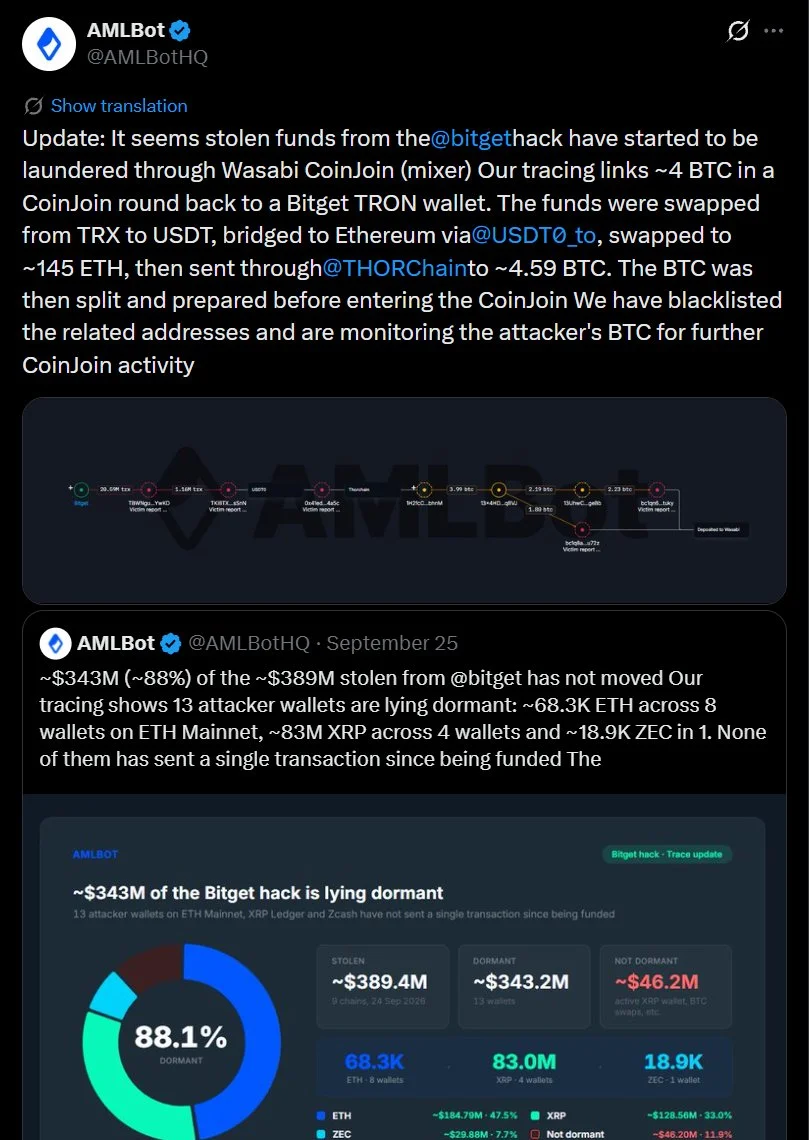
AMLBot said roughly 4 BTC linked to the Bitget theft entered a Wasabi CoinJoin round. The funds began in a Bitget TRON wallet, moved from TRX into USDT, crossed to Ethereum through USDT0 and were swapped into about 145 ETH. They then passed through THORChain and became roughly 4.59 BTC before being split into CoinJoin transactions.
Why it matters
The path illustrates the cross-chain steps used to move and fragment funds after a crypto theft. CoinJoin can make transaction tracing more difficult by combining transfers, while bridges, swaps and cross-chain protocols add further layers to the route.
Market impact
AMLBot said it blacklisted the related addresses and is monitoring the attacker’s BTC for additional CoinJoin activity. The case keeps compliance pressure focused on mixers, cross-chain infrastructure and services that process funds connected to hacks.




Frequently asked questions
-
How much of the Bitget hack did AMLBot trace into CoinJoin?
AMLBot linked roughly 4 BTC from the Bitget theft to a Wasabi CoinJoin round.
-
Which assets did the funds move through before reaching CoinJoin?
The funds moved from TRX into USDT, were swapped into about 145 ETH, and later became roughly 4.59 BTC through THORChain.
-
How did the funds reach the Ethereum network?
The funds crossed to Ethereum through USDT0 after being converted from TRX into USDT.
-
What did AMLBot do with the related addresses?
AMLBot said it blacklisted the related addresses and is monitoring the attacker’s BTC for further CoinJoin activity.
-
Why is the transaction route significant for crypto compliance?
The route combined swaps, a bridge, THORChain and CoinJoin, adding multiple layers to the movement and fragmentation of funds linked to the theft.
 CoinDesk
 Lookonchain
 CryptoSlate