








 CryptoSlate
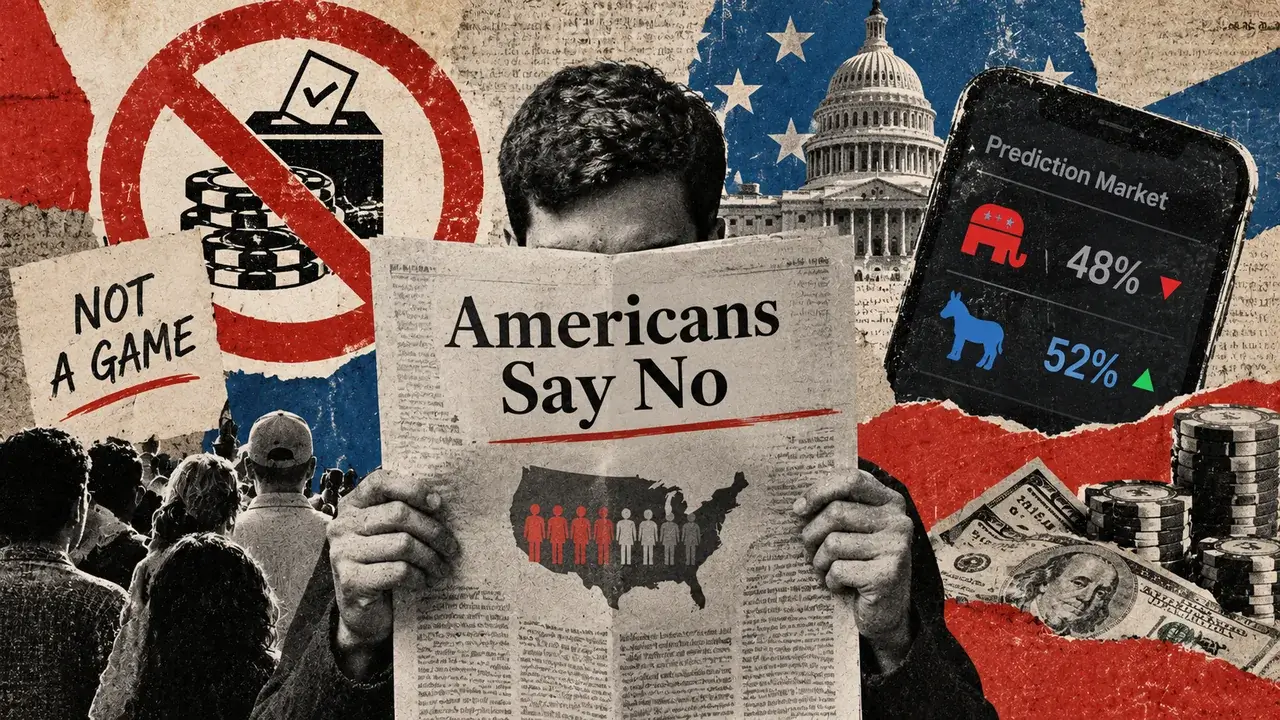


An Ipsos poll published by Reuters found that 69% of Democrats and 61% of Republicans oppose using prediction markets to bet on election results. The survey covered 4,506 US adults from Sept. 30 to Oct. 5, and measured approval of political betting rather than trust in the forecasts themselves. The findings put Kalshi and its peers under pressure to defend both their odds and the business behind them.
Why it matters
Prediction markets turn trades into an implied probability. A contract priced at 60 cents suggests a 60% chance of victory, with buyers and sellers putting money behind opposing expectations. That price can provide a simple, continuously updated election signal, and the same structure can help companies hedge exposure to government decisions.
But the forecast reaches a much wider audience than the traders who create it. Voters do not choose which events platforms list, and they may value an accurate probability while rejecting the idea that elections, military actions, or government policy should become betting products.
The conflict is sharper when participants can affect the outcome. Kalshi said it fined and suspended four congressional candidates for trading on their own races. It also says its rules exclude relevant political insiders and that it screens accounts and investigates suspicious trades.
Market impact
The regulatory and reputational risk is now tied to transparency as much as accuracy. Kalshi’s Oct. 6 election update added low-volume labels, more prominent trade feeds, and scores comparing forecasts with outcomes. Publishing enforcement decisions and showing how probabilities changed before results would give the public a better basis for judging the market.
Prediction markets may become useful election indicators, but accurate odds alone cannot settle whether the incentives, access, and event listings are fair enough for public trust.
Frequently asked questions
-
What did the Ipsos poll find about election betting?
The poll found that 69% of Democrats and 61% of Republicans opposed using prediction markets to bet on election results. It surveyed 4,506 US adults from Sept. 30 to Oct. 5.
-
Why do prediction markets present prices as probabilities?
An election contract priced at 60 cents implies a 60% chance of victory. Buyers and sellers put money behind opposing expectations, pushing the price toward the market's collective judgment.
-
What happened to congressional candidates trading on their own races?
Kalshi said it fined and suspended four congressional candidates for trading on their own races. Such activity can create conflicts between political interests and financial incentives.
-
What transparency measures has Kalshi introduced?
Kalshi's Oct. 6 election update added low-volume labels, more prominent trade feeds, and scores comparing forecasts with actual outcomes.
-
Why is forecast accuracy not enough to win public support?
Accuracy does not settle whether elections should become commercial betting products or whether insiders can exploit their positions. Public trust also depends on fair access, clear listings, and credible enforcement.
 CoinDesk
 WuBlockchain
 WatcherGuru
 CoinTelegraph
 TheBlock
 Crypto Rank News