What problem does Chainlink actually solve?
A smart contract is sealed inside the blockchain it runs on. It can compute anything the chain allows, but it cannot, by itself, learn that ETH trades at $3,500 on Coinbase, that a U.S. election reached a result, or that a shipment cleared customs. Off-chain data has to be delivered into the chain by someone, and the hard part is making that delivery trustworthy.
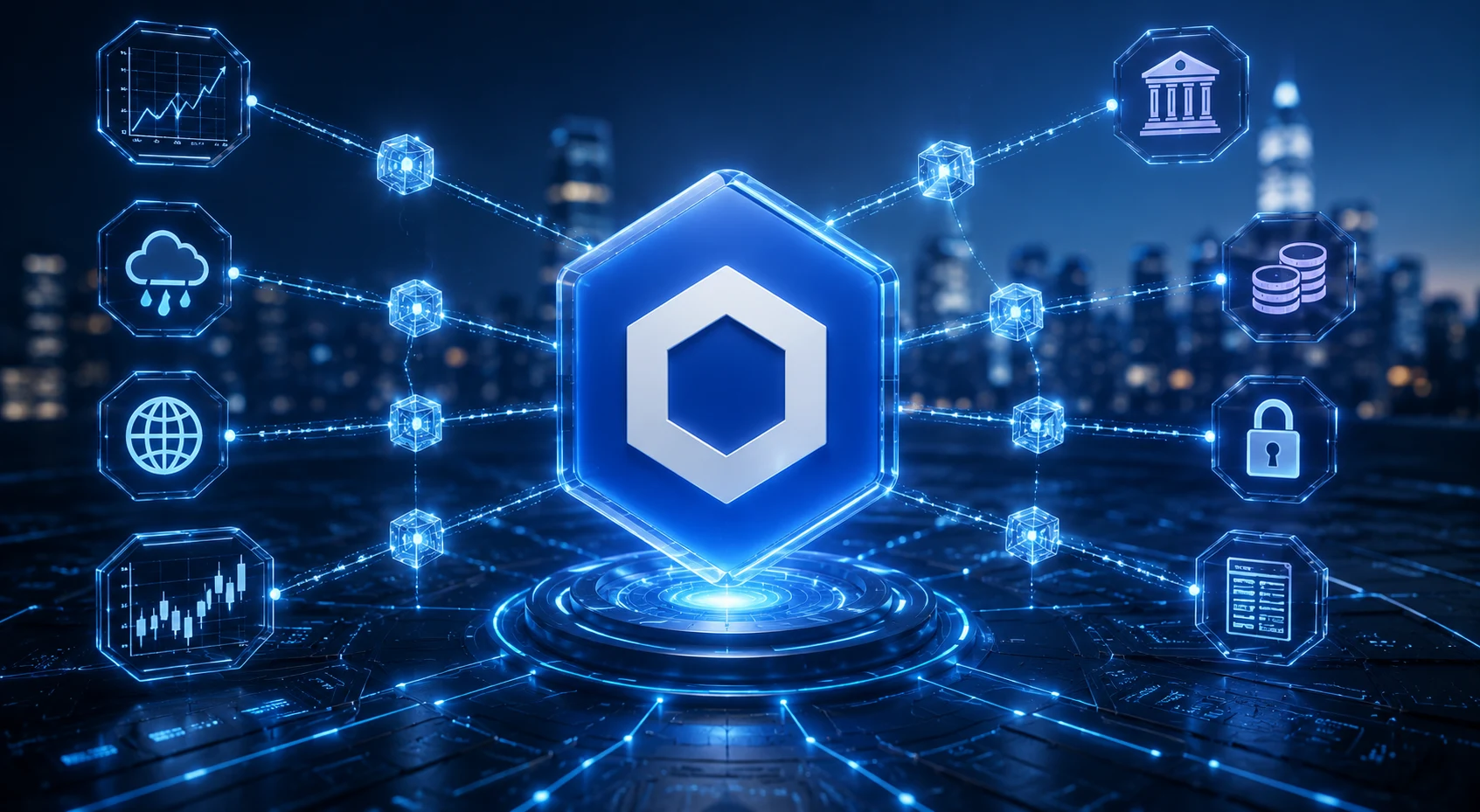
Chainlink's answer, first deployed in 2019, was a decentralized oracle network. Independent node operators each fetch a price from one or more data sources, the network aggregates the answers into a single value, and the requesting smart contract reads the result on-chain. No single node can quietly poison the price, because the network only accepts the median or some weighted aggregate of the answers, and odd votes stand out.
This pattern is now the load-bearing layer of much of DeFi. Aave, Compound, the major liquid-staking tokens on Ethereum, and a long tail of derivatives protocols rely on Chainlink price feeds for liquidations and collateral checks. When those feeds are wrong or stale, lending markets can be drained. The famous wETH/bETH incident on Compound in 2020 and several later manipulation episodes all traced back to oracle failures or thin liquidity, not bugs in the lending logic itself. Oracles are the part of the stack where money is most often lost to bad inputs.
How LINK tokenomics are structured today
The LINK supply started at 1 billion tokens in the 2017 initial coin offering, which raised roughly $32 million at the time. Roughly 35 percent went to early investors and the team, 35 percent funded ecosystem development, and the remaining 30 percent was reserved for node operator incentives and community programs. There is no continuous issuance: more LINK is not mined into existence every block, the way ETH was before the Merge. Fixed supply means inflation does not dilute holders, but it also means there is no protocol-level way to fund node operators without someone paying them.
In practice, the protocols that need price feeds pay node operators directly, often in stablecoins like USDC or in their own tokens, and the LINK that changes hands serves primarily as a coordination asset. Node operators lock LINK as a bond against bad behavior. Requesters can pay fees in LINK or in another asset, and the network's value capture happens by LINK being the thing that has to be put at risk, not by LINK being paid out to passive holders.
The historical concentration is the part most explainers skip. A large share of the ICO-era supply ended up in a small number of wallets, and several public wallets associated with the Chainlink team have moved LINK to exchanges in batches over the years. None of this is illegal, and the team has published regular treasury reports, but the pattern is the reason any serious piece on LINK tokenomics has to acknowledge that the float is not as decentralized as the network itself.
LINK Staking v0.9: what changed, what can be slashed
Until late 2022, LINK staking was more of a signaling mechanism than an economic commitment. Stakers locked tokens to a node, earned a small reward pool, and could withdraw freely. There was no real penalty for misbehavior, because there was no on-chain way to know a node was misbehaving.
Staking v0.9, rolled out through 2023 and 2024, was the first version that introduced genuine slashing. Under v0.9, stakers select a pool and a notification reward credit, and the contract keeps track of how often their node's answers match a reference value. Operators whose answers deviate from the aggregate by enough, over enough rounds, can have a portion of their staked LINK taken away and partially redirected to alerting stakers. The penalty scales with the severity and frequency of the deviation.
The practical effect is that operators now run actual infrastructure rather than parking a stake on someone else's setup. Several large operators have been slashed through the v0.9 mechanism, though the dollar amounts have so far been modest. For passive holders, v0.9 is not a yield product: it requires picking a node or pool, monitoring performance, and accepting the risk that your chosen operator gets penalized. Treat any claim of double-digit LINK staking yield as an APR, not a guarantee, and as the upside of operator selection rather than a passive dividend.
CCIP: cross-chain messaging, not just another bridge
The Cross-Chain Interoperability Protocol is Chainlink's attempt to own a different layer of the stack than price feeds. Bridges, in the usual sense, lock an asset on chain A and mint a wrapped version on chain B, and they have become the single most exploited piece of crypto infrastructure, with multiple billions of dollars lost to bridge hacks since 2021.
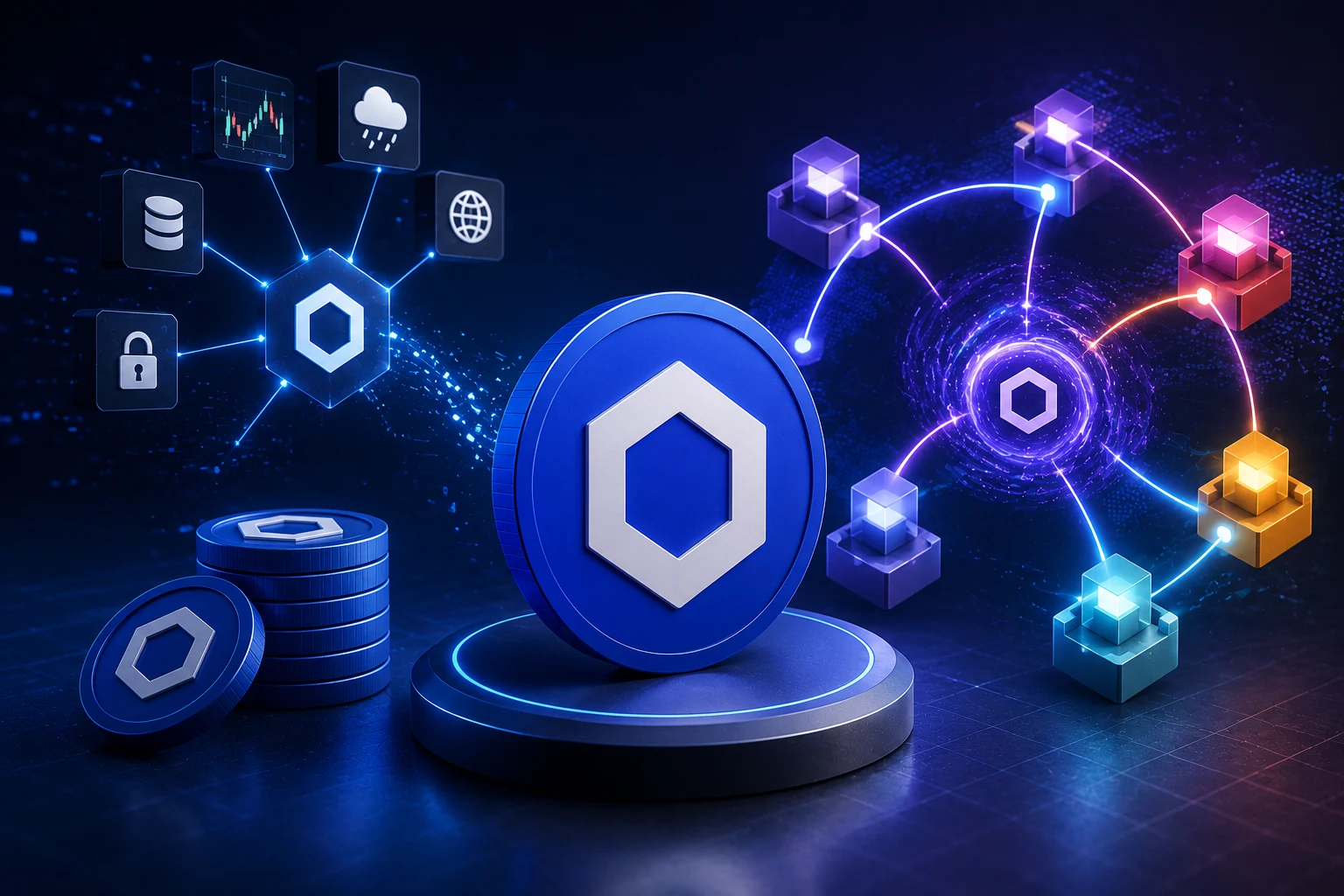
CCIP is not a bridge in that sense. It is a messaging protocol: a way for a smart contract on one chain to send an arbitrary instruction to a smart contract on another, with the same decentralized oracle network verifying the message. Programmable Token Transfers, launched after the base protocol, let a smart contract trigger both a cross-chain message and a token movement in one transaction, useful for chain-to-chain lending, cross-chain DEX routing, and stablecoin issuance.
Institutions have been the marketing focus. Chainlink announced a partnership with SWIFT, the interbank messaging network, in 2023 to test how banks could use CCIP to coordinate tokenized assets across chains. The reality, as of 2026, is that this is still a pilot, not a production system processing real bank traffic. SWIFT itself has explored many blockchain integrations, and several competitors (including the Chainlink rival discussed below) are running similar proofs of concept. The relevant question for readers is not whether SWIFT partnered with Chainlink, but whether the pilot ever moves from the announcement to a system that real correspondent banks transact on.
Who competes with Chainlink, and how seriously
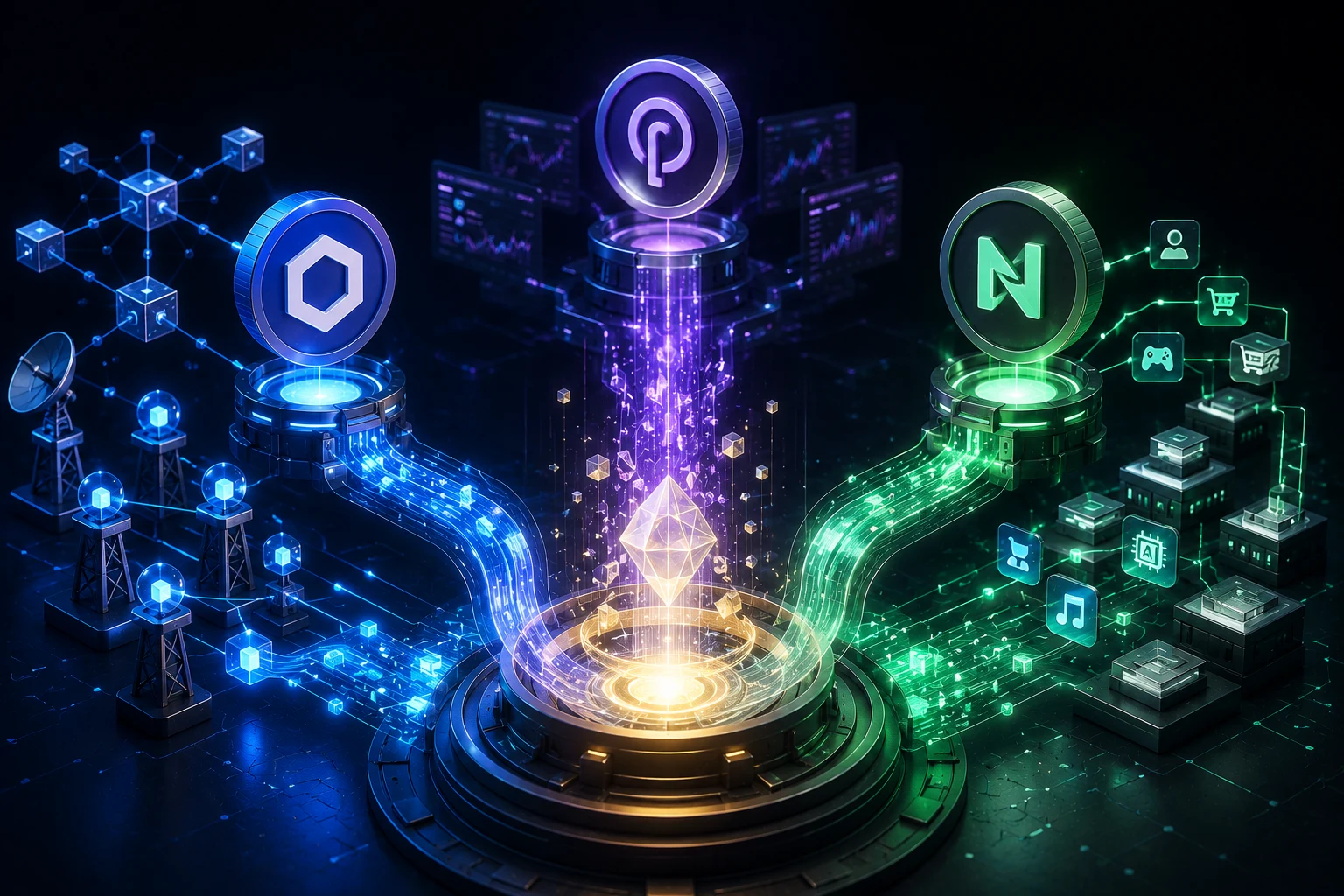
The honest version of the competitive picture matters more than the brand list. Three projects keep showing up alongside Chainlink in 2025 and 2026.
Pyth Network rebuilt the oracle model from the other direction. Instead of a network of always-on nodes that push updates, Pyth pulls price data from a permissioned set of professional market makers and trading firms (the same entities whose quotes actually move real markets). On-chain usage has grown fast on Solana and several app-chains, because Pyth's update frequency is high and its latency suits derivatives. Pyth's main limitation is governance: its publishers are permissioned and KYC'd, which is a feature for institutions and a drawback for the more crypto-native parts of DeFi.
RedStone focused on the gas problem. Chainlink pushes every update on-chain, which is expensive on Ethereum mainnet. RedStone stores signed price data off-chain and only commits a hash on-chain at the moment a user actually reads it, cutting gas costs substantially. It is used by several yield aggregators and some liquid-staking products, particularly on L2 networks where cheap data matters more than brand.
API3 tried to remove the middleman by letting the data provider itself run an oracle node, signing its own data and publishing it directly to the chain. It is philosophically purer than Chainlink and has a smaller footprint. Adoption has been steady rather than explosive.
The honest read is that none of them has displaced Chainlink at the top of the DeFi stack, where safety, decentralization, and multi-chain coverage still matter. What they have done is fragmented the lower end, and several newer protocols, especially on Solana and on L2s, default to Pyth or Redstone rather than Chainlink. The price-feed side of Chainlink's moat is narrower than it was in 2021.
Practical takeaways for anyone holding or considering LINK
If you already hold LINK, the question to ask is what your thesis actually is. If it is "Chainlink will own cross-chain messaging and enterprise blockchain", CCIP is the part of the business to watch, and the milestones that matter are real-world pilots with named institutions moving from announcement to production. If it is "Chainlink will be the price oracle for DeFi forever", the competitive section above is the case for being more cautious than the broader market is.
If you are considering LINK staking under v0.9, the realistic framing is operator selection, not yield farming. Pick operators with public uptime and accuracy histories, understand that you can lose part of your stake to a slash, and treat the rewards as compensation for monitoring, not as passive income. Anyone marketing v0.9 as a guaranteed yield is overselling it.
Finally, the supply concentration is worth weighing against any thesis. LINK has a fixed cap, no continuous issuance, and a wide distribution of tokens compared with most ICO-era projects, yet the early-investor and team wallets remain visible on-chain. Token unlocks from those wallets, when they happen, are a leading indicator and worth tracking through a blockchain explorer before sizing any position.
Follow Chainlink news the smart way
CCIP pilots, v0.9 slash events, and Pyth adoption moves all shift the LINK thesis in real time. Tracking them manually across Discord, governance forums, and X is a losing game. Zippfeed surfaces Chainlink headlines with sentiment scoring (bullish, neutral, or bearish) and an importance rating, so you can separate protocol upgrades from routine partnerships and react to the ones that actually matter.

 TheBlock
 Crypto News
 Altcoin Daily