The big picture
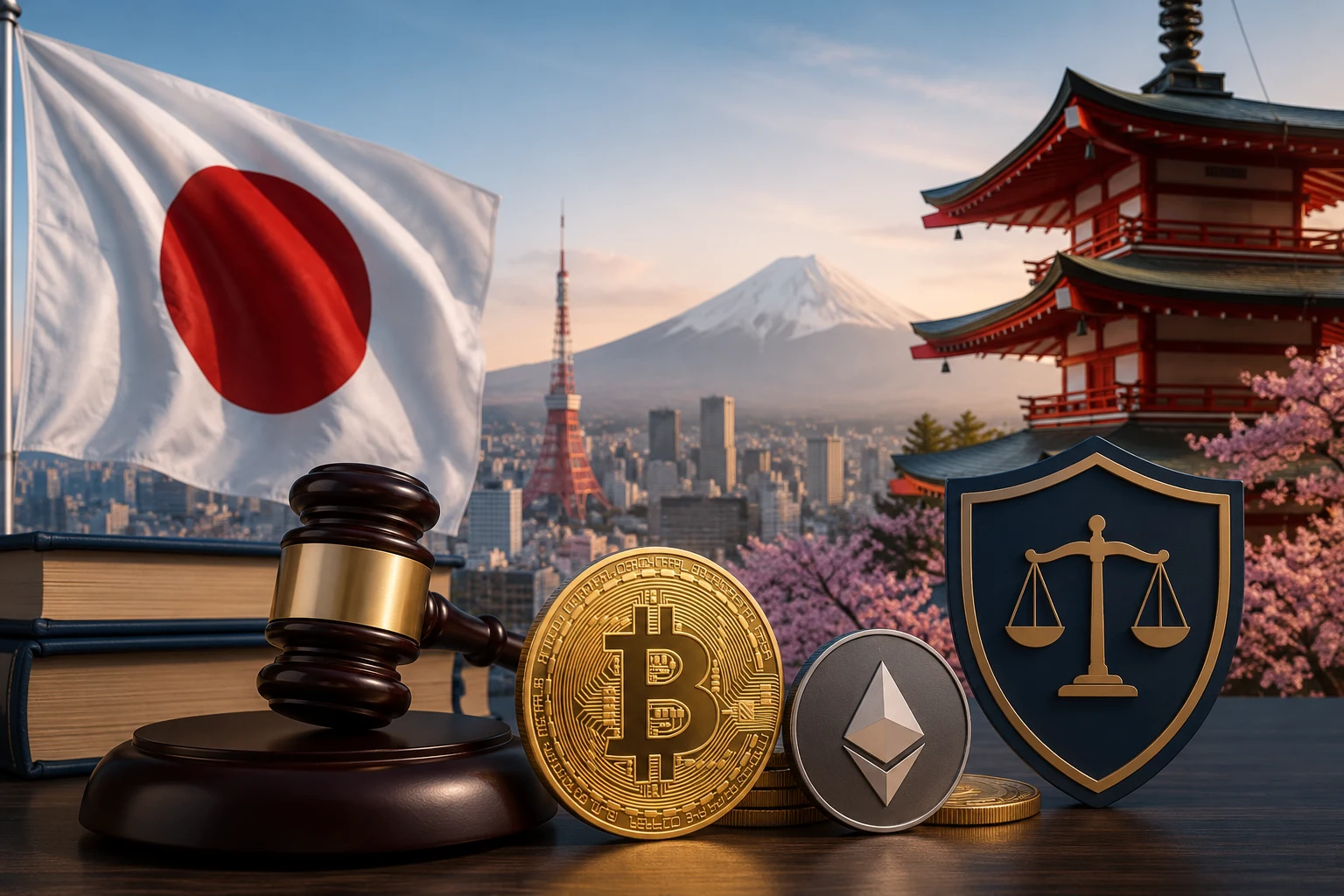
Japan was the first major country to recognise crypto as a legal form of property and one of the first to license exchanges. That early lead was forged through pain: the 2014 collapse of Mt. Gox left lasting scars and shaped a conservative, protection-first regulatory style. The framework has been amended several times since, adding stricter custody requirements, a stablecoin regime and tighter rules on margin trading. The result is one of the most rigorous environments in the world — a high bar for firms and a relatively narrow but well-protected experience for users.
This is an educational overview, not legal advice. Japanese rules are detailed and change as the FSA issues new guidance and amends underlying statutes.
Who the regulator is
The Financial Services Agency (FSA) is the lead regulator for crypto in Japan. It administers the Payment Services Act (PSA), which licenses crypto exchanges and stablecoin-related businesses, and the Financial Instruments and Exchange Act (FIEA), which covers security tokens and derivatives. The Japan Virtual and Crypto assets Exchange Association (JVCEA) is the FSA-authorised self-regulatory body, setting industry standards that complement the statutory rules. Tax sits with the National Tax Agency (NTA).
What the FSA does not do is endorse particular tokens as good investments. A registered firm has met capital, governance, custody and listing standards. The risks of holding the underlying assets remain with the user.
What is regulated
Several activity categories sit inside Japan's perimeter today:
- Crypto exchange services. Buying, selling, exchanging and custody of crypto on behalf of users require FSA registration under the PSA. Requirements cover minimum capital, segregation of customer assets, cybersecurity, internal controls and a token listing process that goes through the JVCEA.
- Stablecoins. Following 2022 legislation, fiat-referenced stablecoins are treated as electronic payment instruments and can only be issued by banks, money transfer agents or trust companies. Intermediaries handling stablecoins must register as electronic payment instrument exchange operators.
- Security tokens. Tokens that constitute securities under the FIEA fall under the securities regime, with prospectus, intermediary and conduct rules. Tokenised securities offerings are an active growth area in Japan.
- Derivatives and leverage. Margin trading is permitted but limited; consumer leverage caps are strict by global standards, reflecting the FSA's protection-first stance.
Together these rules cover most of what a user or firm wants to do, which is part of why off-licence offshore platforms have only limited reach in Japan compared with some other markets.
Practical implications for users and businesses
For Japanese users, the day-to-day experience on a registered exchange is conservative by design. Token listings are slower and more curated than in less regulated markets — new tokens pass through the JVCEA process before being available. Custody segregation is mandatory and consumer asset protections are strong. The downside is fewer products, fewer flashy promotions and tighter leverage. Many users accept the trade-off, considering Mt. Gox lessons.
For businesses, Japan is a high-bar destination. Registration takes time and resources; ongoing supervision is meaningful. Many global firms either run a Japanese subsidiary specifically for the Japanese market or partner with a registered local firm. Building a token-issuance business benefits from clear legal recognition but also has to navigate the tokenised securities framework if the token has investment characteristics.
On tax, the NTA treats crypto gains as miscellaneous income for individuals, taxed at marginal income tax rates plus inhabitant tax. At higher income brackets this can be substantial. There has been ongoing discussion about moving crypto to a flat capital gains rate similar to listed shares, but no change as of writing. Mining, staking and airdrops also generate taxable income. Specific situations should go to a qualified tax professional.
What is changing
Recent and upcoming developments include refinements to the stablecoin regime, possible reform of crypto tax treatment, ongoing approvals of tokenised securities issuances, and continued tightening of custody and segregation expectations. Japan also actively participates in global crypto policy work — for example on the FATF Travel Rule — and its rules tend to track international standards closely.
Compared with the European Union's MiCA — see what is MiCA — Japan reached a similar destination years earlier through different mechanics. Compared with the SEC framework — see SEC crypto regulation — Japan offers more clarity on the path to registration and a smaller but more curated product set.
Follow Japanese crypto policy as it moves
Japan's regulatory rhythm runs through FSA notices, JVCEA rule changes and statutory amendments. Major shifts often pre-stage in working group reports months in advance. Zippfeed surfaces Japanese crypto headlines with sentiment and importance scoring so you can tell which announcements are setup and which will change what is available, how it is priced and what protections apply. This is education, not financial or legal advice — but informed beats surprised every time.