Why this comparison is harder than it looks
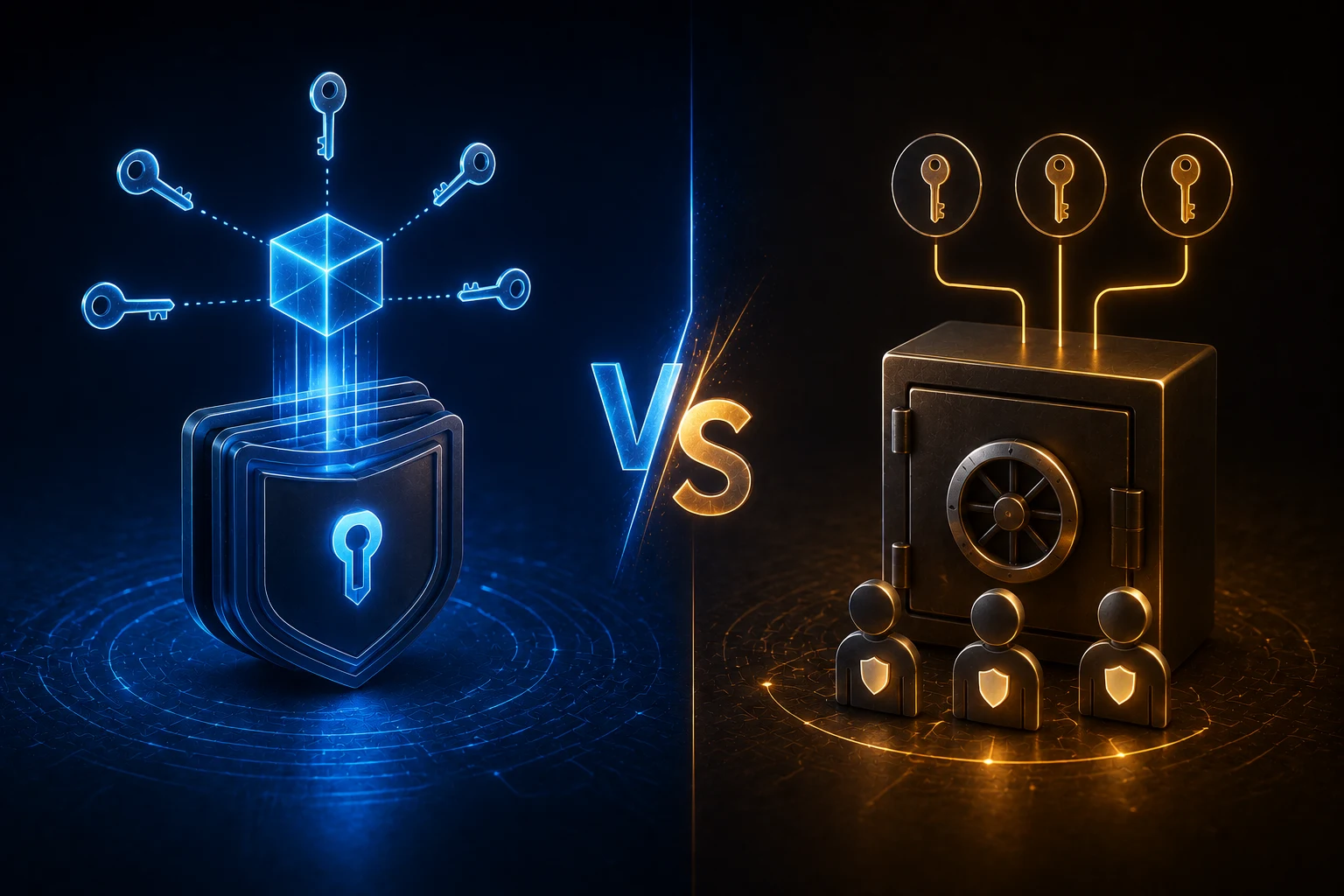
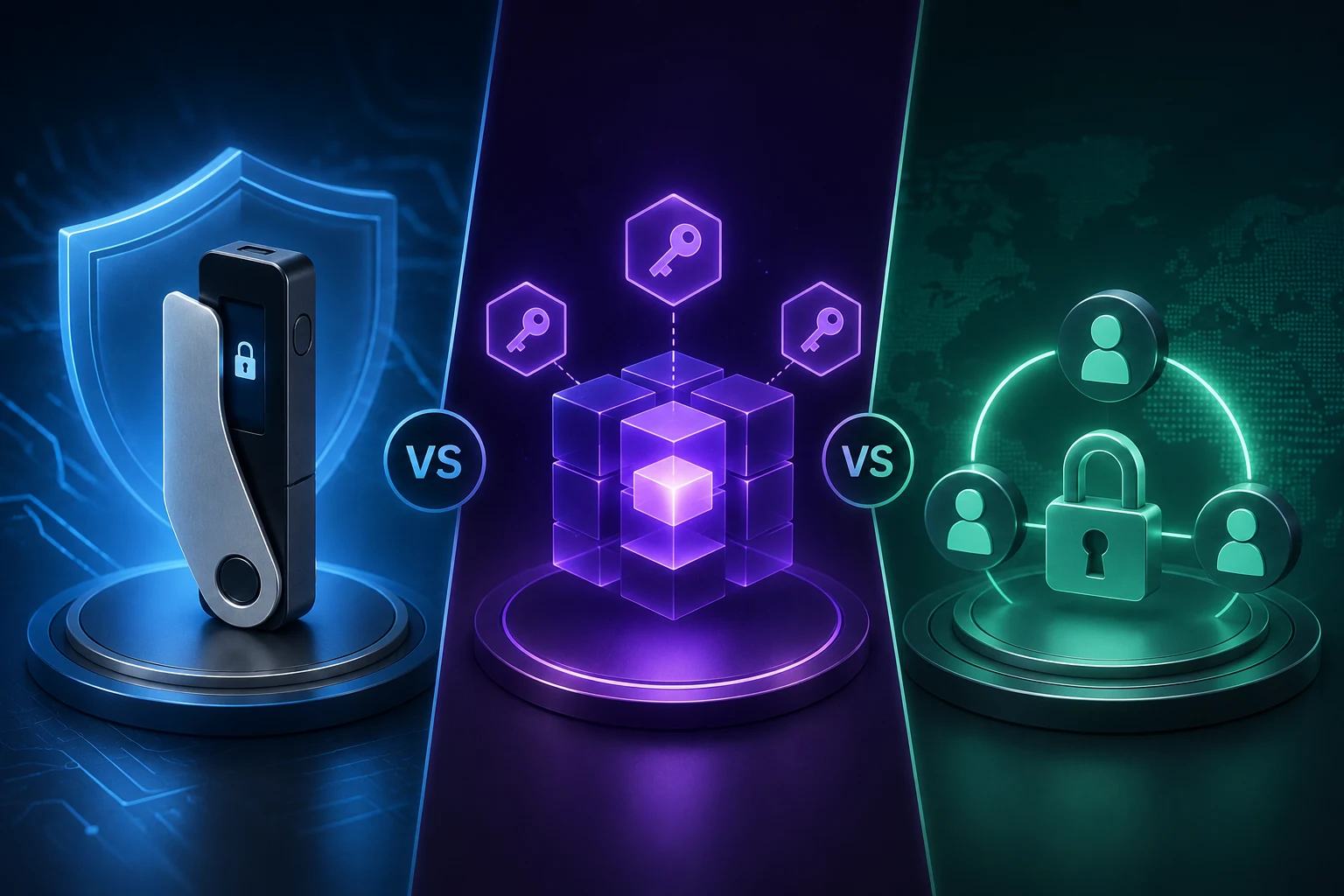
Most "best wallet" articles crown a winner and move on. That framing is misleading because hardware wallets, MPC (multi-party computation) wallets, and multisig wallets are not competing products in the same category. They are three distinct security architectures, each making different trade-offs about where trust lives, who can move funds, and what happens when something goes wrong.
Understanding the difference matters more than picking a brand. The Ledger Nano X and the Trezor Model T look similar in a product roundup, but they sit on opposite sides of a trust boundary from an MPC service like Fireblocks or a Safe multisig with three signers. The threats you face, the failure modes you have to plan for, and the cost you pay all change depending on which architecture you choose.
The right architecture for you depends on three variables, and the rest of this article walks through them. The three variables are: how much you actually hold in self-custody, whether you can physically secure a 24-word recovery phrase (often called a seed phrase) for years, and whether you are managing funds alone or coordinating with a team. If you cannot answer those three honestly, no product review will help you.
What a hardware wallet actually does
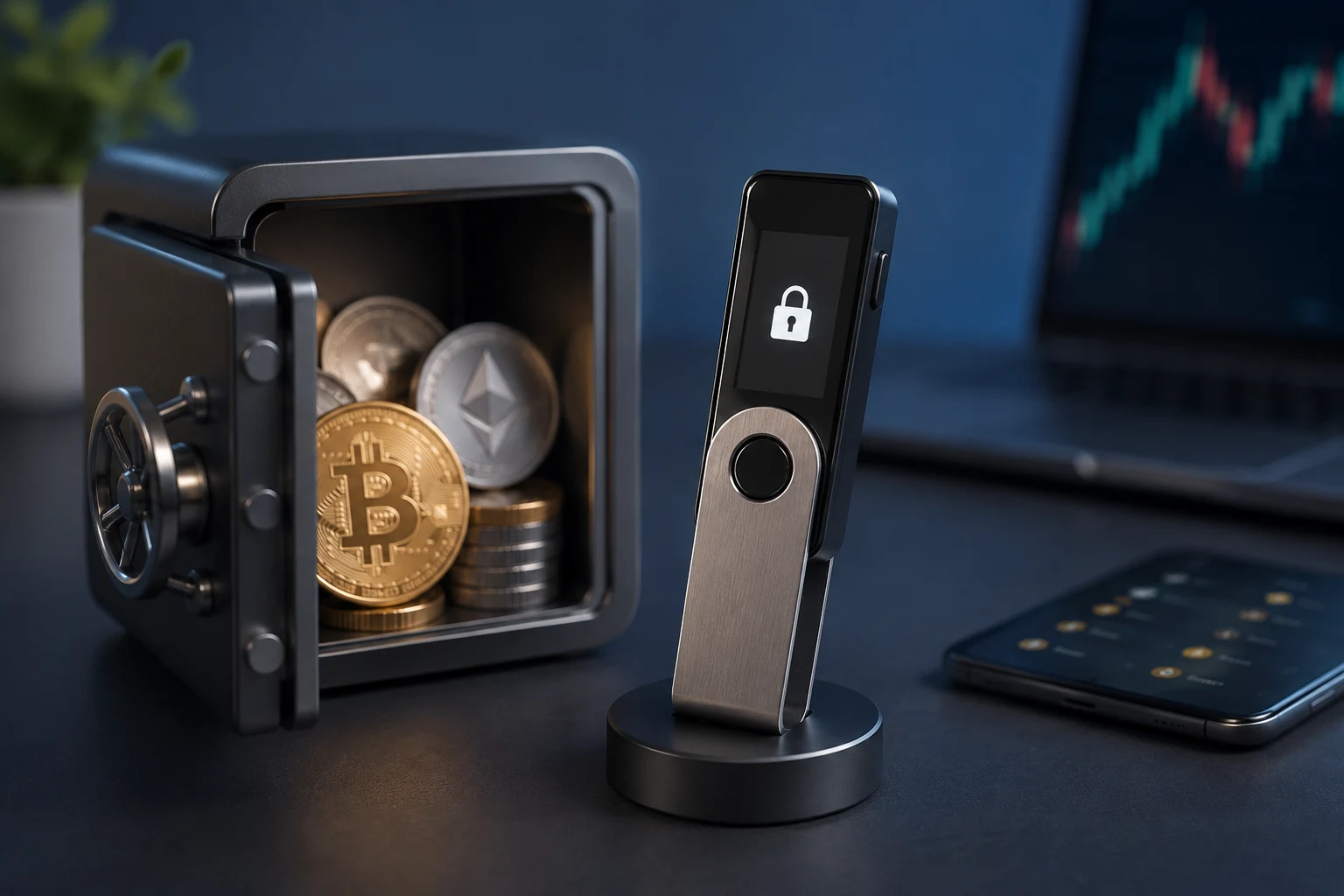
A hardware wallet is a small dedicated device whose entire job is to generate a private key, store that key inside a secure element chip, and sign transactions without ever exposing the key to your computer or phone. When you set up a Ledger or Trezor, the device creates a random private key offline and displays a 24-word seed phrase on its own screen. That phrase is the master backup: anyone who has it can recreate the key and move your funds, even without the device.
The security model rests on two claims. First, the key never leaves the chip, so a malware-infected laptop cannot extract it. Second, the seed phrase is the only backup, so the device itself is replaceable. Lose the device, buy a new one, enter the phrase, recover the wallet. The trade-off is that the seed phrase becomes a single point of failure the moment it exists in the physical world. Paper burns. Metal seed plates can be found by guests. A photo in your iCloud account is one data breach away from a thief.
Hardware wallets also depend on supply-chain integrity. You have to trust that the device you bought was not tampered with in transit, and that the firmware does what it claims. Ledger's 2020 data breach exposed customer names, emails, and shipping addresses. While keys were not stolen, the leak enabled targeted phishing and home-robbery attempts against high-value holders, a reminder that the supply chain extends beyond the chip to the company's customer database.
What an MPC wallet actually does
An MPC wallet uses a cryptographic technique where the private key never exists as a single complete string at any point, not even at the moment of creation. Instead, the key is split into multiple shares, and each share lives on a different device or server. To sign a transaction, a threshold number of shares (say, 3 out of 5) must cooperate, but no single share holder ever sees the others, and the full key is never reconstructed, even in memory.
The practical experience looks familiar: you log in, you approve a transaction on your phone, it goes through. Under the hood, your phone, the provider's server, and possibly a backup server are each running a partial computation. The user-facing benefit is that there is no seed phrase for you to lose. If you lose your phone, the provider can re-issue you a new share after authenticating you, and your funds remain accessible.
The trade-off is that you have outsourced a significant part of the security model. The provider, whether that is a consumer app like ZenGo or an institutional platform like Fireblocks, now holds one or more key shares and has the operational power to help you recover access. That is convenient, but it also means your funds can become unreachable if the provider shuts down, changes its terms, blocks your region, or suffers a key-personnel incident. Vendor lock-in is a real and underappreciated risk in MPC, and "not your keys, not your coins" still applies, just in a more distributed form.
What a multisig wallet actually does
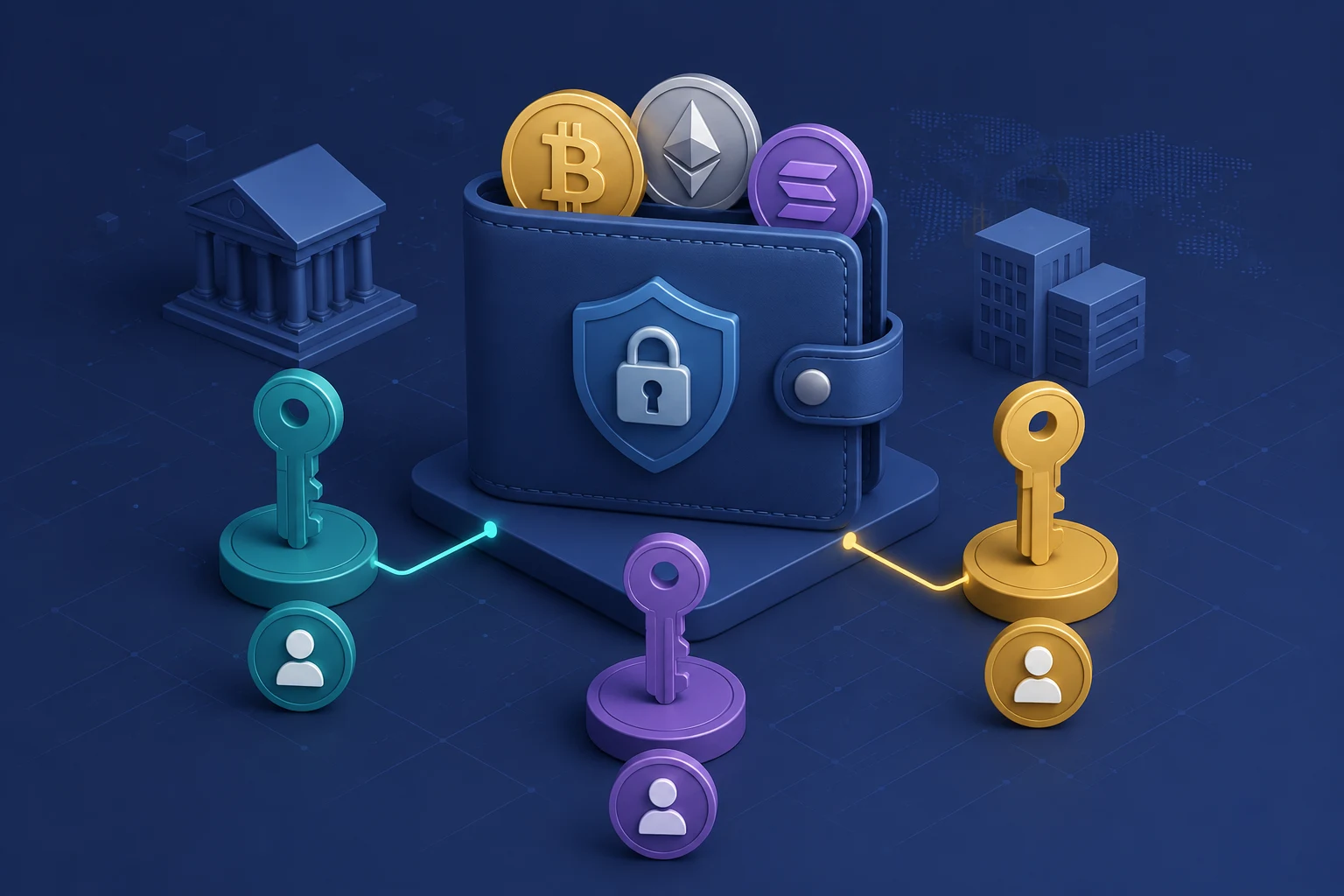
A multisig wallet, most commonly a Safe (formerly Gnosis Safe) on Ethereum, requires multiple independent signatures to move funds. A "2-of-3" Safe needs any two of three designated signers to approve a transaction. Each signer holds a completely separate private key on a separate device, and the on-chain smart contract enforces the quorum. There is no shared key material to leak, no provider to trust, and no single share that can sign alone.
The security model is straightforward: an attacker has to compromise multiple independent signers simultaneously, ideally across different vendors and physical locations. The trade-off is operational complexity. Every transaction requires coordination. If you lose access to two of your three signers, your funds are stuck on-chain forever, recoverable only if you planned ahead with a sufficiently distributed signer setup.
Multisig introduces a different attack surface: signer collusion or coercion. A Safe with three signers who all live in the same house, use the same phone OS, and bought their hardware wallets from the same Amazon listing, has not really distributed trust. The architecture looks decentralized, but the human and supply-chain dependencies are concentrated. Well-run multisig setups, including DAOs and treasury teams, deliberately separate signers by geography, device vendor, and ideally by jurisdiction.
Where each model fails in the real world
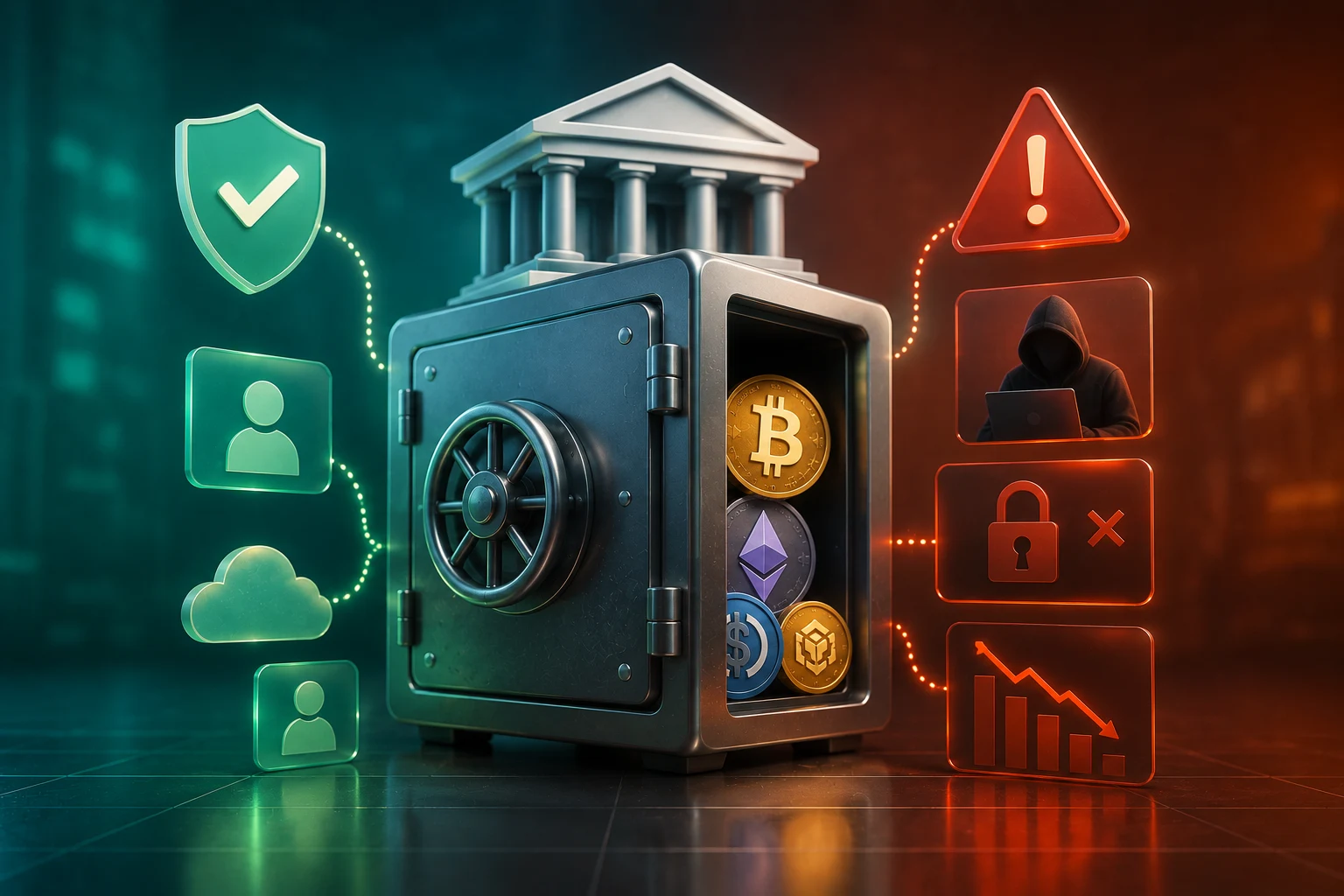
Every custody architecture has documented failure modes, and an honest comparison has to name them.
Hardware wallets fail when the seed phrase leaks, when the user is tricked into approving a malicious transaction on a compromised computer (the device signs what you tell it to sign, even if the destination address is a scammer's), or when the user's supply chain is compromised before the device arrives. The 2020 Ledger breach is the canonical case study: keys were safe, but the supporting customer data leak led to real-world robbery attempts.
MPC wallets fail when the provider goes down, locks users out due to a KYC/AML enforcement action, raises prices, or merges with a company that changes the recovery policy. They also fail when the user's own share is compromised through device theft without strong biometric or PIN protection, since the provider's share can then be combined with the attacker's. Consumer MPC apps have also suffered from bugs in key-refresh ceremonies, where a flawed implementation exposed shares that should have remained opaque.
Multisig fails through signer collusion, signer loss, or smart-contract bugs. The most famous multisig failure remains the 2017 Parity wallet incident, where a user accidentally locked a multi-signature library, freezing hundreds of millions of dollars in ETH. More recently, individual Safe users have lost funds to sophisticated phishing campaigns that compromise two signers before the third can react. The architecture is strong, but humans operating the signers remain the soft target.
Cost, recovery, and inheritance across the three
Hardware wallets have the lowest upfront cost (roughly $70 to $200 for a Ledger or Trezor) and no ongoing fees, but they impose a hidden cost: the discipline required to back up and physically secure the seed phrase for decades. Inheritance planning is awkward because the seed phrase must eventually be passed to heirs, ideally without any single person being able to use it prematurely.
MPC wallets have a similar entry cost (often free or low for consumer apps) but can become expensive for institutional users, with Fireblocks-style platforms charging significant annual fees. Recovery is easier than with a hardware wallet, since the provider can re-issue shares, but this convenience is the same property that creates lock-in risk. Inheritance depends on the provider's policies and may require legal coordination with the company.
Multisig has no software cost beyond gas fees (the transaction fees paid to the blockchain network) for setup and execution, but it requires you to buy and maintain multiple hardware wallets (or other signer devices), distribute them geographically, and document a recovery process for lost signers. Inheritance is the cleanest of the three: you can give one signer to a lawyer, one to a family member, and keep one yourself, so no single heir can act alone and a quorum can be reached when needed.
How to choose: a decision tree
There is no universal winner, but the choice becomes clear once you answer three questions.
If you hold under roughly $5,000 in BTC and ETH, are an individual, and just want to be safer than leaving coins on an exchange, an MPC consumer app or even a well-used hardware wallet is more than enough. The marginal security gain from multisig at this size is not worth the operational complexity. Avoid the temptation to over-engineer small holdings.
If you hold between roughly $5,000 and $100,000, are an individual, and can reliably store a seed phrase in a physically secure location (a fireproof safe, a bank safety deposit box, or split across trusted family members), a hardware wallet from a reputable vendor is the standard answer. Pair it with a clear written plan for what happens if you die or become incapacitated. Add a passphrase (a 13th or 25th word known only to you) if you want plausible deniability against physical attackers.
If you hold more than that, or if you are part of a team managing shared funds, multisig becomes worth the overhead. A 2-of-3 Safe with signers on three different hardware wallets from two vendors, kept in three locations, gives you real distribution of trust. For treasuries above seven figures, consider 3-of-5 with signers held by people who do not all know each other.
If your priority is daily usability and you are unwilling to manage seed phrases, MPC is a reasonable compromise, provided you accept the counterparty risk and pick a provider with a strong track record and a clear legal entity you can locate. Read the recovery policy before you deposit funds.
The honest bottom line
Hardware wallets, MPC wallets, and multisig are not in a horse race. They are three tools for three different jobs, and the right one for you depends on your holdings, your discipline around physical security, and whether you are one person or many. The most common mistake is buying the most sophisticated option and then failing to operate it correctly, which is worse than buying a simpler option and following its procedures reliably.
Whatever you choose, the underlying habits matter more than the architecture: keep your software updated, verify addresses on a trusted screen, never type your seed phrase into a website, and write down an inheritance plan that someone you trust can actually find. The architecture sets the threat model. Your behavior determines whether the threat model holds.
Stay ahead of wallet security risks
Wallet security moves fast: new MPC providers launch, hardware wallet firms ship firmware updates, and phishing campaigns target holders within hours of airdrop announcements. Tracking the news manually is a losing game. Zippfeed surfaces crypto headlines with sentiment scoring (bullish, neutral, or bearish) and an importance rating, so you can spot threats to your custody setup before they reach you.


 WuBlockchain
 CryptoSlate
 Glassnode
 WatcherGuru
 Altcoin Daily