Why one wallet is rarely the right answer
When people first buy crypto, the path of least resistance is one wallet on a phone, or worse, one custodial account on an exchange. That works fine until the balance crosses a threshold that would actually hurt to lose. At that point the question stops being "how do I buy crypto" and becomes "how do I keep it."
The instinct is to buy a hardware wallet and shove everything onto it. That is a real upgrade, but it creates a new problem: a single device, a single seed phrase, and a single point of failure. Lose the seed and the words are gone forever. Get the seed stolen and the balance is gone forever. Have a house fire, and the steel backup sits in the same room as the device it backs up.
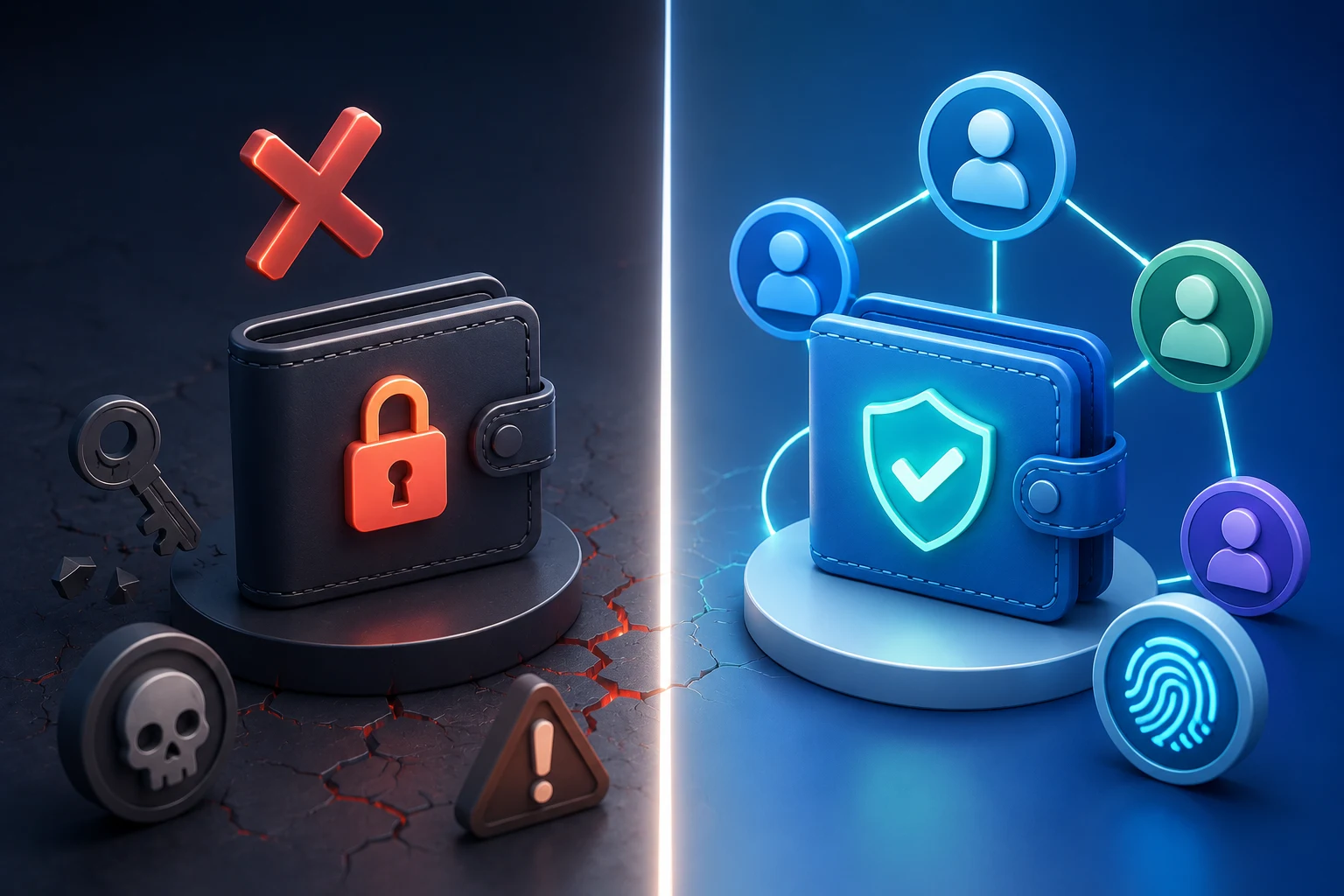
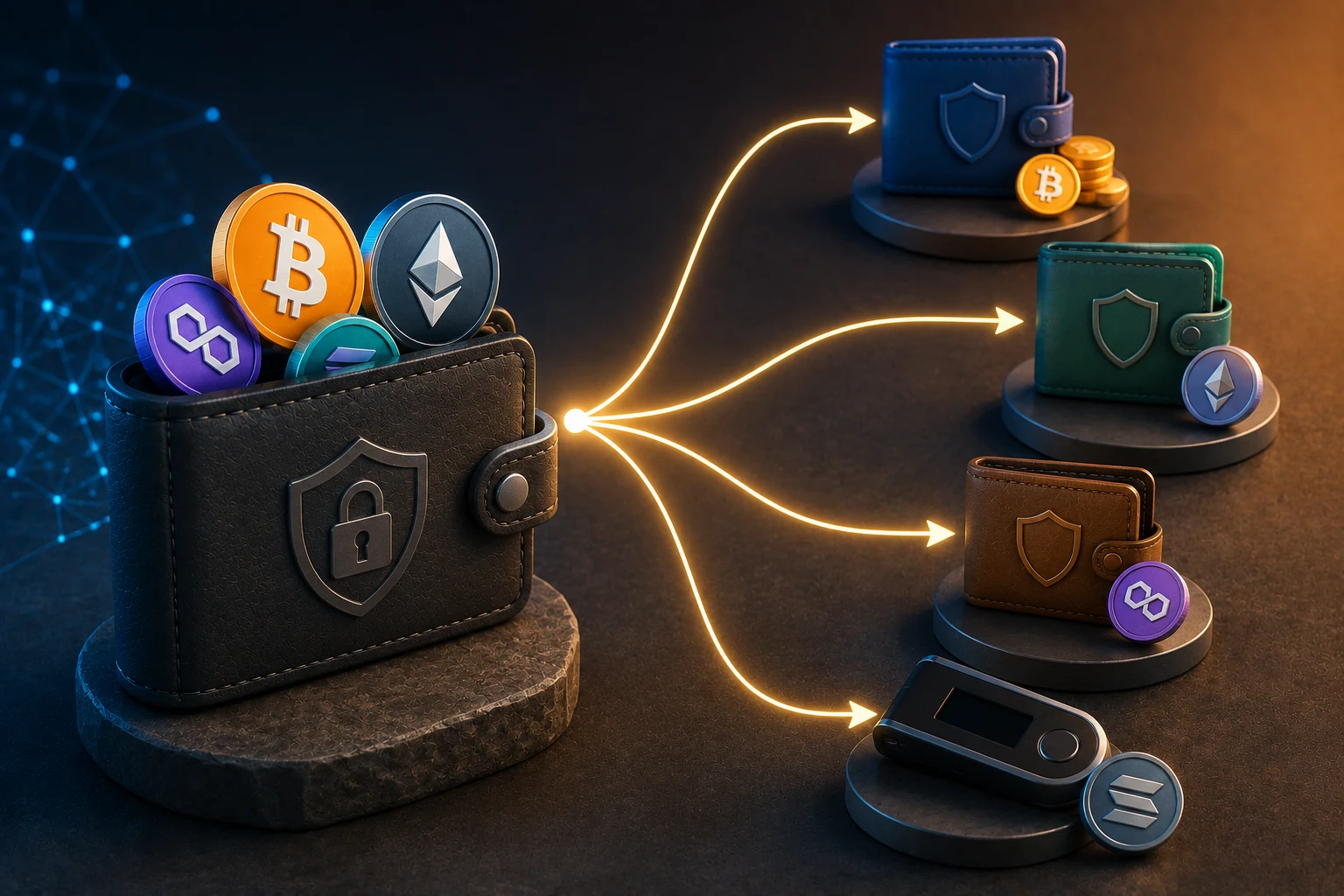
Splitting crypto across multiple wallets is the standard answer to that single-point-of-failure problem. The goal is not complexity for its own sake, it is to make sure that no one mistake, one hack, or one forgotten backup takes down the entire position.
The realistic failure modes of a single-wallet setup
Before going into the layered solution, it is worth being concrete about what actually goes wrong when everything lives in one place. The first category is device loss. Phones break, get stolen, get dropped in water. Hardware wallets are more durable, but they fail too, especially if the firmware is never updated and a chain that wallet supports gets deprecated.
The second category is seed-phrase failure. People write the twelve or twenty-four words on a piece of paper, then lose the paper. They store it in a password manager that later gets reset. They keep a photo of it in iCloud, which is then phished. The seed phrase is the wallet, and anything that touches the seed owns the funds.
The third category is the silent one: operational complexity. Adding a second wallet, a passphrase, or a multisig setup is intimidating. So people start with a clean architecture, then slowly drift. They move "just a little" of their savings back to the exchange to trade. They store a copy of the seed on their laptop because it is easier. They give a trusted friend the words "just in case." Each individual step is small. The combined effect is a setup that looks diversified on paper but is actually one stolen laptop away from zero.
A multi-wallet design only helps if it is one the user will actually keep using. That tradeoff is the theme of the rest of this article.
The three-tier wallet model: spending, savings, treasury
The model that survives contact with real life has three tiers, each with a different job and a different risk profile. Naming them makes the architecture obvious and harder to drift from over time.
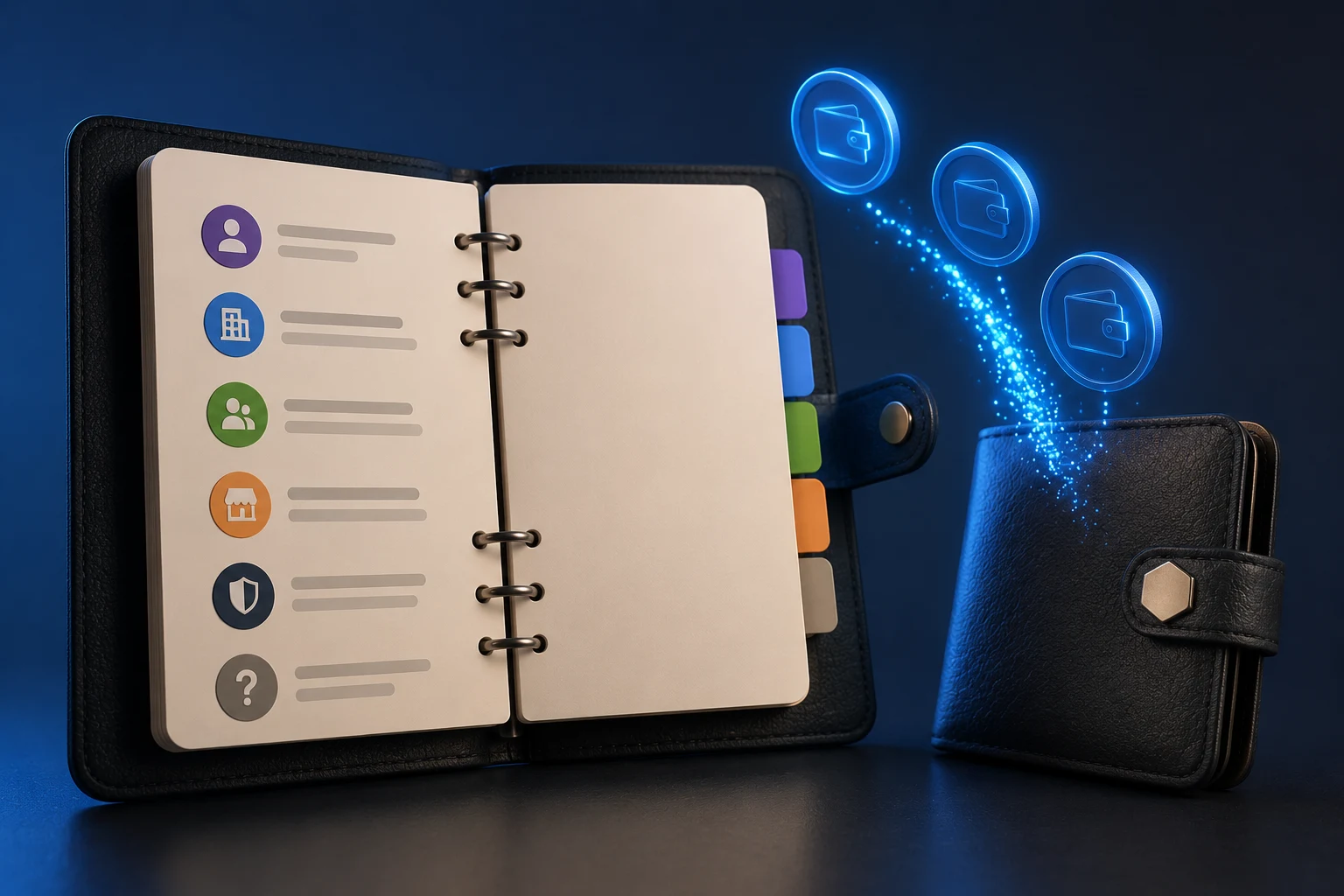
The first tier is the spending wallet, also called the hot wallet. This is a mobile or browser wallet connected to the internet, holding only what the user is willing to lose to a phishing site, a malicious dApp approval, or a compromised device. For most beginners this is somewhere between zero and a few hundred dollars worth of crypto, topped up from the savings tier when it runs low.
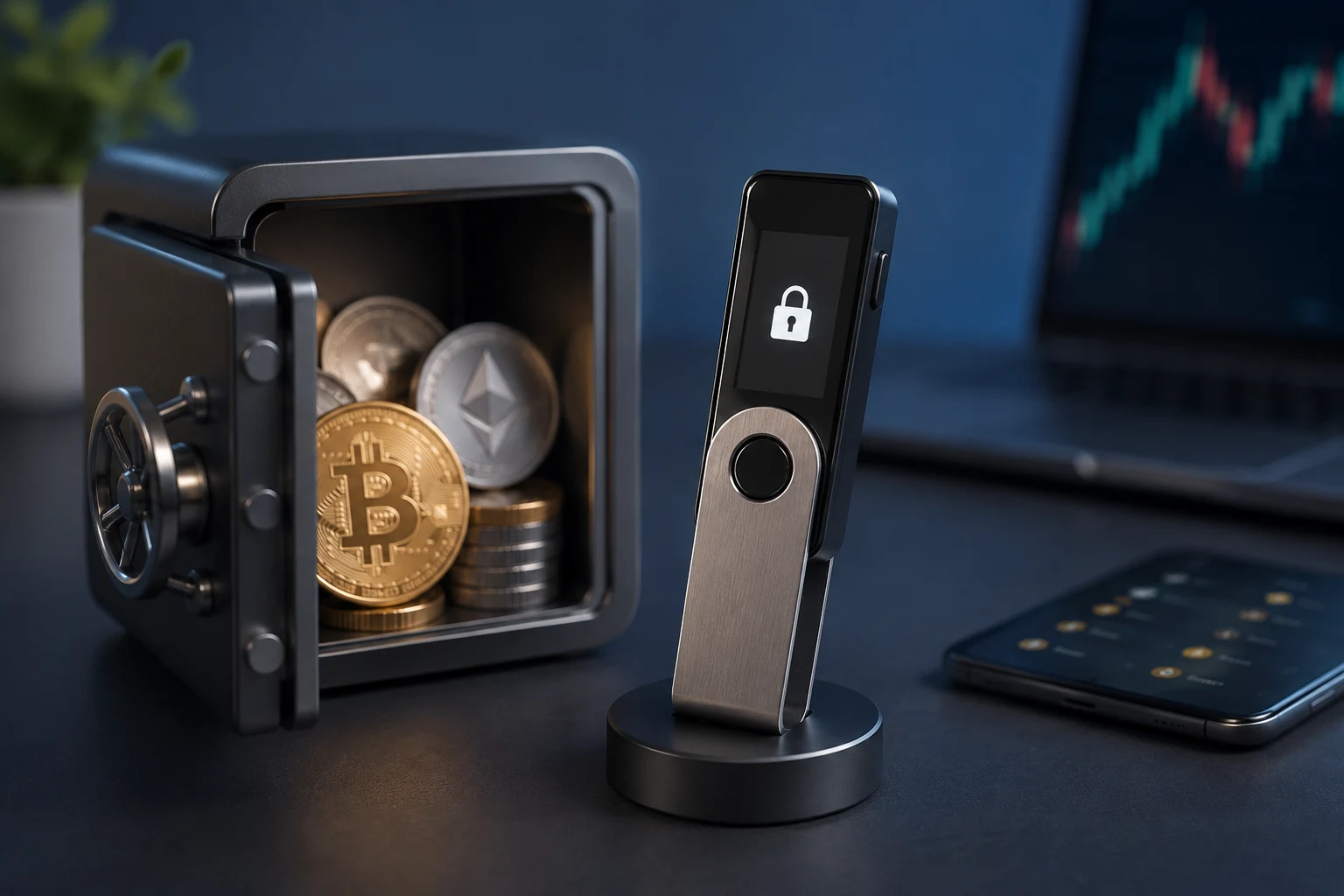
The second tier is the savings wallet, a hardware wallet that holds the bulk of the holdings. It is signed only offline, with the seed phrase stored separately from the device, ideally on metal, in a different physical location. This is the layer people usually mean when they say "cold storage," and for solo holders it is the right default for any balance large enough to be a life event.
The third tier is the treasury wallet, used for shared funds, family holdings, or balances that need to survive a single person disappearing. Treasury tier almost always means a multisig wallet, where two or three signatures are required to move funds, and the signers are spread across different devices, different locations, and ideally different people.
The mistake is treating these tiers as interchangeable. The savings tier is not "just a hardware wallet." It is a hardware wallet that never touches a connected computer, holds most of the net worth, and has a recovery plan that does not depend on the user being alive, lucid, or in one piece. The spending tier is not "the same wallet, just smaller." It is a wallet the user is willing to drain to learn a lesson, because the lesson is going to cost something one way or another.
How to actually move funds between tiers without errors
The most common way people lose money in a multi-wallet setup is during the move between tiers, not while funds are sitting still. A few habits make a meaningful difference.
First, always do a test transaction. When moving from the exchange to the hardware wallet, send a small amount first, confirm it arrived, then send the rest. Network fees on a test send are cheap insurance against sending the bulk to an address controlled by clipboard malware that swapped the address in transit.
Second, verify the receiving address on the hardware wallet's screen, not on the computer. This is the single rule that defeats almost every address-swap attack. If the address shown on the device matches the address shown in the software, send. If they do not match, stop and figure out why.
Third, label everything. The hardware wallet software, the mobile wallet, and any block explorer bookmarks should have clear names for each tier, and each receive address should be tagged by purpose. "Savings BTC," "Spending ETH," "Treasury USDC." Labeling sounds trivial, but it is the difference between a careful setup and a confused one six months later.
Fourth, keep the tiers in their own lanes. The hot wallet should never hold a seed phrase for the cold wallet. The cold wallet should never be plugged into a computer that has ever opened a phishing site. The treasury wallet should never be approved in a wallet that is also used for daily trading.
Seed-phrase and passkey separation rules
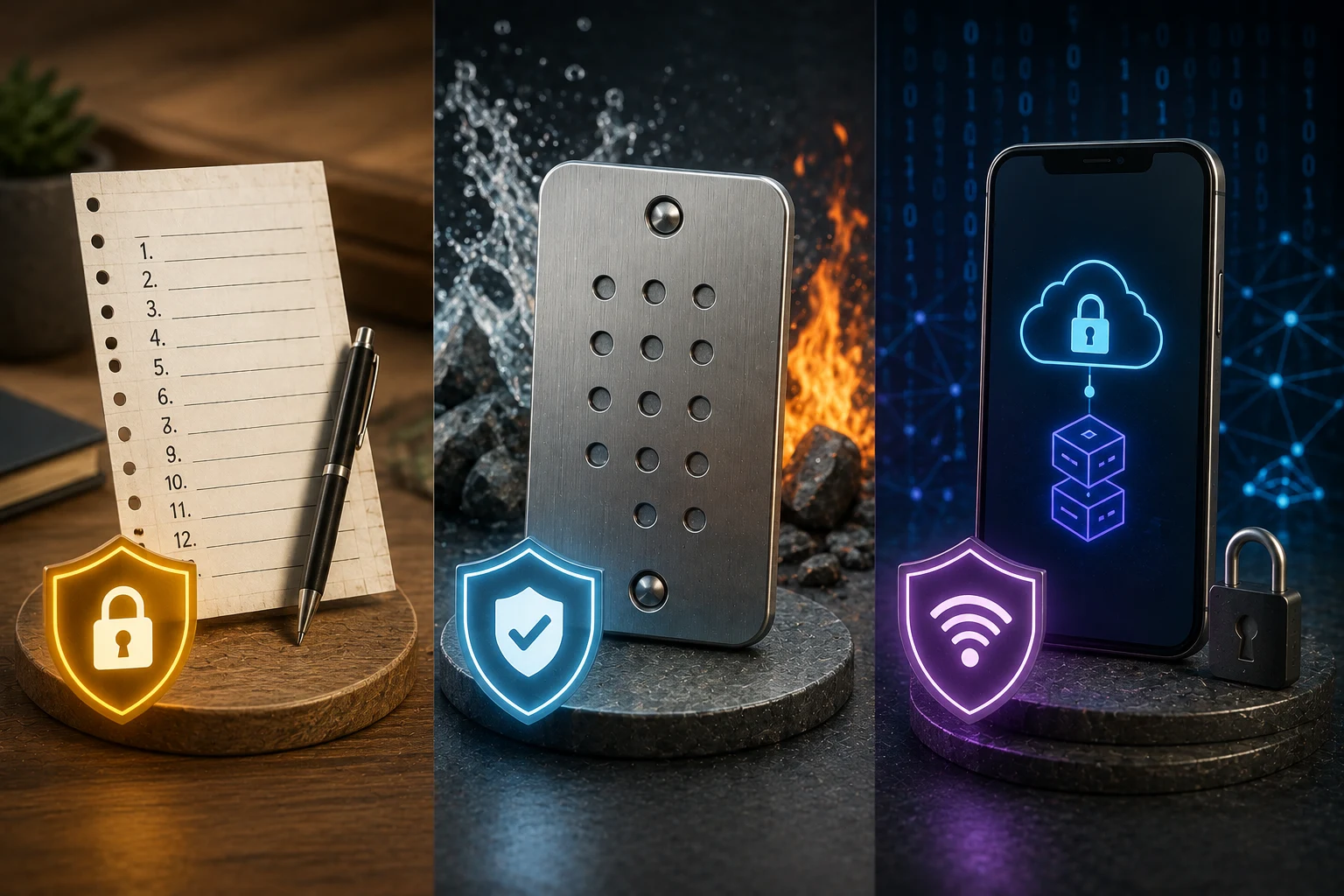
The seed phrase is the wallet, and the rules around it are stricter than they look. A seed phrase should be written down once, on a durable medium, and never typed into any device that connects to the internet. It should not live in a password manager, an email draft, a note-taking app, a photo, or a cloud backup. It should not be read aloud on a video call, even to verify it.
For a multi-wallet setup, the rule is simple: every tier gets its own seed, and the seeds are stored in different physical locations. The spending wallet can use the seed in the mobile app, because the balance is small. The savings wallet's seed should be on metal in a fire-resistant location, ideally a separate one from the device. The treasury wallet, if it is a multisig, may use multiple seeds held by different people in different places, and ideally a different manufacturer for each signer device, so a single hardware flaw or supply-chain attack cannot compromise every signer at once.
Passphrases deserve their own note. A passphrase is an extra word or string added on top of a seed phrase, turning one seed into multiple hidden wallets. It is a powerful tool, but it is also a way to lose funds permanently by forgetting a word that was never written down. If a passphrase is used at all, it must be backed up separately from the seed phrase, and the user must test the recovery flow end to end, on a wiped device, before relying on it.
Inheriting or handing over a multi-wallet setup
Most wallet guides stop at the moment the user is set up. The harder problem is what happens when the user is gone, incapacitated, or simply wants to hand the keys to the next generation. A multi-wallet setup that nobody else can navigate is functionally zero, no matter how secure it was for the original owner.
The minimum viable inheritance plan has three parts. First, a written, offline, periodically reviewed document that names where each tier's seed phrase and device live, in language a non-technical person can follow. "There is a steel plate in the safe deposit box at [bank], sealed in an envelope marked [name]. The twenty-four words on it control the savings wallet. To use them, buy a [device brand] hardware wallet and enter the words in order."
Second, a small set of people who know the plan exists, even if they do not know the seeds themselves. A spouse, a sibling, a lawyer, a trusted friend. The point is not to give them access today, it is to make sure that, when the time comes, the person looking knows where to look.
Third, for the treasury tier specifically, the inheritance plan is built into the multisig design. Two-of-three or three-of-five setups can include a family member, a lawyer, and a professional custodian as signers, with the user being the second or third signature. When the user is no longer available, the other signers can still move funds, and no single person ever had full control.
How to follow your wallet setup the smart way
Wallet security does not stay still. New chains launch, devices get deprecated, seed-phrase formats evolve, and attackers invent new phishing tricks. A setup that worked in 2023 may have quiet vulnerabilities in 2026, especially around passkeys, smart-contract wallets, and account abstraction. Tracking the moving parts manually is a losing game for anyone who is not a full-time security researcher. Zippfeed surfaces wallet and custody headlines with sentiment scoring (bullish, neutral, or bearish) and an importance rating, so you can spot risks to your specific setup before they become a loss.