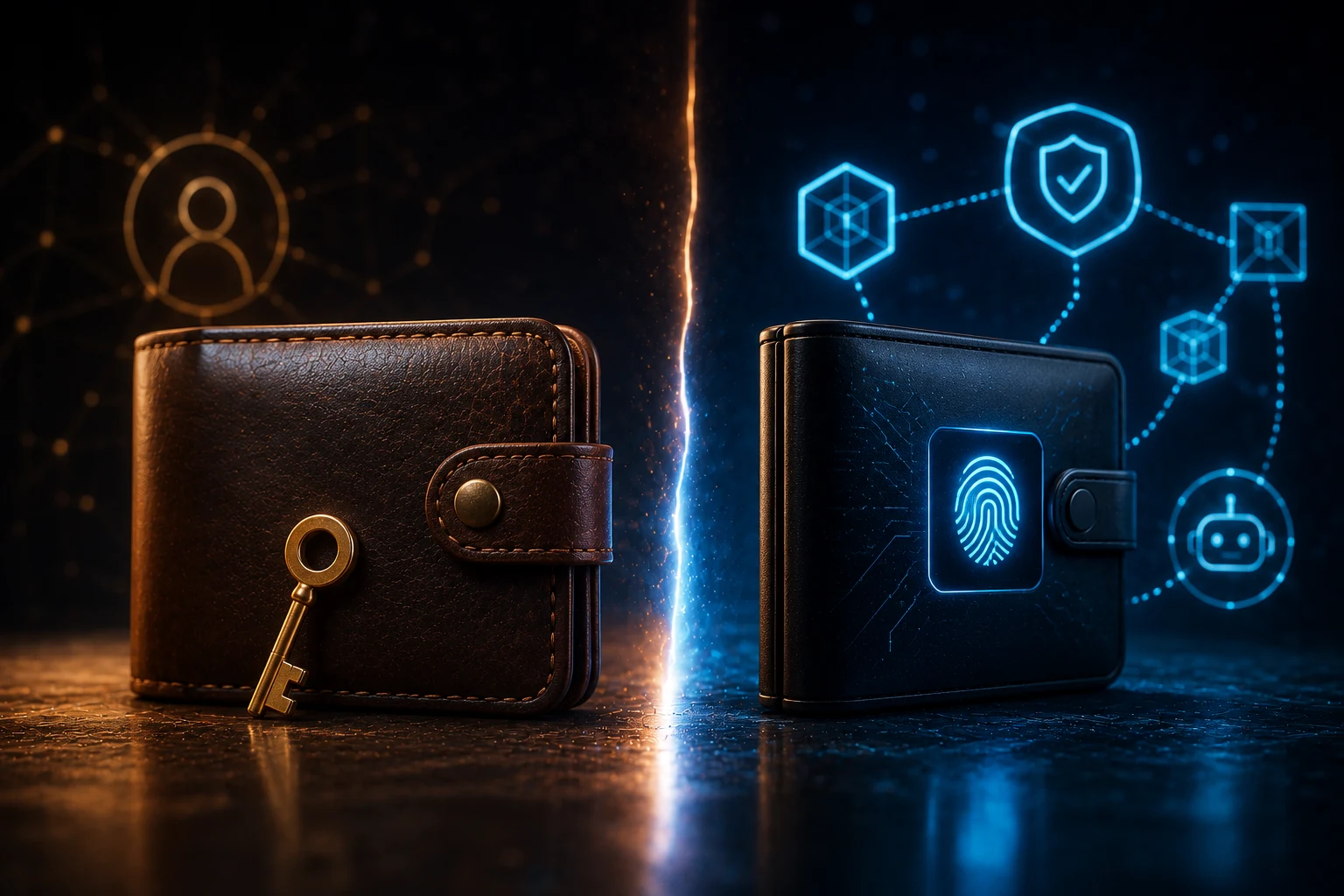
What problem are smart wallets actually trying to solve?
The pitch you hear from Coinbase, Rainbow, and Zerion is simple: stop writing down 24 words. Underneath that pitch is a real complaint from a decade of EOA wallets.
An EOA, an externally owned account, is just a private key paired with an address. Lose the key and the funds are gone forever. There is no built-in recovery. Sharing access means sharing the seed phrase, which is a security disaster. Every action needs a separate on-chain signature, and gas must be paid in the chain's native token.
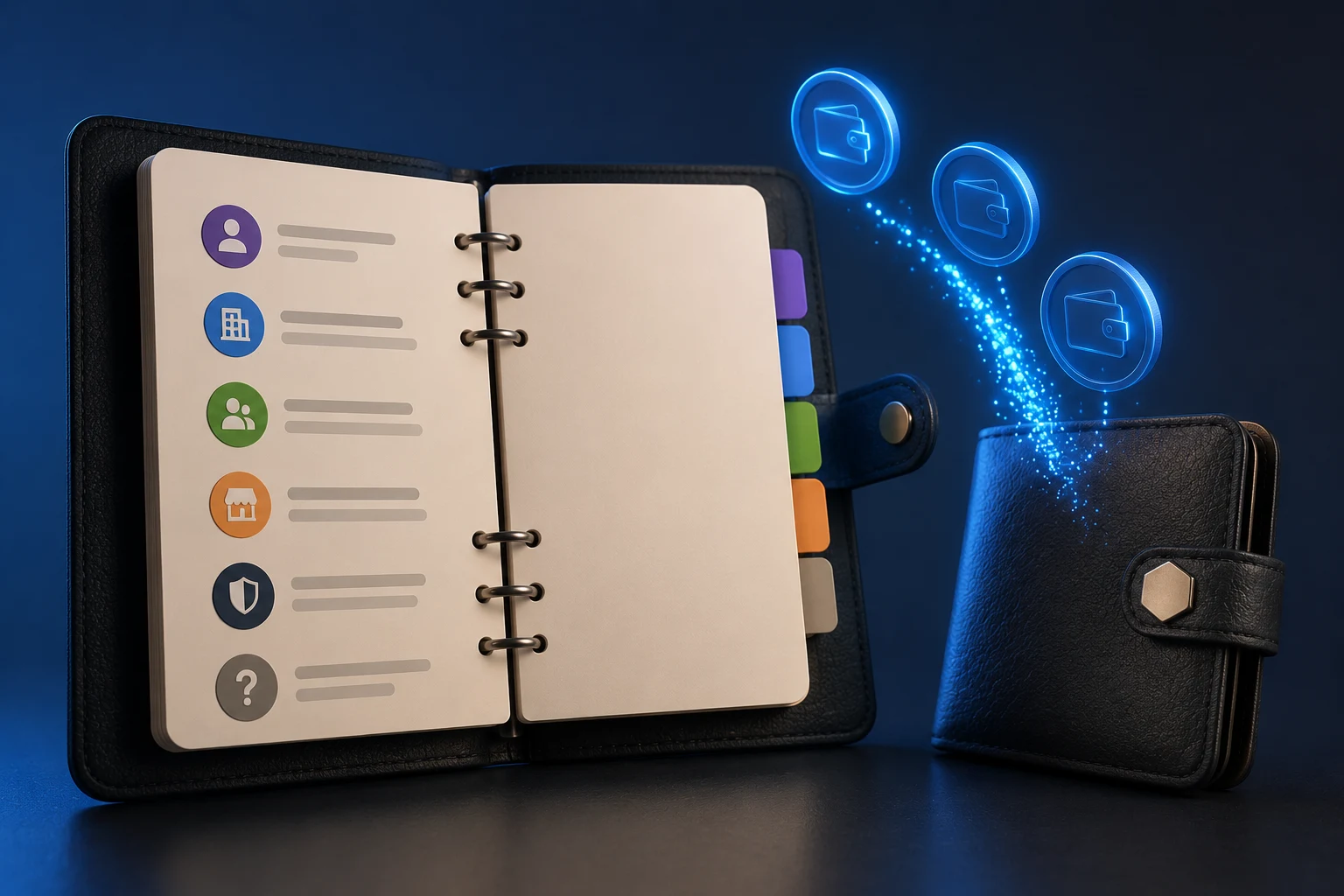
Smart wallets try to replace the private key with a smart contract that holds your assets and follows programmable rules. That contract can check transaction limits, allow trusted devices, batch many actions into one click, let a friend or guardian help you recover access, and even pay gas with a stablecoin somebody else sponsors.
None of this is magic. A smart wallet still has owners, also called signers, who can move funds. The difference is that the policy for what those signers can do lives in code that can be upgraded, audited, and rotated, rather than in a single string of words you must never lose.
Risk profile: what actually changes (and what does not)
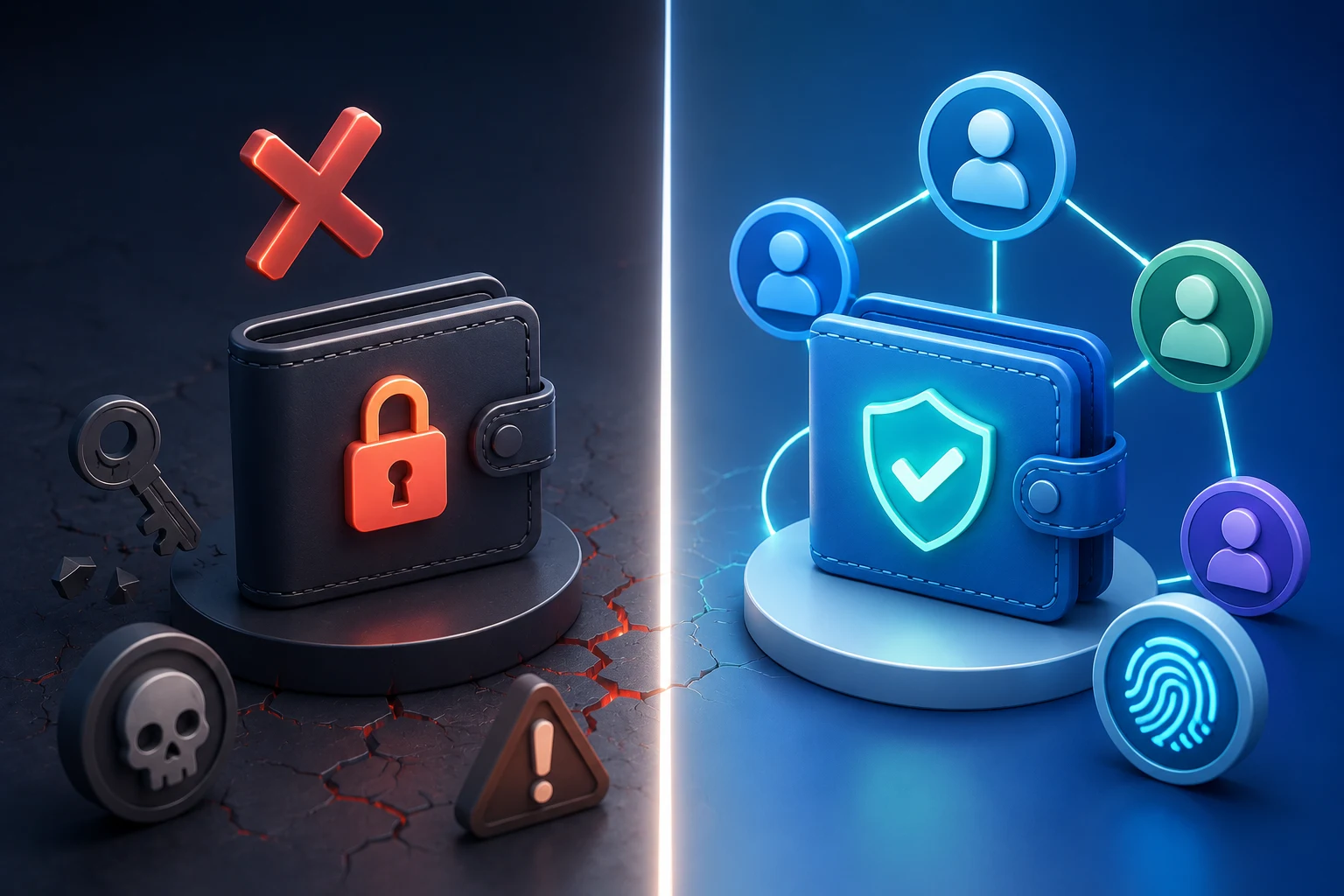
The honest framing is that smart wallets do not delete the threat model of EOA wallets. They shift it.
If you use a smart wallet, here is what is now on your critical path:
- The smart contract code that defines account logic, including bugs in the EntryPoint, the shared contract every ERC-4337 account calls into.
- The bundler, a service that packages your user operations and submits them to chain.
- The paymaster, a service that agrees to pay gas on your behalf, which sees your transaction and can refuse, front-run, or censor it.
- The signer policy on the device, since most users still keep one key on their phone or laptop that can authorize everything.
Compare that to an EOA, where the critical path is shorter: your hardware wallet, your seed backup, and the dapp you sign with. No third party relays your transaction. No shared contract sits between you and the chain.
Smart wallets reduce a specific class of risk, namely seed-phrase loss or theft, and replace it with a different class: smart contract bugs, paymaster abuse, bundler censorship or failure, and signature-replay attacks where the same authorization is reused because the wallet did not include a nonce or chain id.
How ERC-4337 account abstraction actually works
ERC-4337 is the standard that made smart wallets usable without changing Ethereum's base protocol. You do not need to run a node or modify the chain. You send a special object called a UserOperation to a separate mempool.
Here is the high-level flow, simplified:
- Your wallet crafts a UserOperation describing what you want to do, such as swapping a token and staking the result.
- A bundler, which is a kind of relayer, picks up that UserOperation, wraps it in a normal Ethereum transaction, and submits it on-chain.
- That transaction calls the global EntryPoint contract, which calls your smart account contract to validate signatures and execute the action.
- An optional paymaster contract can step in to pay gas for you, in exchange for a fee in the token of its choice.
What this buys the user is real. You can pay gas in USDC instead of ETH. You can sign once and have five actions execute atomically, so a swap and an approval cannot half-succeed. You can grant a dapp a session key that only works for a specific contract, a spending cap, and a time window, then revoke it from the same screen.
What it costs you is dependency on infrastructure that did not exist five years ago. If the bundler is down, your transaction stalls. If the paymaster is drained or censored, free gas stops. If the EntryPoint has a bug, every smart wallet that depends on it is exposed, which is why audits of EntryPoint implementations are taken seriously across the ecosystem.
The new attack surface: paymasters, bundlers, and entrypoints
This is the part most marketing pages skip over. In 2024 and 2025, real exploits and incidents hit every piece of the ERC-4337 stack.
Paymaster griefing and draining
A malicious or sloppy paymaster can be used to grief users by accepting user operations and then failing them on-chain, which still costs the user the verification gas. Worse, a paymaster that auto-approves without proper policy can be drained by an attacker who generates fake user operations that all get sponsored.
Signature replay
If a smart wallet does not include a chain id and a nonce in the data it signs, a signature intended for one chain or one action can be replayed elsewhere. This is the same class of bug that hit older EOA integrations, but now it lives in the wallet contract and in the relayer stack.
EntryPoint and account contract bugs
Because every ERC-4337 account calls the same EntryPoint, a vulnerability there can ripple across many wallets at once. Auditors now treat the EntryPoint as core infrastructure. So is the specific account implementation, such as Safe modules, Kernel, or LightAccount, which is why you will see bug bounty programs with eight-figure totals.
Bundler centralization
Most users rely on a small set of bundlers, and the user operation mempool is currently more permissioned than the regular transaction mempool. If your bundler is offline or censoring, your transaction does not land. This is a single point of failure that an EOA does not have.
None of this means smart wallets are bad. It means the surface you have to evaluate has grown, and the failure modes have moved from "I lost my seed" to "the relayer, the paymaster, and the EntryPoint all behaved correctly today."
EIP-7702 and the in-between state
The cleanest distinction, smart contract vs EOA, is already dissolving. EIP-7702, which shipped as part of Ethereum's Pectra upgrade in 2025, lets a regular EOA temporarily load smart account code into its address during a transaction.
In practice this means your existing EOA can batch, sponsor gas, or run session keys for one transaction, and then go back to behaving like a plain account right after. No new wallet to migrate to, no fresh address to fund.
This is why the idea of a "pure EOA" is mostly historical. Between EIP-7702 and the gradual ERC-4337 rollout, most active users today run a hybrid: their funds sit at an address that is technically an EOA, but they rely on relays, paymasters, and smart contract code to operate.
What to choose based on holdings size and activity
A clear decision tree helps more than a verdict.
If your holdings are small and you transact often
A smart wallet from a reputable provider, ideally one that lets you export or rotate your keys and that publishes audits, fits well. Gas sponsorship removes a real friction. Session keys make approving a game or a perps DEX much safer than handing over unlimited token allowances. Recovery with trusted friends beats losing everything when your phone breaks.
If your holdings are large and you rarely transact
An EOA on a hardware wallet remains a strong default. The threat surface is small: the device, your seed backup, and the dapps you sign with. Adding smart-wallet dependencies does not pay for itself unless you actively use features like batching or sponsored gas. Wait for the providers to mature, or run a hybrid where the long-term cold storage stays in an EOA and a smaller "spending" balance lives in a smart wallet.
If you are a power user or developer
Run both. Use the EOA on hardware for treasury and approvals you want to inspect manually. Use a smart wallet (or an EIP-7702 enabled account) for daily trading, session-key dapps, and gas-sponsored experiments. The cost of running two wallets is low compared to losing one set of keys.
Universal checks, regardless of wallet type
- Read the audit reports. Not the marketing summary, the actual report.
- Verify the contract address of the wallet implementation, not just the dapp you are using.
- Prefer wallets that give you a clear way to rotate signers and guardians.
- Treat any "gas-free" offer as you would treat any third-party paying your bills: know who is paying and why.
How to follow smart-wallet and EOA-wallet news the smart way
Wallet standards change fast. ERC-4337 shipped, EIP-7702 shipped, and the next batch of upgrades is already in research. Tracking the audits, the relayer incidents, and the dapp support yourself is a losing game. Zippfeed surfaces smart-wallet and EOA-wallet headlines with sentiment scoring, bullish, neutral, or bearish, and an importance rating, so you can spot the news that actually affects your setup before it reaches your favorite influencer.