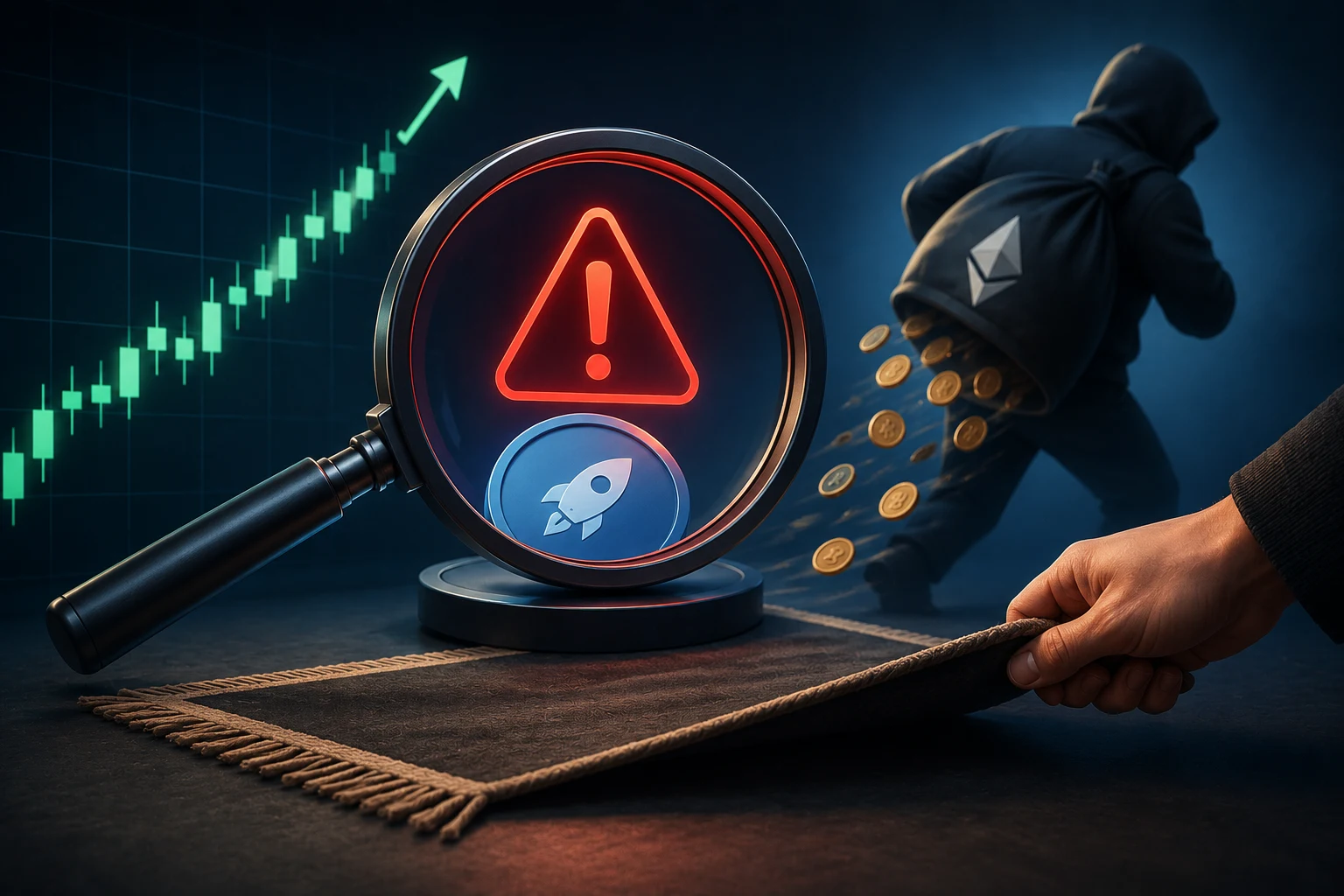
The basics: what a rug pull actually is
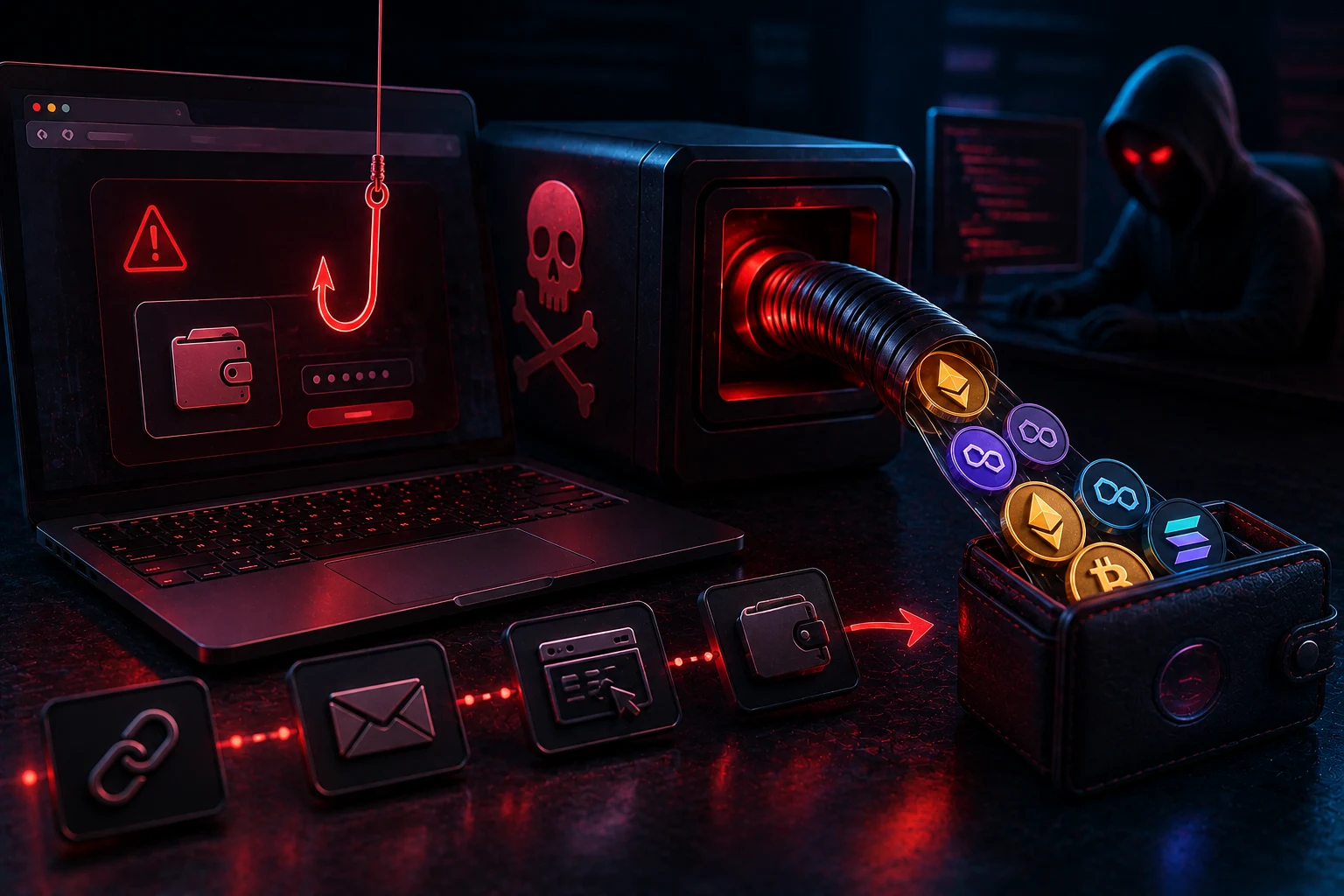
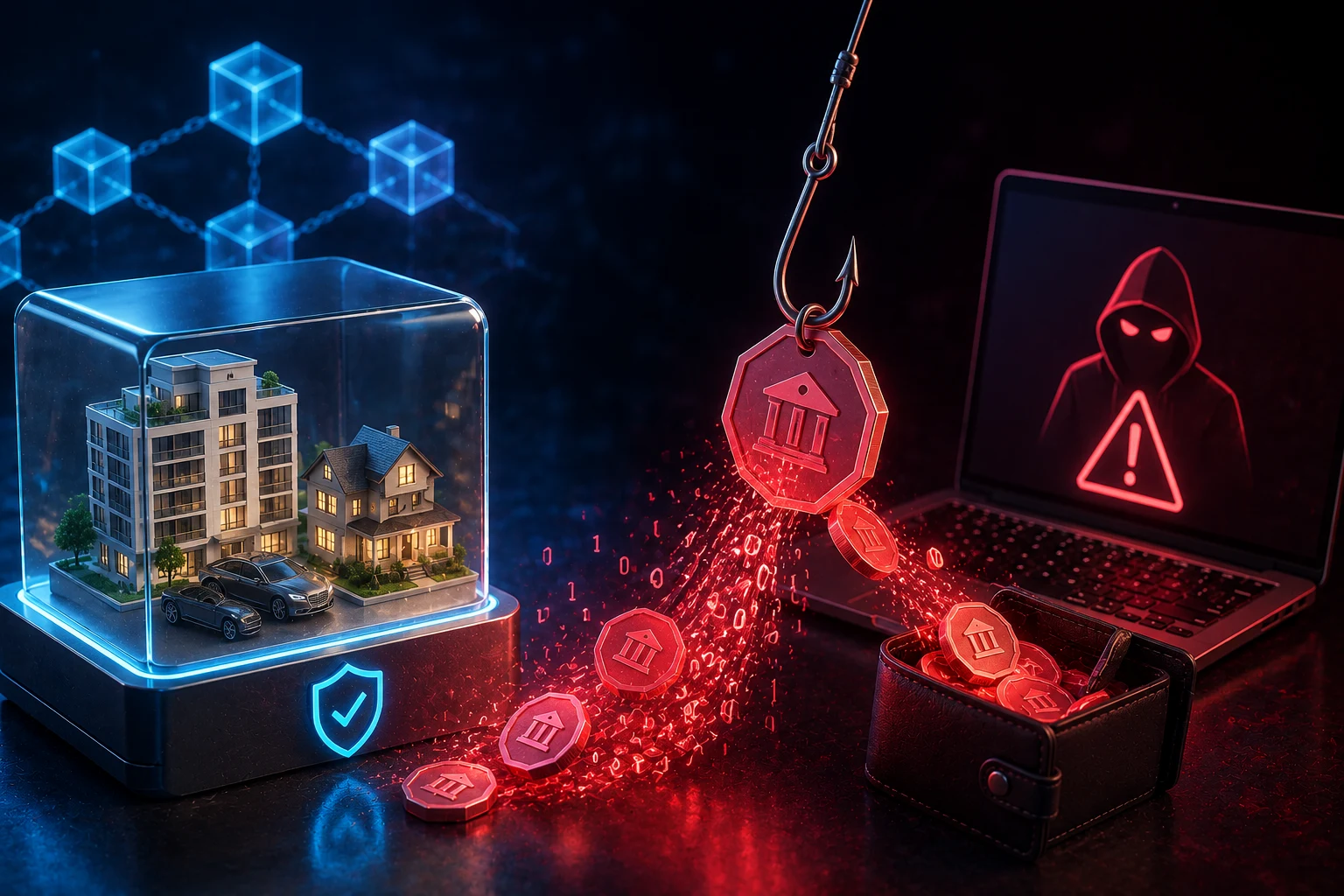
A rug pull describes a few related scam patterns:
- Liquidity rug. The team puts their token in a DEX liquidity pool, lets buyers come in, then withdraws the pool — taking the buyers' money and leaving them with a token they can't sell.
- Slow rug. The team gradually sells their large allocation into retail buying over weeks or months. Less dramatic but the same outcome.
- Hard rug. The contract itself has a hidden function letting the team mint unlimited tokens, blacklist holders, or pause transfers. They use it and disappear.
- Abandonment rug. The team stops working, deletes social media, and the token loses all value as the project dies.
In all cases, the result is the same: buyers hold tokens worth essentially zero. The good news: most rugs are forecastable. The bad news: most buyers don't run even basic checks.
Step 1: Check if liquidity is actually locked
For DEX-listed tokens, the team usually adds tokens + a base asset (ETH, SOL, etc.) to a liquidity pool. If the team can withdraw that pool, they can rug. The defense is a liquidity lock — sending the LP tokens (the receipts representing the pool position) to a time-locked contract or burning them.
Tools like Team Finance, UNCX, and DEXTools' liquidity tab let you check if a token's liquidity is locked, by whom, until when, and for how much of the total LP. Watch for:
- No lock at all. Rug risk: high.
- Only a small percentage locked. The team locked 5% and kept 95% withdrawable. Useless theater.
- Lock expiring soon. A lock that expires next week isn't a lock; it's a countdown to a rug.
- Burned LP tokens. Sent to a dead address, can never be withdrawn. Strongest signal.
Step 2: Check if the contract is renounced
Many token contracts give the deployer ("owner") special powers — mint new tokens, change fees, blacklist addresses, pause transfers. A renounced contract is one where the owner has been set to a null address, meaning no one can use those special powers anymore.
Renouncing is positive: it removes the rug surface. Look up the token contract on Etherscan (or equivalent), find the "Owner" field, and check whether it points at the zero address (0x000...000) or a real wallet. A real-wallet owner isn't automatically a rug — large, professional projects often keep some upgradability — but for small unaudited projects, owner control is a serious risk.
Caveat: smart developers can disguise dangerous functions under benign-sounding names. A renounced contract that still has "setTaxFee" or "airdrop" functions that mint unlimited tokens may not be safe even with renounced ownership.
Step 3: Check the team
Doxxed teams — real names, public history, professional reputation — have far more to lose from rugging than they could gain. Anonymous teams have no such restraint. This doesn't mean every anon team rugs (many are honest builders) but the statistical risk profile is much higher.
Things to look for:
- Real names on LinkedIn with verifiable professional histories.
- Prior projects (success or honest failure) — track record beats promises.
- Public talks at conferences, podcast appearances, photos with people you can verify.
- For anon teams: strong technical evidence — active GitHub, working product, pseudonym with reputation.
What's missing matters too. A "team" of stock photos with fake LinkedIn profiles is a classic rug setup. Reverse-image-search any team photo before believing it.
Step 4: Look at on-chain holder distribution
Open the token on a block explorer (Etherscan, Solscan, etc.) and look at the holder list. Common rug patterns:
- Top 1-3 wallets holding most of the supply. They can dump on you any time.
- The deployer wallet still holds a huge allocation. No vesting visible.
- Many wallets created in the same block with identical balances. Fake holder distribution to look popular.
Compare with a legitimate project — Bitcoin, ETH, established tokens — and you'll see thousands of holders with gradual concentration. A new token with 200 holders, three of whom hold 80%, is structurally unsafe.
Step 5: Check the audit (carefully)
A real audit by a known firm (Trail of Bits, OpenZeppelin, Quantstamp, CertiK, etc.) reduces rug risk because it catches dangerous functions in the contract. But:
- An "audit" by a firm you've never heard of is worth nothing — make sure the firm is reputable.
- Check whether the audited contract matches the live contract — projects sometimes audit one version then deploy another.
- Audits don't catch tokenomics or team intent — only contract code. A safe contract can still be rugged through liquidity withdrawal or coordinated selling.
Step 6: Read the marketing pressure
Almost every rug has the same marketing texture: artificial urgency. The token's launch is "now or never"; the influencers all post the same talking points; the Telegram is full of celebration emojis; admins DM you with exclusive opportunities. Compare with a project that's confident in its own value — it doesn't need to push.
The reliable correlation: the harder the marketing pressure, the more likely the rug. Real projects rarely need to convince anyone to buy at any specific moment.
Common mistakes that turn buyers into rug victims
- Buying because price is up. A pump just means earlier buyers got in cheaper. It tells you nothing about whether the project is safe.
- Trusting an audit's existence without reading what it says. Audits often flag exactly the risks the team then ignores.
- Believing "locked liquidity" without checking the lock. Some projects say liquidity is locked when only a tiny percentage is.
- Buying tokens promoted by influencers. Influencer promotion is almost always paid; their endorsement says nothing about safety.
- Sizing too big. Even if you do everything right, a small unknown token is high-risk. Never invest more than you can afford to lose entirely.
The safety checklist
Before buying any small or new token, run through this — five minutes of work catches most rugs:
- Is liquidity provably locked or burned? For how long?
- Is the contract renounced? If not, why not?
- Is the team doxxed with a real track record?
- Does holder distribution look healthy (no 3 wallets holding 80%)?
- Is there a real audit from a known firm — and does the audited contract match the live one?
- Is the marketing relaxed and confident or pushy and urgent?
- Have I sized so a total loss isn't catastrophic?
Any single red flag is reason to skip. Combine two and the math says walk away.
Read the rug pull patterns before you're in them
Rug pulls usually have a paper trail — researchers spot the warning signs on-chain, write threads, and call them out before the dump happens. Zippfeed tracks crypto security news across multiple sources with sentiment and importance scoring, so when a project starts showing signs (huge transfers to exchanges, suspicious contract changes, social media silence), you see the early warning in time to act. The best protection against rug pulls is paying attention to the people watching for them.