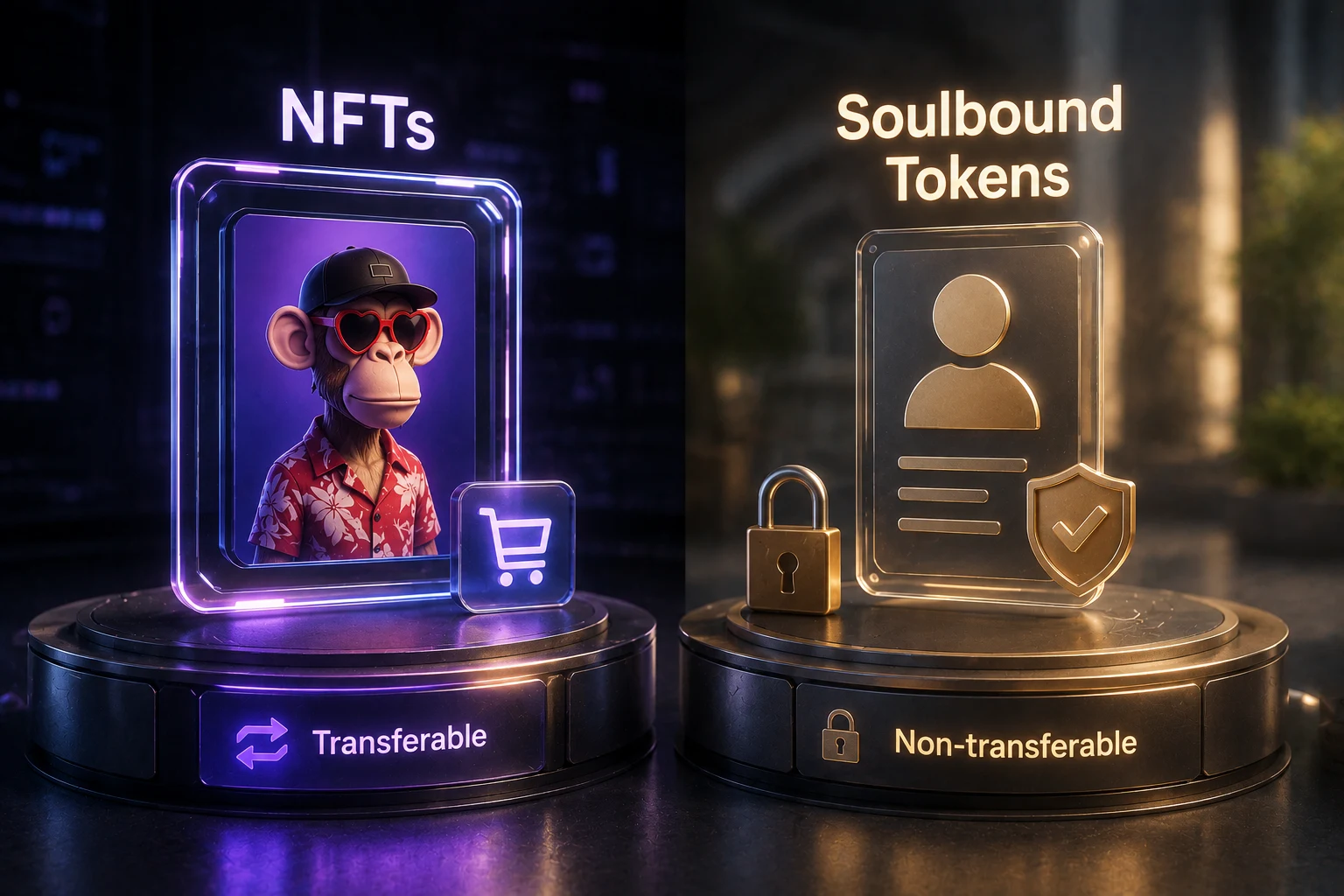
What are NFTs and soulbound tokens, really?
Both live on a blockchain, both point to a unique item via a token ID, and both are usually minted on Ethereum or an Ethereum Virtual Machine (EVM)-compatible chain using the ERC-721 or ERC-1155 standard. The visual difference is cosmetic. The functional difference comes from a single line of code in the token's smart contract, the piece of code that runs on the blockchain and decides what the token can do.
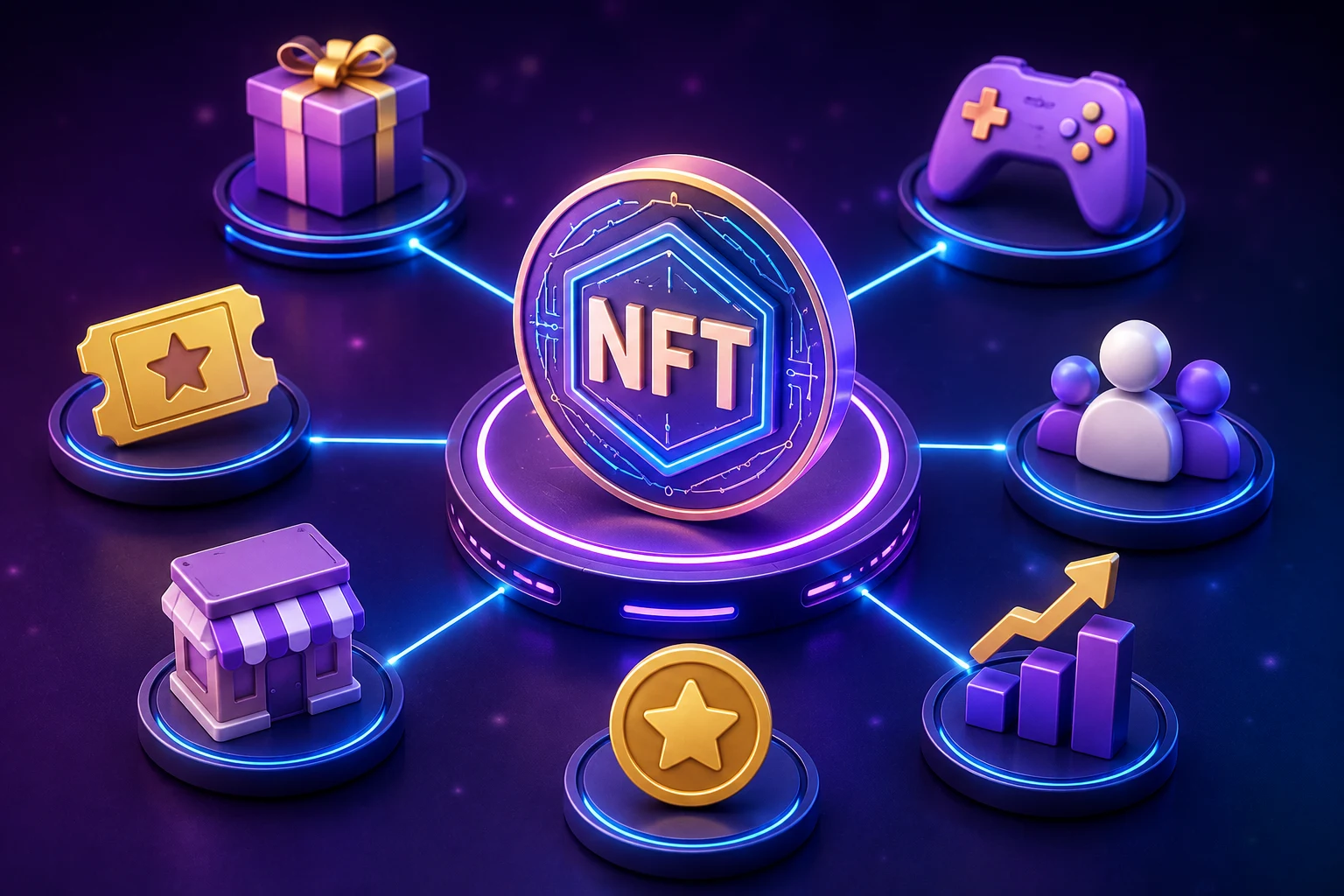
A standard NFT contract includes a transfer function. Anyone who owns the token can call it, send the token to another wallet, sell it on a marketplace, or hand it to a friend. That tradeability is the entire point of the asset class for art, collectibles, and in-game items.
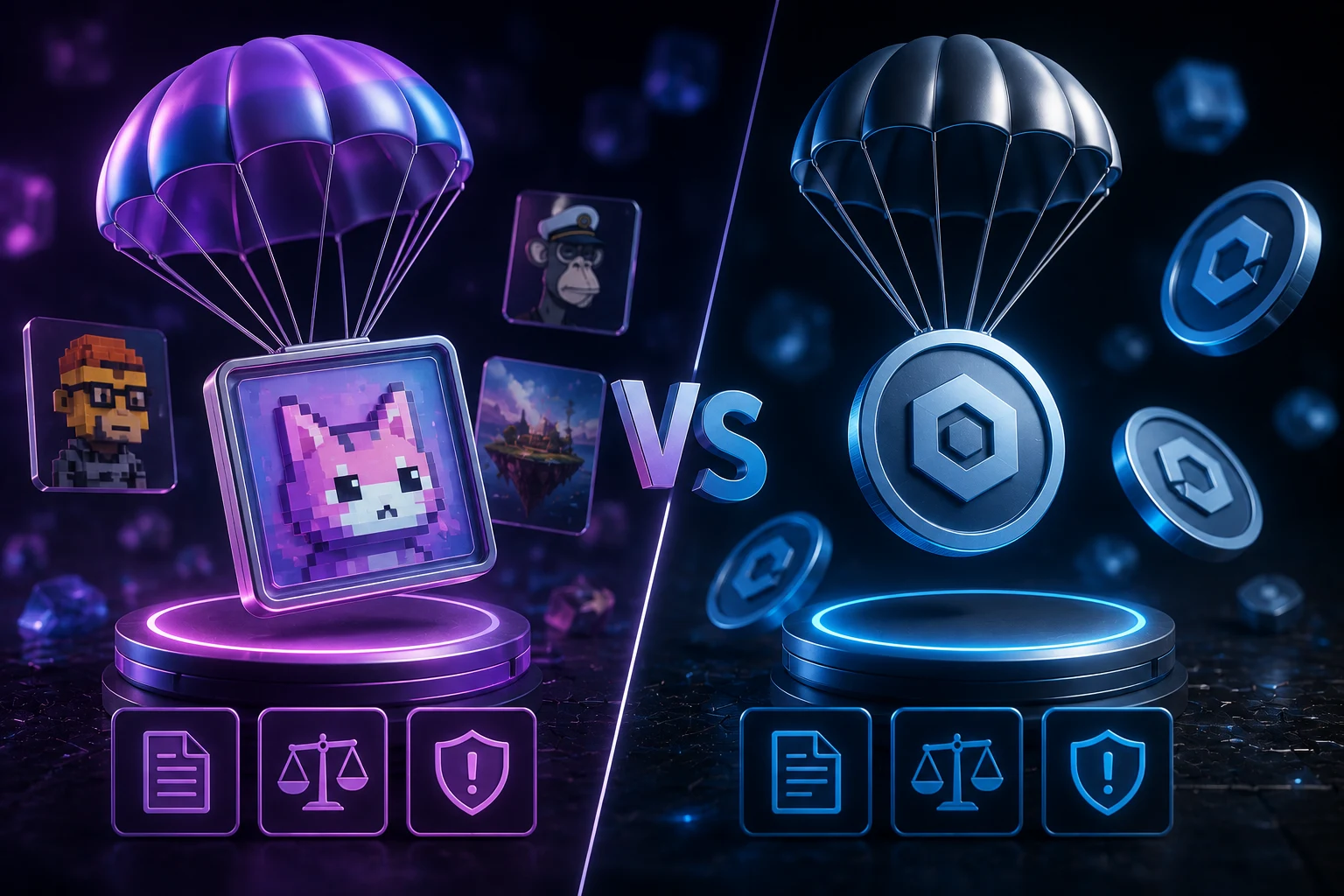
A soulbound token contract disables, removes, or guards the transfer function. The token can still be minted to a wallet and read by applications, but the owner cannot send it elsewhere. The name comes from a 2022 Ethereum research paper that borrowed the term from the World of Warcraft game, where high-level items bind to a character and cannot be traded or sold.
Because the same token standard is used, wallets, block explorers, and marketplaces all display both tokens the same way. You usually cannot tell which is which until you read the contract, or until you try to transfer one and the transaction fails.
Why the transferability switch matters so much
Tradeability is not a small feature. It is the foundation that gives an NFT its market value, because buyers expect they can resell or move the asset. Remove that ability and the token's economics change completely. It can no longer be priced by what someone else will pay for it, because no one else can hold it. It becomes a credential, not an asset.
This is the lens that frames the whole comparison. The question is not whether soulbound tokens are morally better or worse than NFTs. The question is whether you want the credential to be tradeable, and that answer depends entirely on the use case.
For a piece of digital art, tradeability is essential. The artist wants collectors, collectors want liquidity, and the secondary market funds more creation. For a university degree, tradeability would be a bug. A diploma that anyone can buy is not a credential. For a concert ticket, the answer is more nuanced, which we will get to in the practical section.
Real implementations you can look at today
The most widely deployed soulbound-style token is the POAP, or Proof of Attendance Protocol. When you attend a conference, join a virtual event, or complete a challenge, organizers can mint a POAP to your wallet. The token serves as a verifiable record that you were there at a specific time. POAPs are technically NFTs (most are ERC-721 on Gnosis Chain), but the contract does not allow transfers, so they cannot be resold or faked by buying one secondhand.
Lens Protocol, a decentralized social network built on Ethereum, hands every user a soulbound profile NFT when they sign up. That profile acts as the user's identity and follows them across every Lens-compatible app. Because the profile is non-transferable, no one can buy, sell, or hijack a reputation someone else built.
Several research projects have explored SBTs for civic identity. The original 2022 paper by Vitalik Buterin, E. Glen Weyl, and Puja Ohlhaver proposed using soulbound tokens to prove education, employment, and other credentials without a centralized issuer. Gitcoin Passport takes a softer version of the same idea, granting soulbound stamps to wallets that have verified their humanness, ownership of accounts, or history of contributing to public goods.
The risks people hand-wave past
Loss is the most underappreciated risk in the soulbound world. With a tradeable NFT, losing access to your wallet is painful but recoverable: the token still exists on-chain, and you can recover it by importing your seed phrase (the list of words that backs up a crypto wallet) into a new wallet, or by working with a custodian if one holds the keys. With a soulbound token, loss means loss. If the issuer does not build a recovery mechanism, the credential is gone forever when the wallet is gone.
This is not a theoretical problem. Studies of early Ethereum activity have shown that a meaningful share of all tokens are held in wallets whose keys appear to be lost. For a $200 JPEG, that is sad. For a university degree or a KYC-lite credential, it is a serious design flaw.
Identity-graph spam is the second risk. Soulbound tokens are designed to build reputation, and reputation is a target. An attacker can airdrop thousands of fake credentials to a victim's wallet, attempting to forge associations with extremist groups, stolen identities, or shady services. The victim cannot simply reject the tokens, because most contracts let anyone mint to any address. Researchers call this the SBT harassment problem, and it has no clean solution.
Privacy is the third risk. Because soulbound credentials are publicly readable on the blockchain by default, anyone can see what you have attended, which DAOs you have contributed to, and which issuers trust you. That is fine for public reputation, but it is a serious liability for credentials that were supposed to be private, like medical records or political affiliations.
Trade-offs between the two designs
Tradeable NFTs give you liquidity, but they also create a market for fraud. People buy fake verifications, sell degrees they did not earn, and rent out credentials to bypass reputation gates. Soulbound tokens close that loophole, but they also close the door on legitimate recovery and resale scenarios.
Consider a concert ticket. The traditional NFT ticket lets resellers speculate on the secondary market, which fans hate but promoters sometimes tolerate. A soulbound ticket kills the resale market entirely, but it also means a fan who genuinely cannot attend the show loses the value of the ticket with no way to recover it.
Some projects now use a hybrid: the ticket is a tradeable NFT, but the entry check mints a soulbound attendance token to the wallet that actually scans in. That way the resale market functions, and the verifiable record of who attended is non-transferable. This split design may become the most common pattern for credentialed events.
Regulatory and privacy implications
Tradeable NFTs have drawn the attention of regulators because they look, walk, and quack like securities. The U.S. Securities and Exchange Commission has repeatedly signaled that some NFT collections may fall under securities law, especially when marketed as investments with promised returns. Soulbound tokens sidestep that risk in most cases, because there is no secondary market to regulate.
But soulbound tokens trip other wires. KYC-lite credentials, where a soulbound token attests that a wallet has passed some check without revealing the underlying data, become a target for anti-money laundering (AML) regulators. If a soulbound token is used to bypass traditional KYC, expect regulators to ask whether it qualifies as an identity verification service under existing financial rules.
Privacy regulators care about the immutability of public chains. A soulbound token cannot be deleted. If it encodes a credential you later regret holding, such as a medical diagnosis or a political donation, removing it from the public ledger is not straightforward. The General Data Protection Regulation in Europe enshrines a right to erasure, and on-chain public records sit in tension with that right.
For builders, the practical takeaway is that the legal treatment of your token depends less on whether it is soulbound or tradeable and more on what it represents, who issued it, and whether it is marketed as an investment. The smart contract switch is just the surface.
How to choose between them for your project
Start with one question: do you want the holder to be able to transfer this token to anyone else? If yes, mint a regular NFT. If no, mint a soulbound token. The decision is usually that simple, and trying to retrofit one into the other after launch is hard.
Then ask three follow-ups. First, what happens when the holder loses their wallet? If the answer is catastrophic, you need a recovery design, such as a multi-sig guardian, a time-locked social recovery contract, or an issuer-side reissuance process. Second, how will you prevent identity-graph spam? Common answers include allowlists for minters, recipient opt-in, and burnable tokens that holders can dismiss. Third, do you need privacy, and if so, will the data live on a public chain or a private one with zero-knowledge proofs?
For most identity and reputation use cases, the soulbound pattern is the better fit, but it only works if the design acknowledges loss, spam, and privacy from day one. For most collectibles, art, and gaming assets, the tradeable NFT remains the right primitive, and trying to make it soulbound usually destroys the value.
Following the NFT and SBT space the smart way
The line between tradeable NFTs and soulbound tokens keeps moving, and so does the news around it. New projects launch every week claiming to have solved recovery, spam, or identity, and most of them have not. Tracking which experiments are actually being used, and which are just whitepapers, is a losing game if you do it manually. Zippfeed surfaces NFT and SBT headlines with sentiment scoring (bullish, neutral, or bearish) and an importance rating, so you can spend less time reading and more time deciding what is worth building or holding.

 WuBlockchain
 Crypto Capital Venture
 Lookonchain
 TheBlock