What an NFT utility token is, in plain English
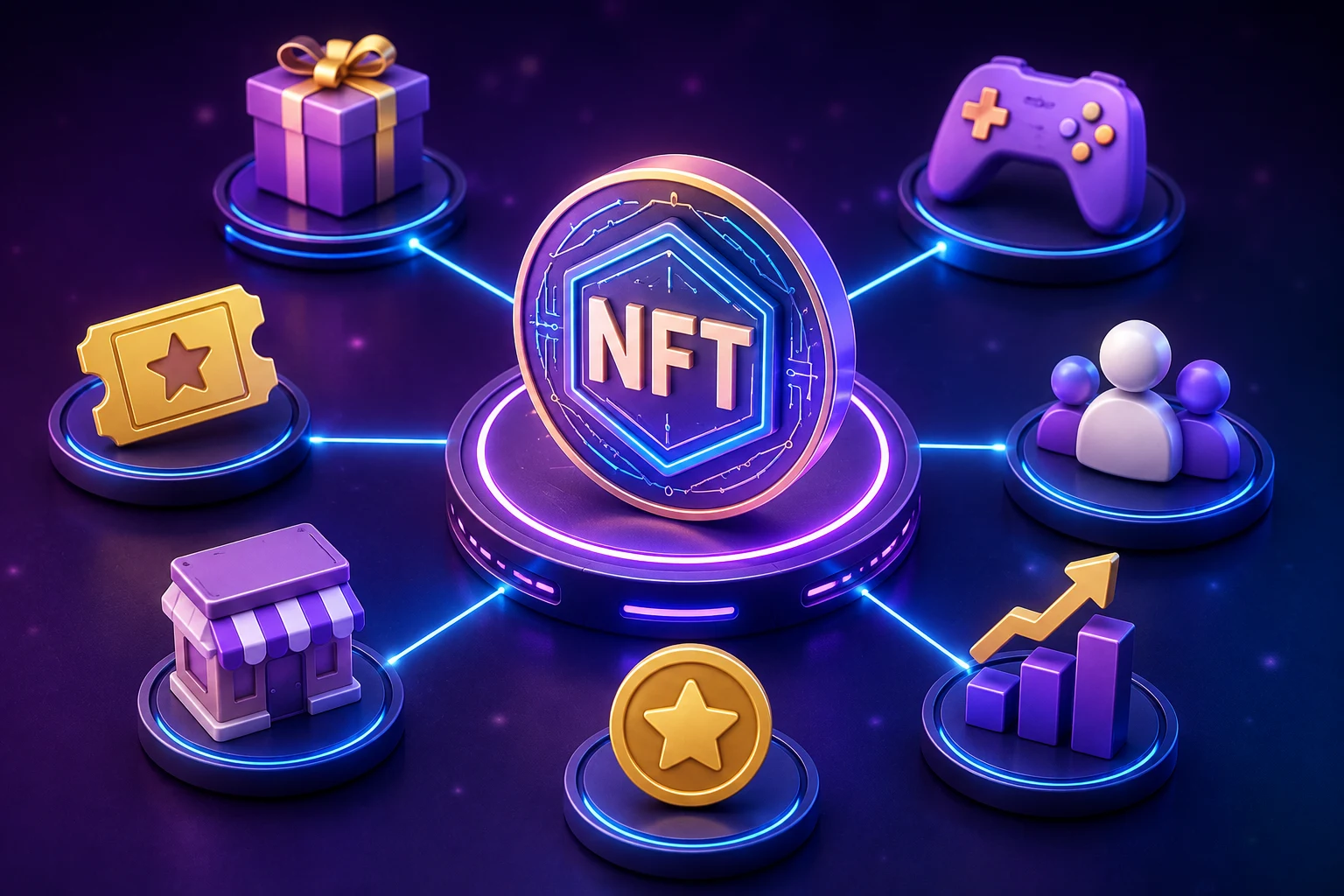
A non-fungible token is a one-of-a-kind entry on a blockchain. It points to a token id, an owner address, and usually a small piece of metadata. When people talk about a 'utility NFT' or 'NFT utility token', they mean a token whose main reason for existing is to give the holder some kind of right. The right might be entry to a Discord, a seat at a governance vote, a concert ticket, a loyalty discount, or proof that you attended a conference.
This sits in contrast to the original NFT wave, where the token mostly represented a piece of digital art, a profile picture, or a generative collectible. Those tokens were bought because they might appreciate, because the community felt cool, or because the owner wanted to support an artist. Utility NFTs are bought, at least in theory, because they do something.
That 'in theory' matters. The on-chain part of any NFT is just code that says address X owns token id Y. The benefit is almost always defined somewhere else, either in a smart contract function (like a vote or a claim) or on a website run by a team (like a ticket scanner or a member login). The honesty of any utility NFT lives in that 'somewhere else'. The token itself cannot force a human to seat you at a concert or give you a discount.
The honest risk picture before anything else
Utility NFTs carry four overlapping risks that beginners rarely price in. None of them are exotic. They are the everyday failure modes that explain why the majority of utility projects from 2021–2023 quietly faded.
Rug pulls are the headline risk. A team sells 5,000 'lifetime membership' NFTs, raises several million dollars, builds a thin Discord, then stops replying. The token still exists on-chain. The benefit does not. Buyers are left holding a token whose only remaining use is selling it to someone else for less. Several high-profile 2022 launches (like the Frosties case, where two founders were charged with fraud) followed exactly this script.
Off-chain redemption is a trust bet. If the utility is 'show this token at the door for a free drink', the venue, the brand, or the app has to stay in business and keep honoring it. Companies get acquired, partnerships end, and servers get shut down. An on-chain token outlasts most of the partners who promised to honor it.
Metadata and standards change. Many older NFTs point to metadata stored on IPFS or a centralized server. If that server goes offline or the format changes, the 'benefit' can quietly disappear even though the token still shows in your wallet.
Regulatory drift is real and quiet. Some tokens marketed as 'utility' started looking a lot like unregistered securities once regulators began paying attention. Projects that raised money on the promise of future utility have been investigated, and the token holders were the last in line, not the first. None of this means utility NFTs are scams. It means the buyer has to evaluate the issuer the same way they would evaluate a small business loan.
How utility actually works: on-chain vs off-chain
Every NFT utility token splits into two layers. The on-chain layer is the smart contract. It can run code automatically, without anyone needing to approve anything by hand. The off-chain layer is everything in the real world: a website, a human, a venue, a server. Understanding which layer delivers the benefit is the single most useful thing a beginner can learn.
On-chain utility is enforced by code. Examples include voting in a DAO, claiming airdrops, splitting revenue through a smart contract, or using token-bound accounts (the ERC-6551 standard) where the NFT itself becomes a wallet that can hold other tokens and interact with apps. Because the contract runs on Ethereum or another chain, no one can quietly cancel the right. If the code says 'any holder of token id 1–1000 can claim 10% of this pool', that code runs as written until the community votes to change it.
Off-chain utility is enforced by humans and businesses. A concert promoter who sells NFT tickets still has to scan your QR code at the door. A coffee chain offering NFT-based loyalty still has to keep a rewards database. If the business disappears, so does the benefit, even though the token is technically in your wallet forever. This is not a flaw of NFTs. It is a feature of how the world works. The token is just the receipt.
The honest framing for a beginner is: the more the benefit lives in the smart contract, the more durable it tends to be. The more it lives on a website run by a startup, the more you are betting on that team.
The soulbound credential pattern
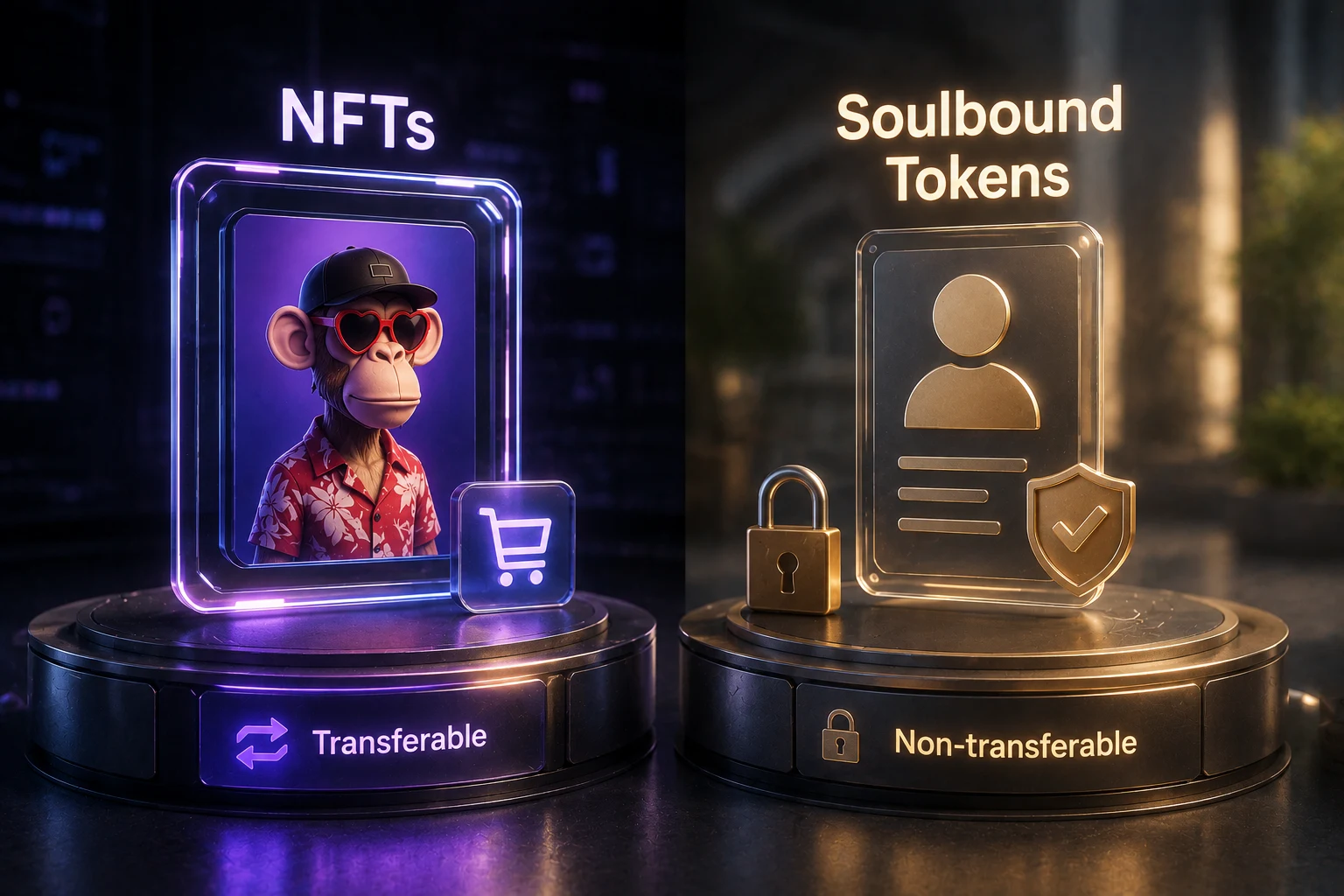
One of the most interesting utility patterns is the soulbound token. A soulbound token is a non-transferable NFT. By default, NFTs can be moved from wallet to wallet, which is why people can sell them. A soulbound token cannot be sold or given away. It is bound to the wallet that received it, which makes it behave more like a certificate than a collectible.
This pattern is useful for credentials that should not have a secondary market: university diplomas, conference attendance, proof of KYC, employee badges, or voting weight in a specific community. If a 'degree NFT' could be sold on OpenSea, it would stop being a degree. Soulbound design solves that by making the transfer function revert.
Implementation varies. Some projects simply refuse to include a transfer function in the contract. Others use allowlists or wrapping patterns. The most rigorous version is being standardized at the protocol level, but for now most soulbound tokens rely on the issuer's smart contract behaving as advertised.
For a buyer, the soulbound pattern is a signal. If the seller wants you to hold a token for access to a private community, and they make it soulbound, they are telling you that the value is in being a member, not in flipping the token. That is usually a healthier project than one that loudly markets 'utility' while quietly listing the token on a marketplace for ten times the mint price.
Royalties, IP rights, and what 'utility' often really means
Two recurring claims sit under the word 'utility': royalties and intellectual property rights. Both deserve plain treatment.
Royalties. Many NFT collections include a code-level royalty: every time the token is resold on a participating marketplace, a percentage (commonly 2.5% to 10%) is automatically routed to the original creator's wallet. On chains like Ethereum, the standard is enforced by marketplaces that opt in. The right is real, but it is not absolute. Marketplaces can choose to honor or ignore the royalty, and several large marketplaces now let buyers set custom (lower) royalties. Creators have responded by routing revenue through their own smart contracts instead, which works until users stop using those contracts.
Intellectual property. When you buy an NFT, you almost never buy the copyright to the underlying art. You buy a token. The fine print in most projects (sometimes called 'terms') spells out what you can do: usually display it, sometimes use it as a profile picture, rarely use it commercially. A few collections, like some Bored Ape derivatives, transferred broad commercial rights to the holder. That exception is loud because it is rare. Most 'IP utility' claims should be read as 'you can show the picture', not 'you own a brand'.
The honest summary: programmable royalties are a real, code-enforced right that can route a small slice of secondary sales back to the creator. Commercial IP rights for the holder are an exception, not a default, and they almost always live in a legal document rather than in the token itself.
Real examples: tickets, loyalty, and governance passes
The clearest utility NFTs are boring on purpose. Event tickets are the easiest example. A promoter issues 500 tokens for 500 seats, each token holding a unique seat id. The venue scans the token at the door, the seat is yours, and resale happens peer-to-peer with the promoter taking a small cut. Several major events experimented with this, including some sports leagues and music festivals. The wins were small (less counterfeiting, faster entry) and the losses were also small (poor apps, confused staff), which is exactly what you would expect from a new ticket delivery system.
Loyalty programs are the second most common pattern. A coffee chain or airline issues a token that represents points. Because the token is in your wallet, you can trade, sell, or stack those points in ways the chain's own app might not allow. Some projects bundle loyalty with membership: hold the token, get a discount, get early access to drops. The PENGU token associated with the Pudgy Penguins brand is a recent example of a token tied to a recognizable IP that has been positioned as part of a broader membership and consumer ecosystem. Whether that ecosystem delivers durable utility depends entirely on the team's execution, not on the token itself.
Governance passes are the third pattern. DAOs (decentralized autonomous organizations, which are member-owned internet groups that vote on treasury spending and protocol changes) often issue NFTs as membership cards. Holding the NFT means you can submit and vote on proposals. The right is enforced by the smart contract, which is why governance is the cleanest case of on-chain utility. The same logic powers token-bound accounts (ERC-6551): the NFT itself can own other tokens, vote, and interact with apps, turning a collectible into a small wallet with a personality.
Each of these examples has the same shape: the token is the key, the benefit lives somewhere else, and the issuer's trustworthiness determines the outcome.
How to evaluate a utility NFT before you buy
The mechanics only matter if you can apply them. A short checklist is more useful here than a long lecture. Before paying for any NFT marketed as utility, work through these five questions.
First, where does the benefit actually live. If the answer is 'in the smart contract' (voting, claim function, royalties), the utility is enforceable. If the answer is 'in our app' or 'at our venue', you are trusting the team. Both can be valid, but they are not the same bet.
Second, who is the team, and have they shipped before. Anonymous teams are not automatically scams. Anonymous teams who have not shipped anything, raised a lot, and have no public roadmap are a different story. Look for working products, public GitHub, and named advisors.
Third, is the contract verified and the metadata pinned. On Ethereum, that means the contract is verified on Etherscan, the metadata is stored on IPFS or a stable decentralized store, and the team has not retained an admin key that can mint or burn tokens at will. A 'mint' function in the hands of a single wallet is a quiet way to dilute holders later.
Fourth, is the project already listed for many times its mint price on a marketplace. A token claiming 'utility' while trading at a steep premium on secondary markets is mostly being traded for speculation. That does not make it bad, but it does make the 'utility' framing a marketing layer on top of a price bet.
Fifth, what happens if the team disappears tomorrow. If the answer is 'nothing, the on-chain functions still work', the project is in better shape than one whose entire benefit relies on a login at a website that may go offline in a year. This is the soulbound credential question in a different form. If the token can be separated from the issuer and still do something, it has real utility. If it cannot, you are really buying a subscription that happens to be on-chain.
What 'real' utility looks like, and what it usually doesn't
The most useful mental model is to split utility NFTs into three honest buckets. The first bucket is real on-chain rights: governance, royalties, token-bound accounts, and claim functions. These are enforceable by code and tend to outlast the team that launched them. The second bucket is hybrid rights: tickets, event access, and loyalty perks that depend on a partnership with a venue or brand. These are valid but fragile, because the partner can change. The third bucket is vapor: promises of 'future ecosystem', 'metaverse integration', or 'exclusive experiences' that never arrived and, in the worst cases, were never intended to.
Most failed 'utility' projects sat in the third bucket. A 2023 analysis by several crypto researchers found that a large share of 2021–2022 utility launches had stopped all meaningful activity within twelve months of mint, and the floor price of those tokens reflected that. The lesson is not that utility NFTs are bad. The lesson is that 'utility' is a word, and the market has learned to be skeptical of words that arrive before products.
How to follow utility NFT projects without getting burned
Utility NFT launches move fast, the same handful of names cycle through Discord and Twitter, and the gap between a working product and a polished pitch can be hard to see in real time. Tracking every mint, every partnership announcement, and every quiet contract upgrade by hand is a losing game. Zippfeed surfaces NFT and token headlines with sentiment scoring (bullish, neutral, or bearish) and an importance rating, so you can tell the difference between a real product launch and another promise before you decide whether to spend the ETH.


 WuBlockchain
 Crypto Capital Venture
 Lookonchain
 TheBlock