What is PENGU, and why does it sit next to other PFP tokens?
PENGU is the official token of the Pudgy Penguins brand, a profile-picture (PFP) NFT collection originally minted on Ethereum in 2021. The token itself launched on Solana in late 2024 and later expanded to Abstract, a Layer-2 network connected to the broader Ethereum ecosystem. That makes PENGU an unusual hybrid: an NFT-native brand that chose a non-Ethereum chain for its primary token distribution.
The pitch is simple. Pudgy Penguins already had a recognizable consumer brand thanks to its licensed toy line with a major retailer, plush product rollouts, and a steady stream of brand collaborations. PENGU was framed as a way to widen the brand's audience beyond existing NFT collectors, giving new holders a token to trade while keeping the original NFT collection as the cultural anchor.
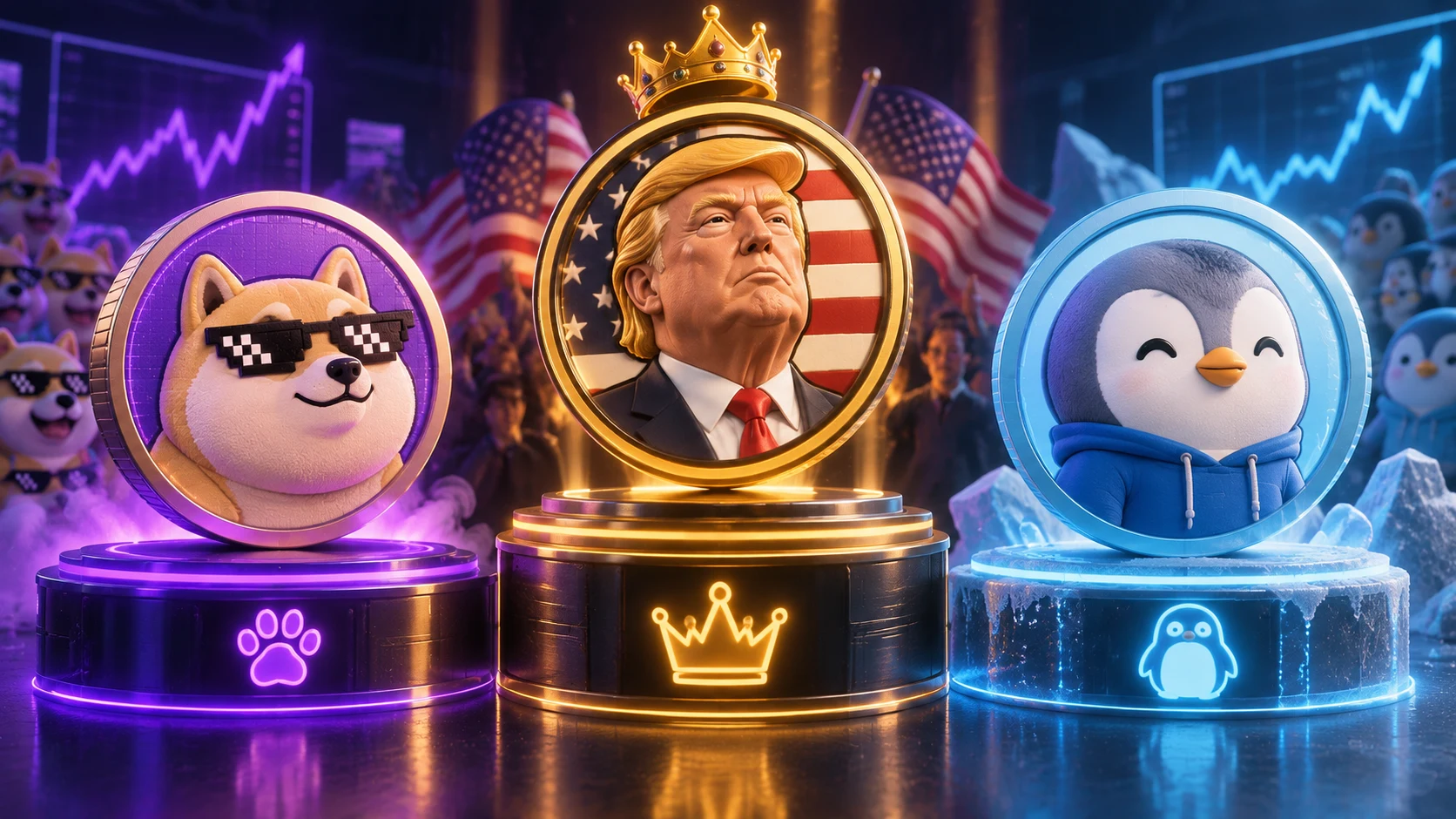
This structure places PENGU next to a small but growing category: PFP collections that issue a separate, tradable token alongside their NFTs. Milady CULT is the other flagship example, launched by the Milady maker culture community. Both projects blur the line between memecoin and brand token, which is exactly why it is worth comparing the tokenomics side by side.
The risks of PFP-with-token launches before the mechanics
Before getting into supply numbers and unlock schedules, it helps to name the failure modes that have hit this category repeatedly. PFP-with-token launches have a short, brutal history, and most of the patterns that hurt earlier projects are still relevant.
Post-airdrop drawdowns are the rule, not the exception. Tokens airdropped to NFT holders and free claimants almost always sell off sharply once recipients are free to move them. Drawdowns of 50% to 80% from the first-day open have been common in 2024 and 2025. A token's launch price reflects hype, not fundamentals, and the airdrop itself creates a steady stream of willing sellers.
Licensing revenue does not flow to token holders. This is the single most misunderstood point about PENGU and similar brand-backed tokens. When a toy line sells, the revenue goes to the brand company or licensor, not to a treasury that buys back PENGU. Unless a project's whitepaper or governance documents create a hard link (buybacks, dividends, fee routing), the token is a cultural bet, not a revenue share.
Multi-chain fragmentation can break liquidity. PENGU exists on Solana and Abstract at minimum, with bridges in between. Bridged versions of the same token can trade at different prices, and liquidity can fragment across pools. Traders who assume a single order book are often surprised by slippage.
Memecoin crowd and NFT crowd have different time horizons. A token that attracts day traders behaves very differently from a token held by long-term NFT collectors. The mix shifts over weeks and months, and so does the price action.
PENGU tokenomics in detail
PENGU has a total supply of 88.88 billion tokens, a number chosen for its meme-friendly repetition rather than scarcity. Of that supply, roughly half was distributed at launch: about 25.9 billion to the Pudgy Penguins and Lil Pudgys NFT communities, and around 24 billion to a broader claim window for wallets that met certain activity criteria on Solana.
The airdrop dust filter. To prevent Sybil farming (one person claiming many times through many wallets), the team applied a dust filter. Wallets that received or sent very small SOL transfers to qualify for the claim window were excluded or received reduced allocations. This is a common anti-Sybil measure in modern airdrops, but it is imperfect: determined farmers can still chain wallets through DEXes to look organic.
Remaining supply. The team, treasury, and liquidity buckets account for the rest of the supply. A meaningful portion of team and investor tokens sits under a vesting schedule, typically cliff-vested for several months and then released linearly over a longer window. Traders who ignore unlock dates do so at their own risk, since supply expansion is a known sell-pressure event.
Multi-chain distribution. PENGU launched on Solana and bridged to Abstract, a consumer-focused Layer-2 built using the OP Stack. Abstract was chosen partly because it shares cultural DNA with consumer NFT communities and offers lower fees for on-chain brand experiences. The trade-off is that bridging introduces wrapper contracts and can split liquidity between Solana DEXs and Abstract-based venues.
Pudgy Penguins brand revenue: who actually gets the money?
Pudgy Penguins has built one of the more recognizable brand extensions in NFTs. The collection has a licensed toy line sold through major retailers, ongoing plush and merchandise drops, and a steady cadence of collaborations with fashion and food brands. Revenue from these activities flows to the operating company behind the Pudgy Penguins brand.
This is where the distinction matters. PENGU holders do not automatically receive royalties, dividends, or buybacks funded by toy sales. The brand and the token share a narrative and a marketing budget, but they are not legally or mechanically linked in a way that sends cash to token holders. If you are evaluating PENGU as a way to invest in Pudgy's commercial success, you are buying exposure to a thesis, not a revenue stream.
By contrast, some DeFi tokens explicitly route a share of protocol fees to token holders, either through buybacks or staking rewards. PFP-with-token projects rarely offer anything that mechanical. The closest precedent is when a DAO treasury chooses to use brand profits to support the token, but that is a governance decision, not a contractual right.
Milady CULT and the comparison set
Milady CULT is the most direct comparison point. Milady is a PFP collection with strong counterculture roots, often associated with the neon-soaked internet aesthetic of the early 2020s. CULT launched as a token alongside the NFT brand, with a smaller supply figure and an airdrop weighted toward existing NFT holders and certain on-chain activity patterns.
Supply and concentration. CULT has a much smaller total supply than PENGU, in the billions rather than tens of billions. Smaller supply does not automatically mean scarcity is tighter, because circulating supply, unlocks, and centralized exchange listings shape real float. Still, a smaller headline number can attract retail attention.
Narrative and audience. Milady leans into meme and counterculture energy, with a thinner commercial brand story. PENGU leans the opposite direction, toward a family-friendly consumer brand with toy shelves and licensing deals. The audiences overlap at the edges but the core buyers are different.
Brand revenue. Neither CULT nor most other PFP tokens route external brand revenue to token holders by default. The comparison across this category is therefore mostly about narrative, supply, and airdrop mechanics rather than cash flow.
Other comparison cases. Beyond Milady, smaller PFP launches such as project-specific tokens tied to generative art collections have followed similar templates: airdrop to NFT holders, claim window for outsiders, vesting for insiders. The cycle has been brutal for most of them, with tokens briefly spiking on launch and then grinding down as unlock supply hits the market.
Drawdown and liquidity: what the post-airdrop months looked like
The post-airdrop period for PFP-with-token launches tends to follow a recognizable pattern. Initial excitement on day one gives way to a multi-week drawdown as airdrop recipients sell into any meaningful bid. Liquidity, which looked ample on launch day because of concentrated market maker activity, often thins out once the market makers step back.
For PENGU specifically, the token experienced sharp drawdowns in its first months, trading well below its initial airdrop valuation reference points. Some of that drawdown was specific to PENGU, and some of it was a function of overall risk-on, risk-off rotation in memecoins and altcoins. Either way, the lesson is the same: a token's launch is not its floor.
Liquidity on Solana DEXs was reasonable at launch but fragmented across pools. Bridged PENGU on Abstract traded at times at slight premia or discounts relative to Solana, depending on bridge flows. Traders using automated routing may not always get the best price across venues, especially during volatile windows.
Practical implications for NFT collectors and memecoin traders
For NFT collectors already holding Pudgy Penguins, the token represents a way to monetize brand affinity without selling the underlying NFT. Holding PENGU does not give you special NFT perks by default, but the brand has historically rewarded engaged community members through separate programs, giveaways, and product access. Whether those rewards justify holding the token is a personal decision.
For memecoin traders, PENGU sits in an awkward middle. It is too brand-heavy to behave like a pure Pepe-style meme, and it is too token-native to behave like a slow-moving blue-chip NFT. That hybrid profile means volatility can spike when either audience rotates in or out. Size positions accordingly.
For both groups, the same risk rules apply. Treat PFP-with-token allocations as high-risk. Cap exposure to an amount you can afford to see drop 70% or more. Watch unlock schedules, treasury wallet activity, and bridge flows. And remember that licensing news is good for the brand narrative but is not, by itself, a fundamental catalyst for the token.
How to follow PENGU and PFP token launches the smart way
PFP token launches move fast and so does the news around them. Airdrop rules, vesting cliffs, bridge contracts, and licensing announcements all matter, and missing any of them can change your risk picture overnight. Tracking these signals manually across Discord, X, governance forums, and on-chain dashboards is a losing game. Zippfeed surfaces PENGU and PFP-token headlines with sentiment scoring (bullish, neutral, or bearish) and an importance rating, so you can cut through hype and react to what actually moves the needle.

 CoinDesk
 WuBlockchain
 TheBlock