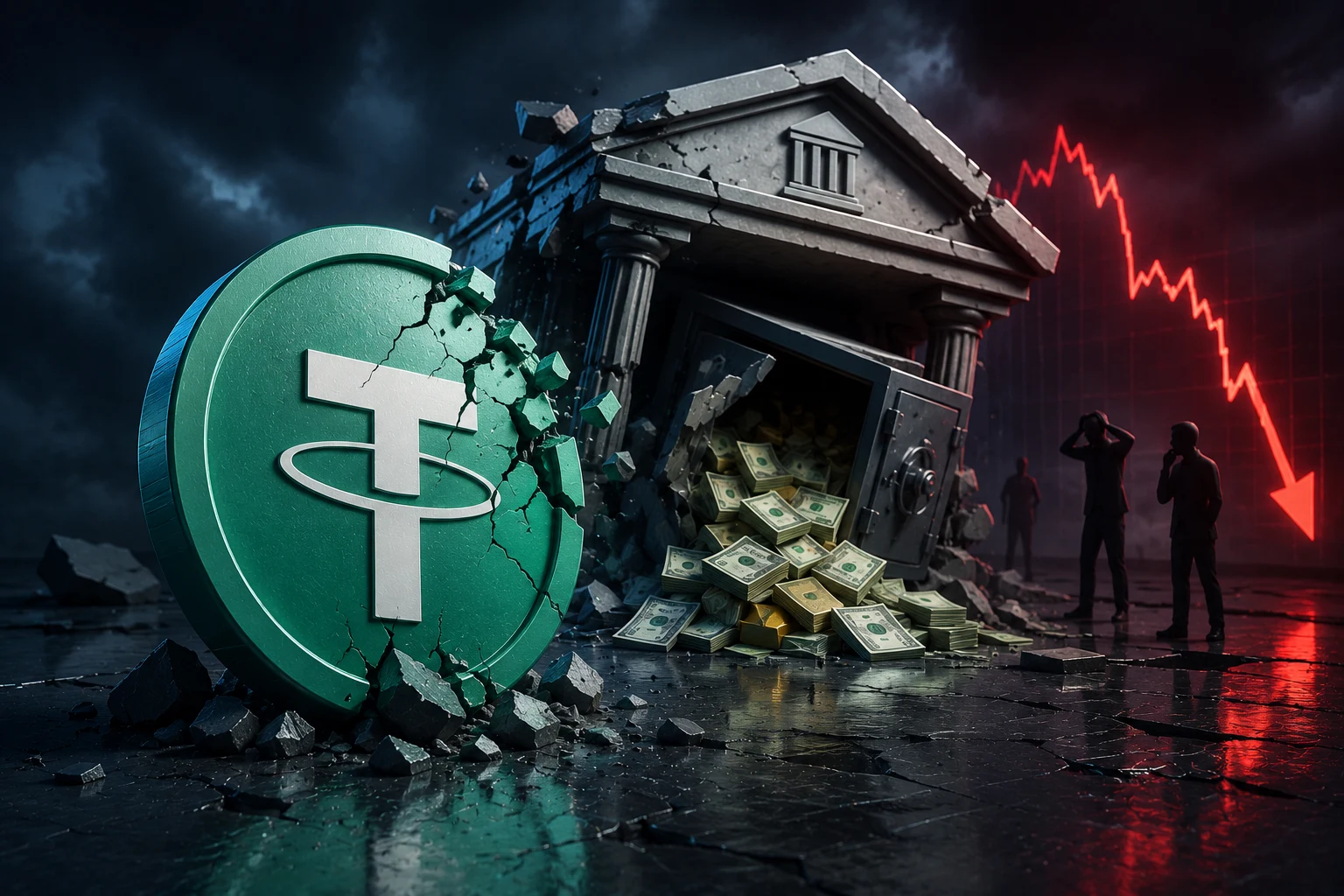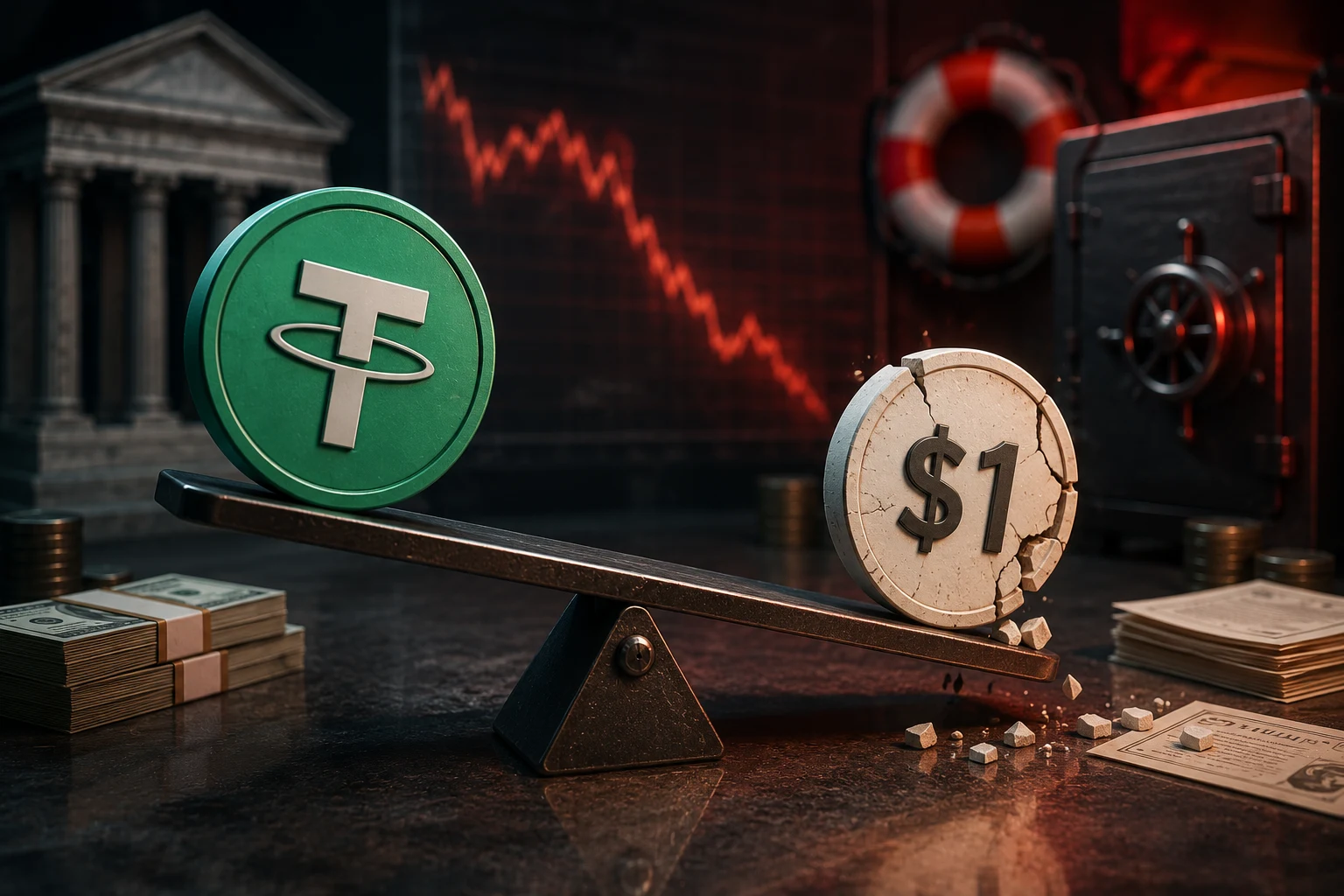
What "redeemable for $1" actually means in a stablecoin's terms
When a stablecoin issuer advertises that every token is redeemable for one U.S. dollar, the legal reality lives inside a multi-page terms of service document that almost no retail holder reads. Circle, the issuer of USDC, describes its redemption process as a service available to "eligible" account holders, with a $100,000 daily minimum on direct cash redemptions and the right to substitute "in-kind" reserves (mostly short-dated U.S. treasuries) when cash is unavailable.
Tether's terms for USDT are similarly restrictive: the company requires a minimum redemption of $100,000 per request, demands a completed KYC file, charges wire fees plus a verification hold that has historically stretched for weeks, and reserves the right to delay or reject any redemption. Paxos's PYUSD and Ethena's USDE run on comparable institutional rails, while the Tron-issued USDD effectively routes redemptions through just-in-time secondary-market arbitrage rather than a primary issuer window at all.
The plain-English version: a small holder with $500 of USDC is not a direct customer of Circle. They are a customer of an exchange, a wallet, or a liquidity pool that promises to honor the dollar peg. The only enforceable $1-for-token contract runs between that intermediary and the issuer.
The risks every stablecoin holder should price in
Three risk layers sit on top of the marketing promise, and they have all shown up in real events.
Counterparty and bank risk. Stablecoin reserves sit in commercial bank accounts and money market funds. During the March 2023 collapse of Silicon Valley Bank, roughly $3.3 billion of USDC reserves were parked at a single failed institution. Circle could not move the cash out fast enough to meet redemptions, and USDC traded down to about $0.87 on Coinbase and even lower on offshore venues until the U.S. government backstopped SVB deposits two days later. Holders who tried to sell on those two days absorbed the loss; only those who held through the disruption or transacted directly with Circle at par did not.
Operational and policy risk. Issuers can change terms, freeze addresses, or pause redemptions at their discretion. Tether has blacklisted more than $1 billion in USDT over the years tied to law-enforcement requests, and Circle froze funds linked to the Tornado Cash mixer in 2022. There is no constitutional or statutory right that compels an issuer to redeem a token it considers tainted, even if the holder is innocent.
Structural or "algo" risk. Not every dollar token is fully reserved. The 2022 TerraUSD collapse wiped out roughly $40 billion in market value in a week because UST had no hard claim on any issuer's balance sheet. USDD, marketed as a decentralized version, fell to about $0.93 in mid-2022 as the Tron DAO Reserve had to deploy billions in BTC and TRX to defend the peg. Both events are reminders that a $1 price is a description of the past hour, not a guarantee of the next one.
How daily minimums, fees, and in-kind payouts lock out small holders
Even when an issuer is willing and able to honor redemptions, the rules can make a direct cash exit impossible for the average user.
Minimum thresholds. Circle's published minimum for direct cash redemption is $100,000 per business day, with larger tiers requiring manual review. Tether's minimum is $100,000 per request with an attached fee schedule. PYUSD is similarly institutional-only. A holder with $50,000 of USDC on an exchange cannot knock on Circle's door; they have to find a buyer on Coinbase, Binance, or a DEX, and the spread they pay is the implicit cost of being below the threshold.
Fees and timing. Wire fees on USDT redemptions have historically ranged from $0 to $1,500 depending on the bank corridor, and the verification period before a first payout has stretched beyond a month in some cases. Circle charges a flat processing fee plus a percentage of the notional on large redemptions. None of this matters to a $100,000+ redemption; it matters enormously to anything smaller.
In-kind substitution. Several issuers reserve the right to pay redemptions in reserves rather than in cash. Circle has stated in its terms that it may deliver U.S. treasuries instead of dollars if cash is constrained, which is fine for a fund manager with a custody account and useless for someone who needs rent money. Tokenized treasury products such as BlackRock's BUIDL and Ondo's OUSG deliberately route every redemption into the underlying treasury bill, so the holder receives a T-bill, not cash, and earns whatever the overnight rate is at that moment.
Fire-sale thresholds are another clause worth reading. Some issuers reserve the right to impose extra fees, delay settlement, or convert to in-kind when daily redemption requests exceed a percentage of circulating supply. USDE added such language in 2024 after rapid growth made its synthetic-dollar mechanism sensitive to ETH collateral volatility.
Lessons from the USDC March 2023 and USDD 2022 depegs
The two clearest stress tests of the modern stablecoin era were the March 2023 SVB crisis for USDC and the May-June 2022 period for USDD, and they reveal what really happens when holders line up to redeem.
During the USDC event, Circle confirmed it held about $3.3 billion at SVB at the moment the bank was closed by regulators. The company paused normal treasury operations, and the price of USDC on Coinbase slipped to roughly $0.87 within hours. Holders who wanted out faced a choice: sell on the open market at a discount, or wait for Circle's banking relationships to normalize. Two days later, when the federal backstop was announced, USDC traded back to peg; holders who panicked on day one locked in losses that were never recovered.
The USDD event unfolded differently. Tron DAO Reserve, the entity backing USDD, did not have a direct issuer-redemption channel to begin with. Stability was supposed to come from arbitrage: mint USDD by locking TRX collateral, burn USDD for $1 of TRX. When TRX fell sharply in May 2022, the peg wobbled to about $0.93. The DAO Reserve responded by selling billions of dollars of its own BTC and TRX reserves to defend the peg, eventually stabilizing USDD. Holders who sold at the bottom took the loss; holders who waited were made whole, but only because a discretionary intervention worked.
The shared lesson is that legal redemption rights do not equal guaranteed liquidity. In both cases, the issuer's formal obligations were less important than the issuer's ability to access banking, liquid collateral, and discretionary reserves in a crisis. Small holders had no voice in either response and no contract clause that guaranteed them $1 within a fixed window.
Tokenized treasuries vs fiat stablecoins: a different redemption structure
Tokenized treasury funds like BlackRock's BUIDL and Ondo's OUSG have become popular as "safer" dollar alternatives, and the redemption mechanics are part of why. Unlike USDC or USDT, these products are not aiming for a fixed $1 NAV through a cash claim; they are shares in a treasury bill fund whose NAV drifts with the underlying bills.
Redemption is typically daily at the prevailing NAV, with minimums in the tens of thousands of dollars and payouts in kind as additional treasury shares or, for accredited investors, as cash after a settlement window. There is no issuer obligation to buy tokens back at a fixed price, because there is no fixed price. The trade-off is transparency: BUIDL and OUSG publish their treasury holdings on-chain or via a custodian, so the user can verify the collateral directly. USDC holders, by contrast, trust Circle's monthly attestations and the structure of its reserve policy.
For a holder who wants certainty that $1 today will still be $1 tomorrow, no token fully delivers that. Tokenized treasuries deliver the closest substitute (a yield-bearing instrument that tracks short-duration U.S. debt) while fiat stablecoins deliver the most liquid dollar proxy at the cost of trusting an issuer's banking and redemption policy. Neither is "money" in a U.S. legal sense; both function only as well as the issuer behind them.
What this means for a holder weighing USDC, USDT, PYUSD, USDE, or USDD
If you are choosing among the major dollar tokens, the practical implications of redemption rights boil down to four questions.
First, can you exit directly with the issuer? For most retail users the answer is no. You are an indirect holder, dependent on an exchange, a wallet, or a market maker. Pick the venue with the deepest liquidity for your token of choice, because that determines your real exit price.
Second, what is the issuer's track record under stress? USDC has survived one major banking scare and returned to peg quickly. USDT has never had a primary-issuer failure despite years of regulatory pressure. USDD survived its 2022 stress only with heavy discretionary intervention. PYUSD and USDE have not yet been tested by a major external shock.
Third, do you understand the in-kind clause? If your issuer reserves the right to deliver treasuries instead of cash, and you cannot receive treasuries, then your effective redemption path is the secondary market, not the issuer.
Fourth, how concentrated is your exposure? Holding more than $100,000 of any single token in a self-custody wallet exposes you to the same threshold problem if you ever need to redeem quickly. Holding small balances on multiple exchanges exposes you to platform risk but buys you liquidity.
None of this is financial advice. It is a description of how the contracts are written. Read the terms of service for whatever token you hold, and decide whether the redemption policy matches your assumptions about what "always worth $1" means.
Follow stablecoin redemption risk the smart way
Stablecoin depegs rarely start with the token itself; they start with a bank, a regulator, or a collateral blow-up somewhere upstream. Tracking that signal manually is a losing game for anyone who holds more than pocket-change levels of USDC, USDT, PYUSD, USDE, or USDD. Zippfeed surfaces stablecoin headlines with sentiment scoring (bullish, neutral, or bearish) and an importance rating, so you can spot the next redemption-stress event before the chart does. Add it to your daily routine and check the feed whenever your wallet balance gets meaningful.




 CryptoSlate
 CoinDesk
 Crypto News
 CoinTelegraph