What "PayFi" actually means in 2025
The word "PayFi" started showing up in 2024 marketing decks and on-chain dashboards as a shorthand for "stablecoin-based payment and credit infrastructure." The pitch is simple: if a USDC balance can sit in a smart contract, earn yield, and be moved anywhere in the world in under a minute, then the stack underneath it is no longer just a payments rail. It is a primitive that traditional finance had to glue together from banks, ACH, wires, and money-market funds.
That is the working definition worth holding onto. PayFi is the convergence of two things that used to live in separate buildings: payments (moving value from A to B) and credit (moving value from now to later). Stablecoins are the shared asset. The infrastructure on top, which includes lending protocols, card programs, B2B settlement layers, and tokenized Treasury bill funds, is what people now call PayFi.
It helps to contrast PayFi with the older phrase "crypto payments." In the 2017 wave, "crypto payments" usually meant: take Bitcoin or a random altcoin, try to convince a coffee shop to accept it, and watch the price crash wipe out the day's revenue. That experiment mostly failed. PayFi is different in one decisive way: the unit of account is a dollar-pegged stablecoin, not a volatile token. The merchant, freelancer, or treasury team is not betting on price. They are betting on settlement speed and access to credit, and that is a much sturdier value proposition.
The risks most PayFi explainers skip
PayFi is built on stablecoins, and stablecoins have a long, ugly history. Before getting into the mechanics, it is worth naming the failure modes that any serious user should keep in mind. These are not theoretical: each has happened, sometimes more than once.
Depeg risk. A stablecoin is only "stable" as long as its issuer or mechanism can honor redemptions at one dollar. USDC broke its peg briefly in March 2023 when Silicon Valley Bank collapsed and roughly 8% of its reserves sat trapped at the failed bank; it traded as low as about $0.87 before recovering. USDT has weathered multiple stress tests with thinner transparency. Even a short depeg is enough to liquidate on-chain borrowers because smart contracts do not wait for things to calm down.
Smart-contract and oracle risk. The on-chain lending side of PayFi runs on protocols like Aave and Morpho. These are code, and code has bugs. Oracles, which feed price data on-chain, can lag or be manipulated. The result is the same: a borrower can be liquidated at a bad price, and a lender can be left with bad debt that socializes losses to the protocol.
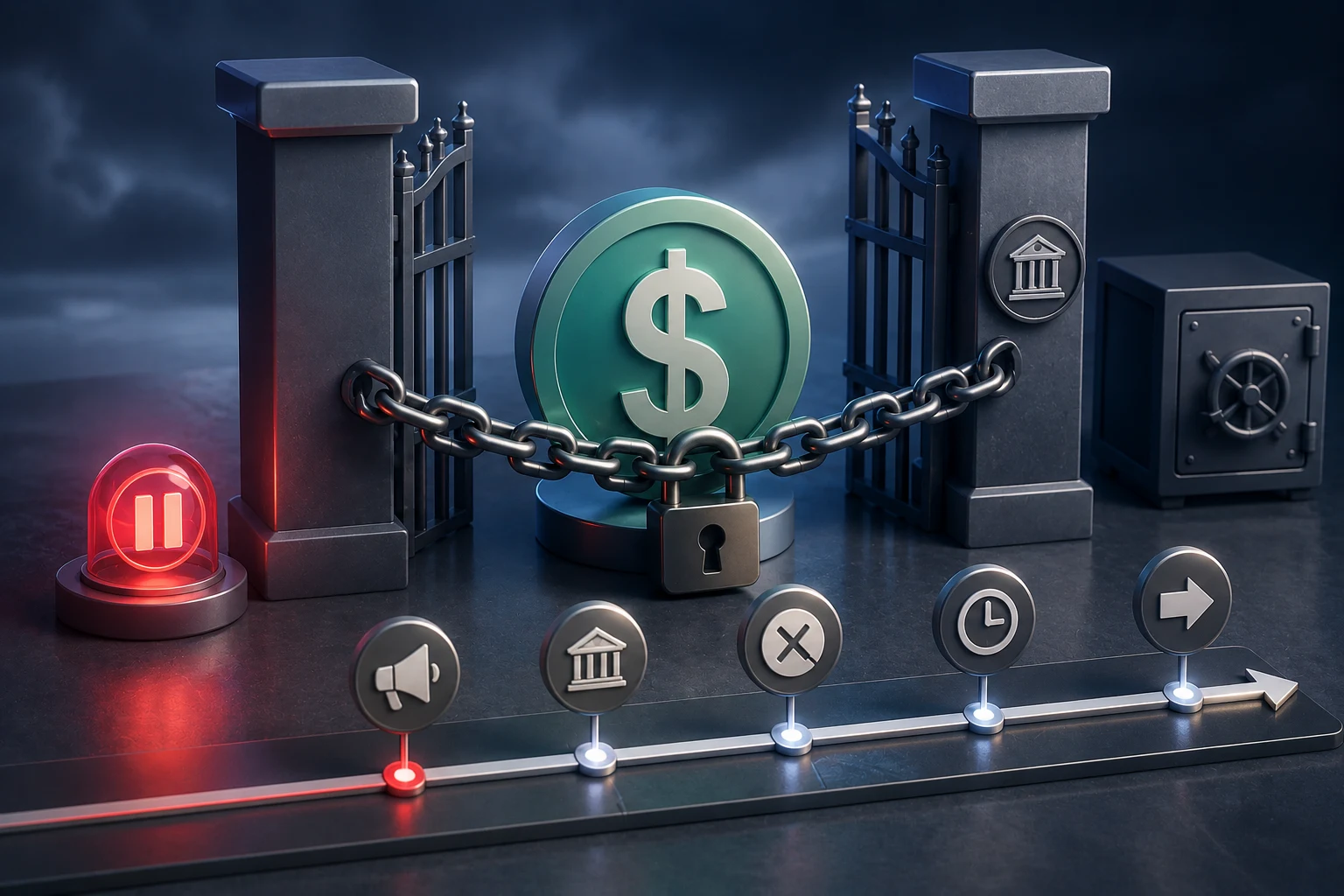
Regulatory and censorship risk. The U.S. Treasury's Office of Foreign Assets Control (OFAC) has sanctioned stablecoin addresses, and issuers like Tether have frozen funds at the request of law enforcement. That is the upside of centralization (you can freeze a thief's wallet) and the downside (a sanctioned address cannot transact, and the line between "thief" and "politically inconvenient" is set by governments, not by users).
Yield and collateral risk. When PayFi leans on tokenized T-bills, you inherit the credit risk of the underlying short-term Treasuries, the custody risk of whoever holds the keys, and the legal risk that your tokenized claim is actually honored in a bankruptcy. The wrappers look slick. The plumbing underneath is still a chain of intermediaries.
None of this means PayFi is a bad idea. It means anyone using it should know which layer of risk they are actually taking: stablecoin issuer, lending protocol, tokenized fund issuer, card program, or remittance corridor.
The credit side: on-chain lending against stablecoin collateral
The half of PayFi that has the most on-chain activity is credit, and the cleanest way to see it is through protocols like Aave and Morpho. The pattern is the same in both: you deposit a yield-bearing or plain stablecoin, the protocol marks your position to market using an oracle, and you can borrow against it, usually up to a loan-to-value ratio somewhere between 70% and 85%.
What changed in 2024 and 2025 is the collateral itself. Instead of depositing plain USDC and borrowing plain USDC (a pointless loop), users started depositing tokenized Treasury bill funds like Ondo's USDY, BlackRock's BUIDL, or Circle's USYC. The tokenized fund accrues yield from short-term Treasuries, so your collateral is slowly growing, and the protocol can offer better loan terms because the borrower's effective collateral is not static. This is the loop that turns a stablecoin into something closer to a programmable, yield-bearing cash equivalent.
ENA, the governance token of the Ethena protocol, sits in the same neighborhood. Ethena's "synthetic dollar," USDe, runs a delta-neutral basis trade (long spot, short perp) to generate yield. That synthetic dollar is then used as collateral and as a borrowable asset across DeFi, blurring the line between a stablecoin and a yield instrument. It is a useful case study because it shows where PayFi is heading: stablecoins that are not just dollar-pegged, but yield-native by design.
For a treasury team at a small company, the practical version looks like this: park idle dollars in a tokenized T-bill fund, post that fund as collateral on Aave or Morpho, and draw a USDC or USDT loan to fund payroll or supplier payments. The position earns Treasury yield on the collateral side and pays a variable borrowing rate on the loan. The spread is the cost of working capital, and the rails are open on a Sunday night when the bank is not.
The payments side: cards, B2B settlement, and 24/7 treasury
The payments half of PayFi is messier and more bifurcated than the credit half, which is one reason honest write-ups separate the two.
Consumer cards. A wave of stablecoin debit and credit cards (issued by Visa and Mastercard in partnership with crypto-friendly banks and fintechs) lets users spend USDC or USDT balances at any merchant that takes the underlying card network. The cards are real, the sign-up flows are real, and a meaningful number of crypto users use them to convert volatile holdings into everyday spending. The honest framing, though, is that these are mostly a UX layer on top of an existing card network. The merchant does not know or care that the customer funded the swipe with a stablecoin. From a PayFi standpoint, the on-chain plumbing is upstream of the swipe, not part of the merchant experience. Adoption is growing, but the narrative has run ahead of the volume.
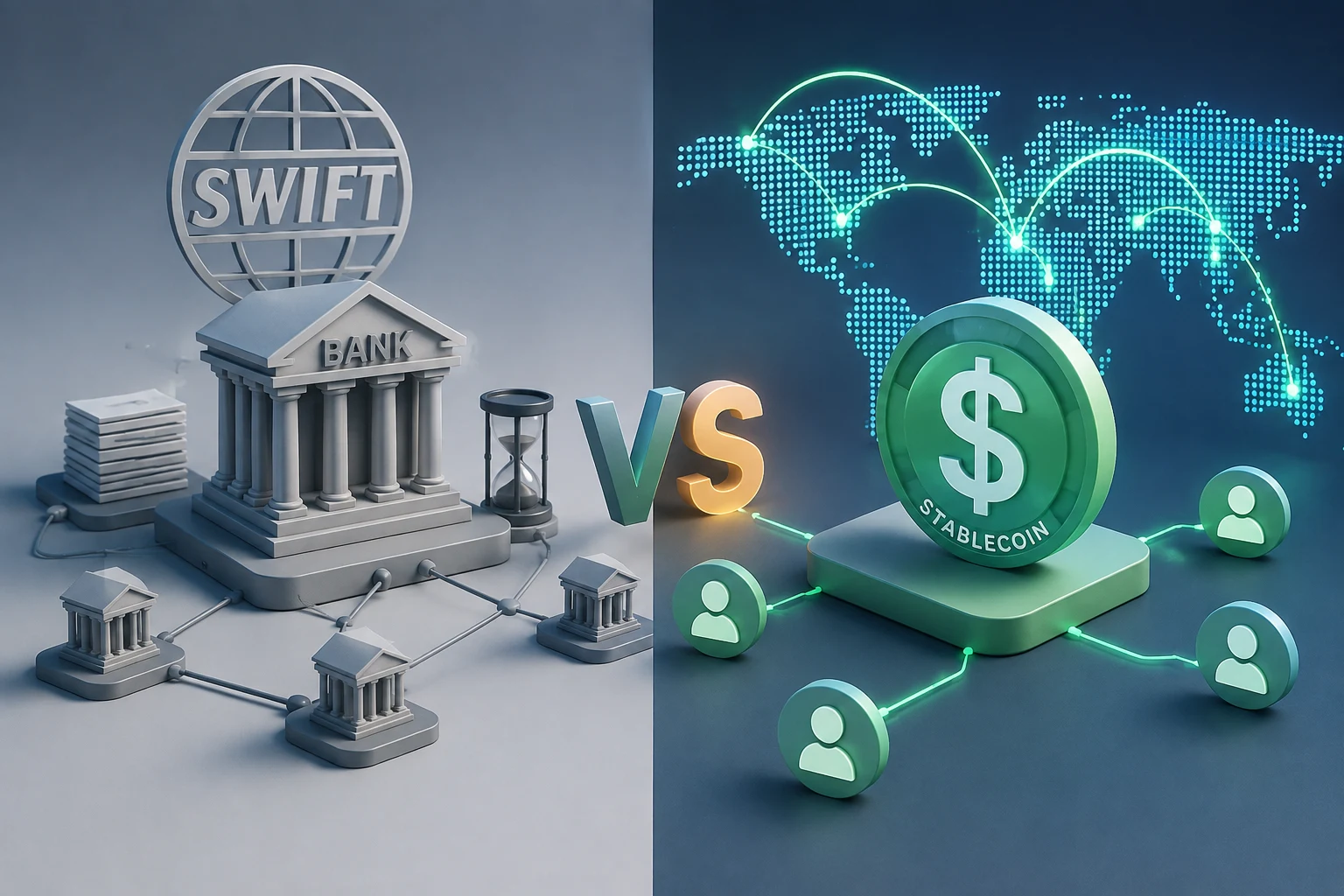
Cross-border B2B settlement. This is the part of PayFi with the most defensible real-world adoption. Paying a supplier in Mexico, the Philippines, or Nigeria through banking rails typically takes one to three business days, costs a percentage point or more in correspondent bank fees, and runs through multiple intermediaries. Sending USDC on a low-fee chain and converting to local currency at the last mile can be a fraction of the cost and finish in minutes. Several B2B-focused fintechs have built their entire stack on this model, and the dollar volumes, while small relative to SWIFT, are growing double-digit year over year.
24/7 treasury and working capital. Banks batch settlements. Crypto rails do not. For companies with global supplier bases, paying contractors across time zones, or running treasury operations that cannot wait for a Monday morning wire window, stablecoin rails offer something the traditional system genuinely does not: always-on settlement. This is the unglamorous core of PayFi. It is not a token launch. It is operations teams quietly using USDC on a weekend.
Tokenized T-bills: the quiet engine of PayFi
It is worth pausing on tokenized Treasury bill funds, because they are the connective tissue that makes the rest of PayFi work. The category has three names worth knowing.
BUIDL is BlackRock's tokenized fund, launched in partnership with Securitize, that holds short-term U.S. Treasuries and a small amount of cash. It is the institutional anchor of the category, and its existence is the single biggest reason traditional asset managers now take the on-chain dollar seriously.
USDY is Ondo Finance's tokenized note, designed to be accessible to non-U.S. users who are excluded from many money-market funds by regulation. It pays a floating yield sourced from Treasuries and is widely used as collateral in DeFi.
USYC is Circle's tokenized money-market fund, launched in 2024, that combines the issuer of USDC with a yield product. Putting the issuer of the dominant regulated stablecoin into the yield-bearing wrapper business is a signal of where the company thinks the next phase of competition is.
Why does this matter for PayFi? Because a tokenized T-bill is the closest thing crypto has to a "real" yield primitive. It is not subsidized by a token launch, not dependent on a passing AMM fee, not exposed to crypto-cycle volatility in the same way staking yields are. When a B2B settlement platform holds treasury float, or a card issuer holds collateral, or a DeFi borrower posts collateral, tokenized T-bills are increasingly the default. They are doing the quiet work of turning stablecoins from payment tokens into programmable cash.
How PayFi differs from "crypto payments" in the 2017 sense
If you were around crypto in 2017, the word "payments" carries baggage. The Bitcoin-as-a-payment-network pitch was loud and did not work at scale: blocks were small, fees were unpredictable, and a ten-minute confirmation time is brutal for a cup of coffee. Projects tried to bolt Lightning on top. Some worked. Most did not reach consumers.
PayFi is structurally different in three ways. First, the unit of account is a dollar-pegged stablecoin, so the receiver is not exposed to crypto volatility. Second, the network is not Bitcoin; it is a base layer like Ethereum, Solana, or one of the lower-cost L2s, with block times measured in seconds and fees measured in cents. Third, and most importantly, the use cases are not consumer retail. They are credit, treasury, and B2B settlement, which is where the actual dollar volume in global commerce sits. A coffee shop that accepts USDC is a cute demo. A supplier that gets paid in USDC every Friday at 2 a.m. is a business process.
None of that erases the old critique. PayFi is still a relatively small slice of global payments, and the parts of it that work depend on the same banking on-ramps and off-ramps that crypto has always depended on. The honest summary is that PayFi is tradfi plumbing rebuilt on a faster rail, and the question for 2025 and beyond is how much of that plumbing actually migrates.
Practical implications if you are building, investing, or just paying attention
For most readers, the right way to engage with PayFi is at the use-case level, not the token level. If you run a business with cross-border supplier payments, the practical experiment is to pilot a USDC corridor on a low-fee chain for a single vendor relationship and compare cost, speed, and reconciliation overhead against your current bank. If you manage treasury for a small company, the experiment is to park a portion of working capital in a tokenized T-bill fund and use that as collateral on a permissioned credit market. If you are a consumer, a stablecoin debit card is a fine way to convert volatile holdings into spending, but it is not a revolution; it is a wire from one balance to another.
For investors, the harder question is which businesses in this stack have a durable edge. The stablecoin issuers (Circle for USDC, Tether for USDT) sit on the most defensible position, because the network effect of a widely held dollar token is enormous. The on-chain lending protocols (Aave, Morpho) earn fees on credit demand. The tokenized T-bill issuers (BUIDL, USDY, USYC) earn fees on assets under management. The card and B2B settlement fintechs earn the thinnest margins, because they are competing on user experience in a category with no real moat. None of this is investment advice; it is a way of organizing the stack so that you can ask better questions.
The biggest mistake a beginner can make is to treat PayFi as a coin to buy. There is no "PayFi token." The category is a set of rails and protocols, and the way you benefit from it, or get hurt by it, is by interacting with one of those rails or protocols directly. If you want a deeper primer on the issuer side, see our guide on how USDC differs from USDT, and for the credit mechanics, our explainer on how on-chain lending markets actually work.
How to follow PayFi without getting sold a narrative
PayFi moves fast, and so does the marketing around it. Every quarter a new acronym shows up, every month a fresh protocol promises to be the "Stripe of stablecoins," and it is easy to lose track of what is real adoption versus what is a token launch with a payments-themed pitch deck. Tracking the underlying signals manually is a losing game. Zippfeed surfaces PayFi headlines with sentiment scoring, marking each story as bullish, neutral, or bearish, and an importance rating, so you can tell the genuine B2B settlement milestones apart from the noise.




 CryptoSlate
 CoinDesk
 TheBlock
 WuBlockchain