








 CoinDesk
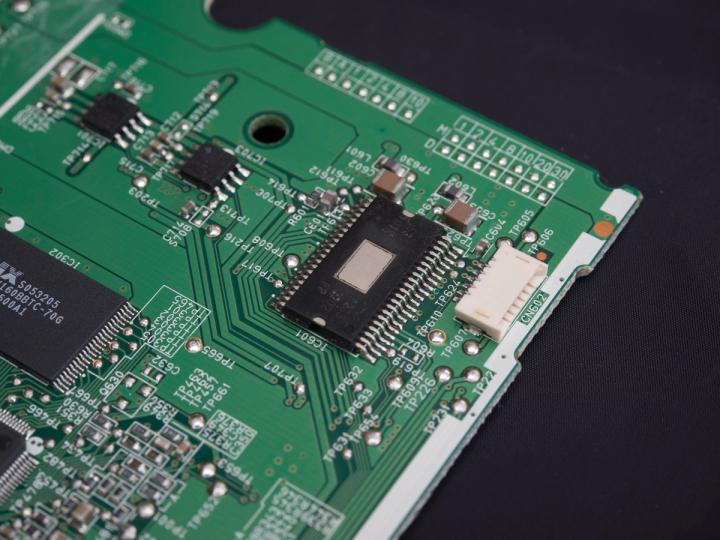



Micron Technology (MU) delivered a blockbuster Q3 on Wednesday, sending its stock up 16% in premarket trading and pulling the entire AI memory sector higher. Revenue came in at $41.5 billion versus the $35.7 billion Wall Street expected, while EPS reached $25.11 against a $20.49 consensus. Q4 guidance landed even harder: roughly $50 billion in revenue, about $6.8 billion ahead of the $43.2 billion Street estimate.
Why it matters
CEO Sanjay Mehrotra told analysts there is "no line of sight" to AI memory supply catching up with demand, with shortages in high-bandwidth memory (HBM) expected to persist well beyond 2027. HBM has become the backbone of AI infrastructure, essential for training and running large language models at scale. That framing re-rates the entire memory complex as a structurally constrained resource rather than a cyclical commodity, which is why SanDisk (SNDK) and SK Hynix both jumped around 13% alongside Micron. SK Hynix, the HBM market leader, is reportedly exploring a US listing that could value it at roughly $30 billion.
Market impact
The AI infrastructure bid spilled into crypto-exposed names. AI-linked crypto miners IREN and Cipher Digital (CIFR) each rose about 3% in premarket trading as the market read the print as a broader risk-on signal. The read is significant because capital has been rotating away from crypto all year: Bitcoin now trades near the $60,000 level, more than 50% below its October all-time high. A confirmed AI infrastructure cycle extending past 2027 gives allocators a reason to revisit high-beta AI-adjacent names across both equities and digital assets, even if the direct linkage from memory chips to BTC spot flows remains thin.

Frequently asked questions
-
What did Micron report that moved the market?
Micron posted Q3 revenue of $41.5 billion against $35.7 billion estimates and EPS of $25.11 vs $20.49 expected. Q4 guidance of roughly $50 billion came in about $6.8 billion above Wall Street's $43.2 billion consensus.
-
Why is CEO Sanjay Mehrotra's HBM shortage call important?
Mehrotra said there is "no line of sight" to AI memory supply catching up with demand, with shortages expected to persist well beyond 2027. That re-frames high-bandwidth memory as a structurally constrained resource for AI infrastructure, not a cyclical chip commodity.
-
Which other stocks rallied on the Micron print?
SanDisk (SNDK) and SK Hynix each jumped around 13% in sympathy. AI-linked crypto miners IREN and Cipher Digital (CIFR) also rose about 3% in premarket trading as the print read as a risk-on signal.
-
How does a memory chip beat connect to Bitcoin and crypto?
The direct linkage is thin, but Micron's confirmation that the AI capex cycle extends through 2027 gives allocators a reason to revisit high-beta, AI-adjacent names. Crypto miners with AI/HPC pivots like IREN and CIFR caught a sympathy bid despite BTC still trading near $60,000.
-
What is SK Hynix's role in the AI memory market?
SK Hynix is the current leader in high-bandwidth memory (HBM), the type of DRAM used to train and run large AI models. The company is reportedly exploring a US listing that could value it at roughly $30 billion.
 Benjamin Cowen
 WatcherGuru
 CoinTelegraph
 Altcoin Daily
 TheBlock