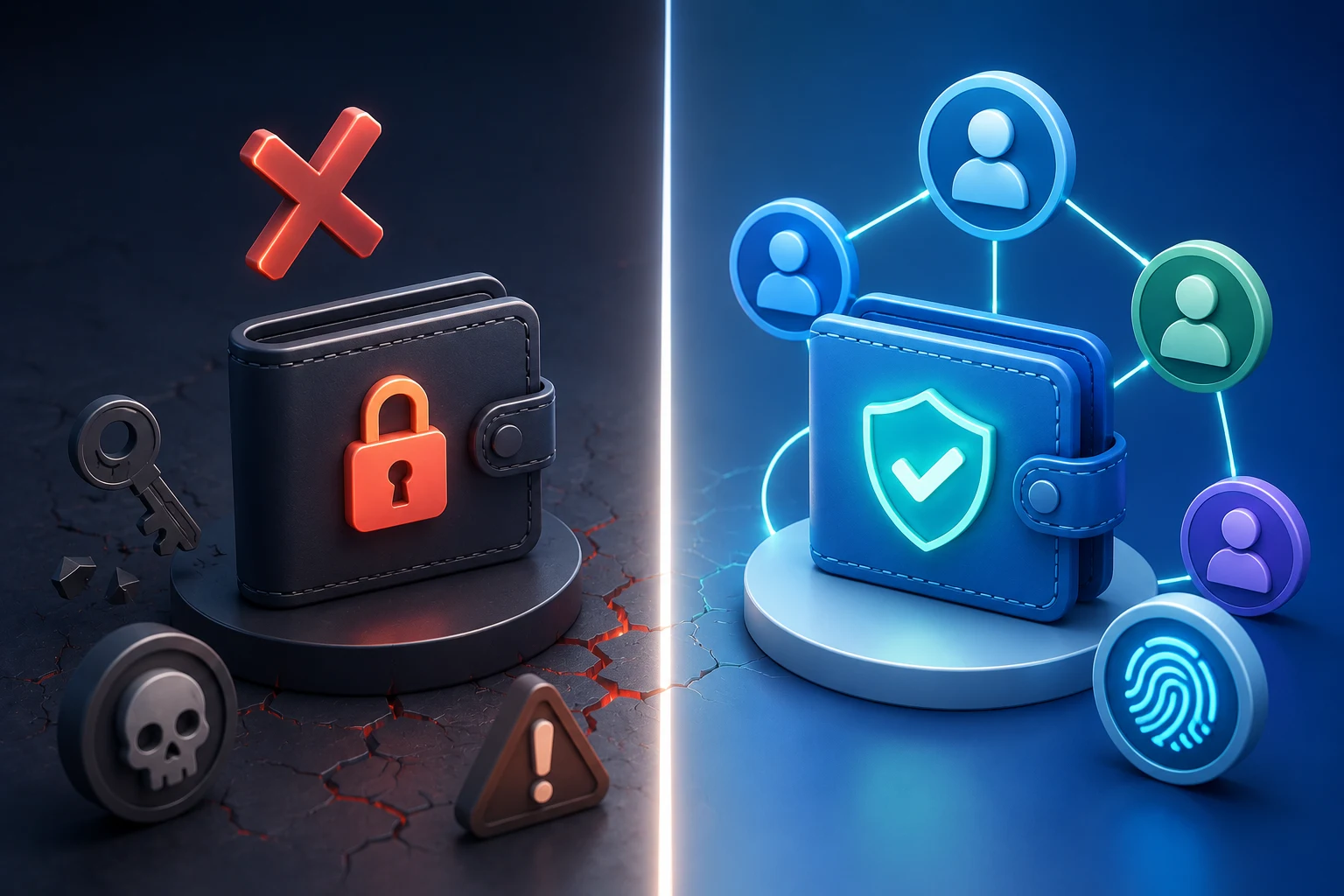
What problem is smart wallet account recovery actually solving?
If you have ever stared at a 12-word seed phrase and felt a small wave of dread, you have felt the real reason smart wallets exist. The classic crypto wallet, the kind Bitcoin pioneered and Ethereum copied for a decade, is an Externally Owned Account (EOA). It is controlled by a single private key, and that key is derived from your seed phrase. Lose the phrase and the funds are gone forever; leak the phrase and anyone in the world can take them. There is no customer support line, no password reset email, no second factor that helps once the phrase is out.
Smart wallet account recovery is the industry's answer to that brutal UX. Instead of one key controlling the account, the account itself is a small program (a smart contract) that lives on Ethereum at a fixed address. That program can define its own rules for who can sign, who can recover, and how authority changes over time. You can lose your phone, your laptop, your hardware wallet, even your memory of a password, and the contract still has a way to hand control back to you. In theory, this is the closest crypto has come to consumer-grade account safety.
The trade is that the failure modes change shape. You no longer lose access because of a single forgotten string of words; you lose access because your guardians collude, because the recovery quorum is set wrong, because a session key got hijacked, because the smart contract has a bug, or because the off-chain identity you used to set up guardians disappeared. Smart wallet account recovery is not magically safer. It is differently unsafe, and the rest of this article walks through how.
How account abstraction and recovery actually work
Two standards now define this category on Ethereum. ERC-4337, live since 2023, introduced the broader Account Abstraction (AA) layer: instead of every transaction needing a real private key, anyone can submit a UserOperation that a smart account validates against its own rules. ERC-7702, added in the Pectra upgrade, lets an ordinary EOA temporarily behave like a smart account for a single transaction, so existing wallets can opt in without migrating to a new address.
Inside a smart account, three actors matter for recovery. The signer is the device or passkey that produces day-to-day signatures, like approving a swap or minting an NFT. The guardians are a predefined set of addresses (other EOAs, other smart accounts, or even email/social login services) that the contract recognizes as recovery authorities. The owner is the address that ultimately controls the account; when a quorum of guardians agrees, they can rotate the owner to a new signer.
The typical flow when you lose your phone looks like this: you tell your guardians, who are usually friends, family members, or a service, that you need a recovery. Each guardian sends a transaction confirming your identity and approving the change. Once a threshold (commonly 3 of 5, sometimes 2 of 3) is reached, the smart account updates its owner slot to a new key you control, and the old lost key is effectively retired. No seed phrase was ever typed, and yet no single guardian could have stolen the funds on their own.
This is the part that surprises people: the assets never leave the smart contract address. Recovery is not a transfer. It is a permission swap inside the contract. That is also why smart accounts can layer on extras like spending limits, session keys, multi-factor checks, and time-locked withdrawals, none of which a vanilla EOA can do without add-on infrastructure.
The real risks of social recovery wallets
The pitch for social recovery is that it removes the seed-phrase single point of failure. That is true, but it adds a new single point of failure: your guardian set. The most cited academic attack on social recovery is guardian collusion. If three of your five guardians decide to drain you, or are tricked into approving a malicious recovery, the smart account will dutifully hand control to the attacker. There is no on-chain way to tell a friendly recovery from a hostile one. The contract only sees signatures.
Beyond collusion, four other risks deserve equal weight.
Guardian disappearance. People die, lose devices, stop paying attention, or simply forget they were nominated. If your recovery quorum requires 3 active guardians and two have gone dark, you cannot recover even with perfect cooperation from the third. Worse, you may not notice your guardian set has rotted until you actually need it. Some users snapshot their guardians on-chain and never revisit them.
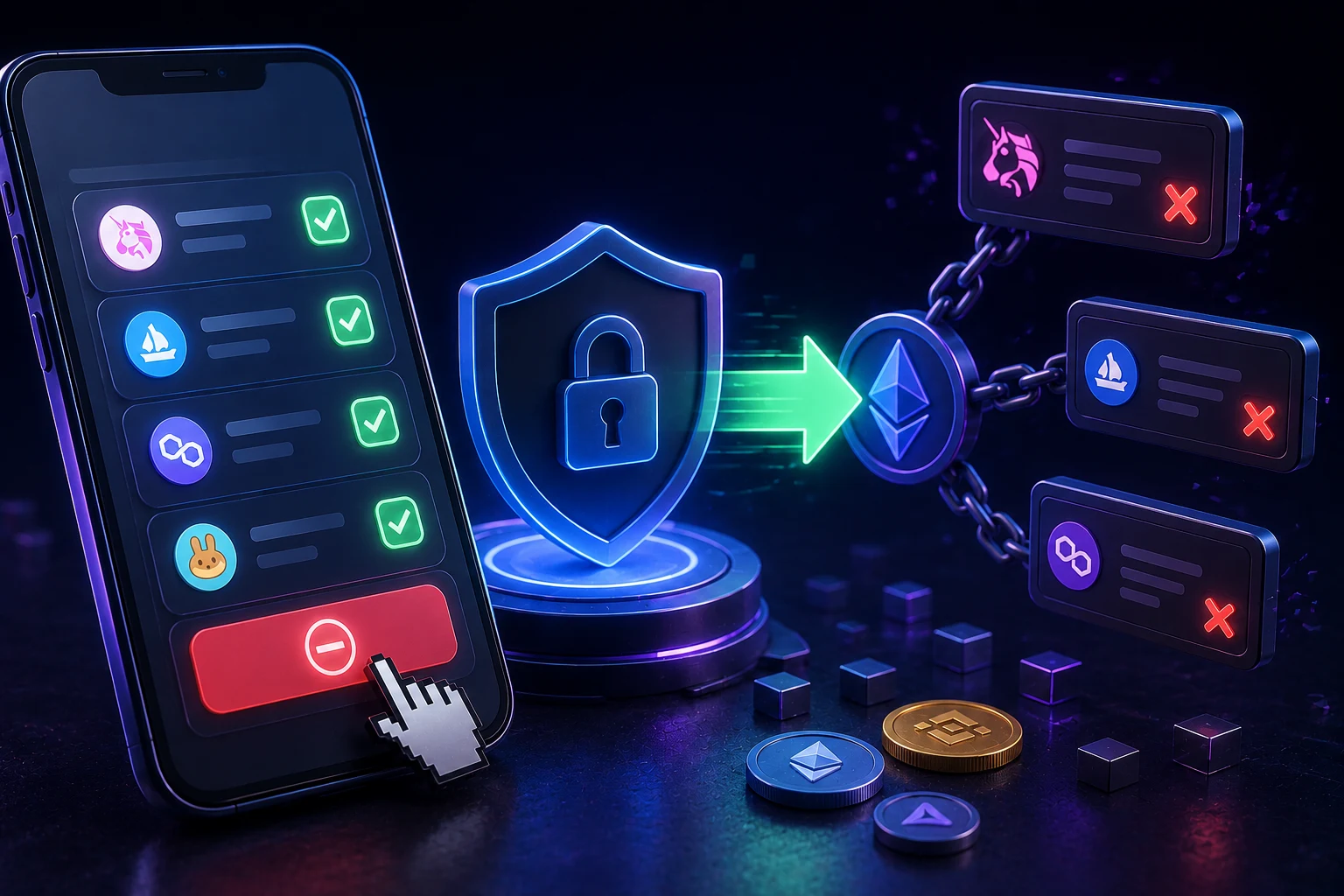
Session key hijack. This is the risk most users underestimate. A session key is a temporary, narrowly-scoped key your smart account issues so a dapp can act on your behalf for a while, like letting a game move an NFT around for an hour, or letting a DEX router batch a few swaps. The dapp holds that key for the session. If the dapp is malicious, or its front-end is hijacked, or its server is breached, the attacker now holds a key your contract treats as legitimate. Drainer kits marketed as 'Wallet Drainer-as-a-Service' on Telegram in 2023 and 2024 began targeting smart-account sessions specifically, because the signing surface is broader than a plain EOA approval.
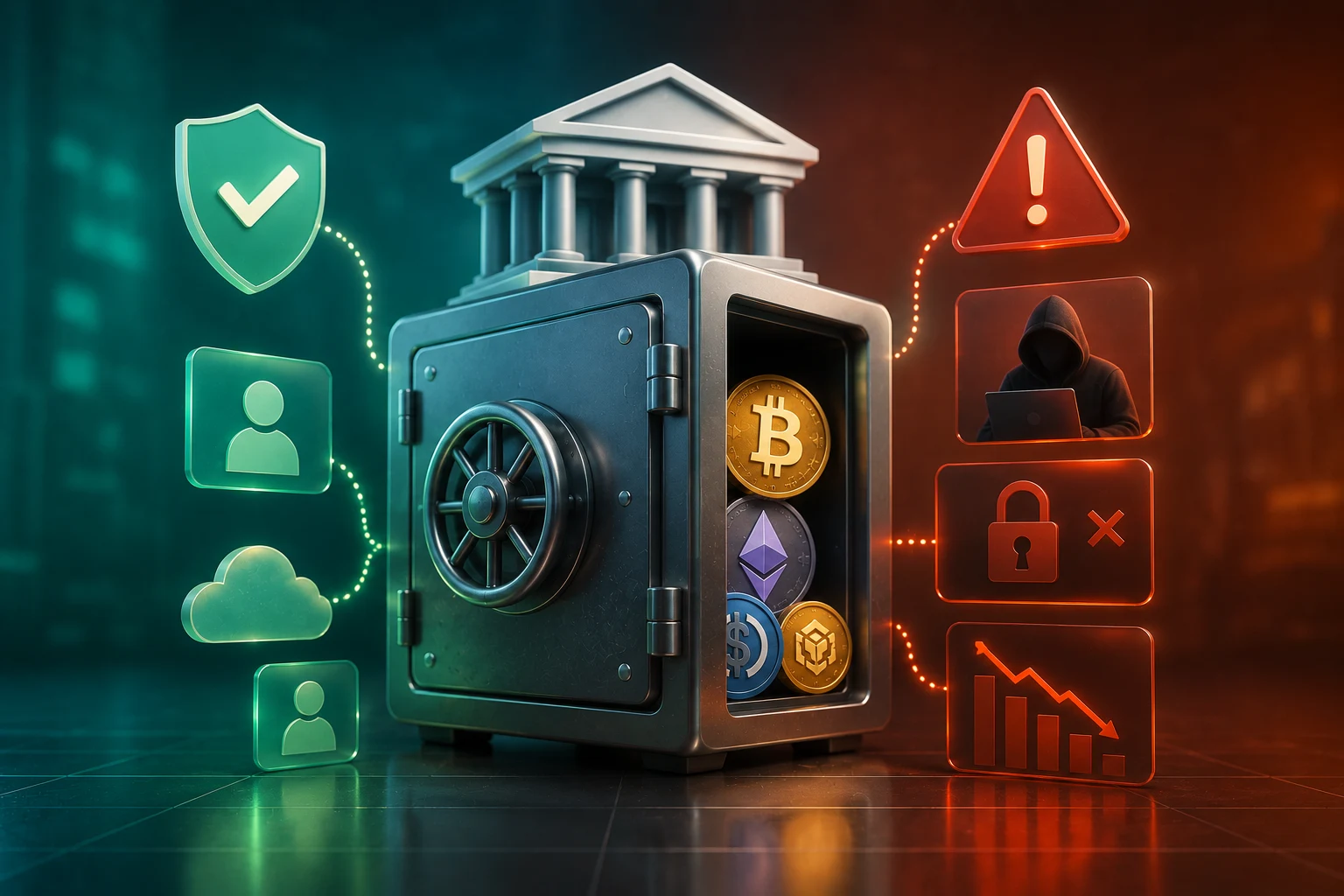
Platform dependency. Many 'social recovery' wallets are actually hybrid: your guardians include a managed service from the wallet provider. If that service goes offline, gets acquired, gets sanctioned, or simply changes its terms, your recovery path shrinks overnight. This is the same shape of risk as custodial recovery, even though the assets still sit in a self-custodied contract. We will return to this distinction below.
Smart contract bugs. The recovery logic is code, and code has bugs. Past audits have caught reentrancy in recovery flows, broken signature replay protection, and threshold math that could be gamed with empty guardian slots. The history of DeFi is mostly the history of audit findings that were caught, and a smaller but painful history of audits that were not enough.
EOAs vs smart accounts: a fair comparison
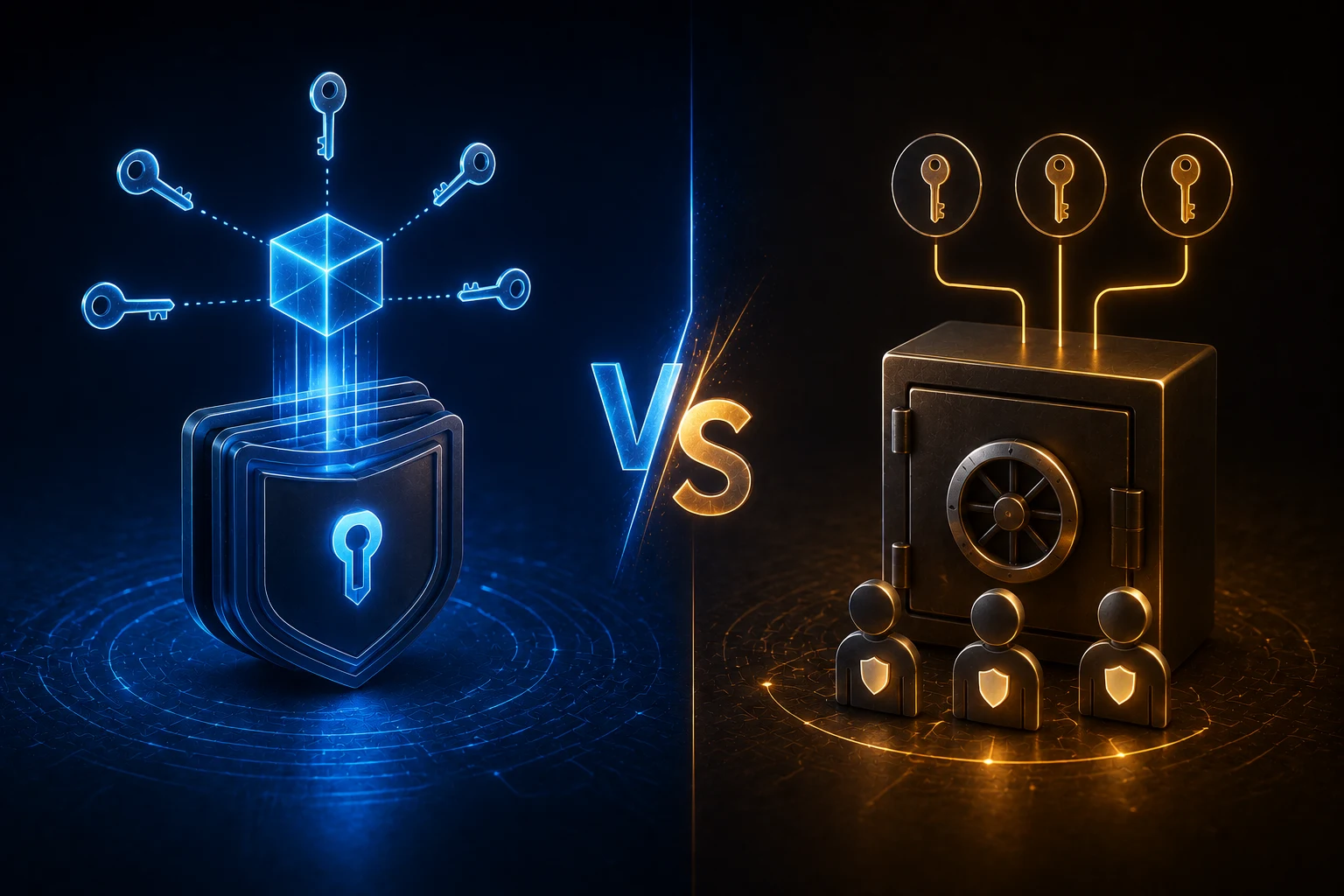
The honest comparison is not 'seed phrase bad, smart account good.' It is a tradeoff table that any informed user should weigh before migrating meaningful funds.
- Single point of failure. An EOA has one: the seed phrase. A smart account still has one, but it is the guardian set and the recovery contract. You are choosing which failure mode you would rather debug.
- Recovery surface. EOAs have no native recovery. Smart accounts have native recovery, but it is only as trustworthy as the guardians you pick and the contract you deployed.
- Phishing surface. Both can be phished, but smart accounts often expose more signing surfaces (session keys, batched approvals, gas-sponsored flows), which gives drainer kits more to grab.
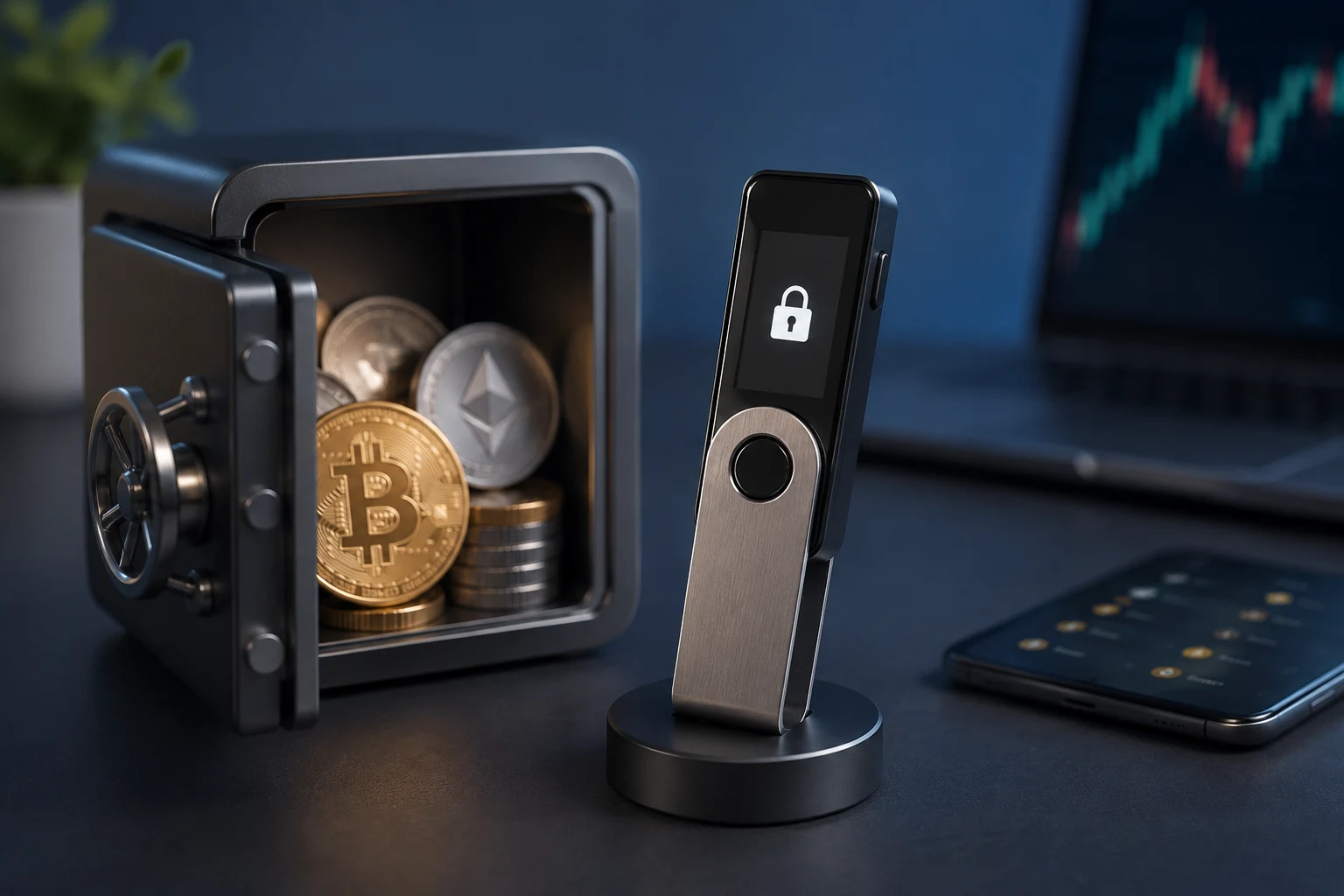
- Hardware wallet support. EOAs integrate with hardware wallets very cleanly. Smart accounts increasingly do too, but the integration typically goes through passkeys, browser APIs, or a wallet-as-a-service, each of which adds a moving part.
- Cost. EOAs are free to use. Smart accounts pay gas for every UserOperation, and recovery transactions are real on-chain transactions. Some users pay in ETH, others get sponsored gas from a paymaster, which means depending on a third party to keep their account usable.
- Portability. An EOA is portable across every EVM chain and every wallet UI that understands it. A smart account is portable only across wallets that speak the same ERC-4337 implementation and trust the same account contract.
The right way to read this table is: smart accounts trade one set of headaches for another. If your main pain is I am afraid I will lose my seed phrase', a smart account solves that. If your main pain is 'I want the smallest possible attack surface and I can secure a hardware wallet', an EOA is still a defensible choice in 2025.
Hardware-backed passkeys and where they fit
The cleanest pairing with smart accounts today is the passkey, a credential stored in your device's secure enclave (the same hardware that stores Face ID or Windows Hello). When you sign a UserOperation, the signature is produced inside the secure enclave and never leaves your device. There is no seed phrase to type, no password to phish in the usual sense, and the device itself becomes the 'something you have' factor.
This is a real improvement over a cloud-stored password or a typed seed, but it introduces two new failure modes. First, if you lose the device and have not synced the passkey to another one, you are back to relying on guardians. Apple, Google, and Microsoft all offer passkey sync, but only across their own ecosystems. Second, if a vulnerability is ever found in a secure enclave's signing primitive, every user of that enclave is affected at once. The history of consumer security chips is mostly clean, but 'mostly clean' is not 'perfect'.
For high-value accounts, the practical pattern is layered: a hardware wallet as the day-to-day signer, a passkey on a second device as a backup signer, and a guardian set chosen with the same care you would use to pick an executor for your will. No single layer is load-bearing, and no single layer is enough on its own.
What happens when guardians disappear
This is the question almost nobody asks during onboarding, and the one that bites hardest in year three of using a smart account. Guardian decay is real. The friend who set you up in 2023 swapped phones twice, reformatted their seed phrase, and forgot they were your guardian. The wallet-provider service you used got acquired and the new owners changed the recovery policy. The email-based guardian you nominated got shut down when its provider moved on.
Smart accounts typically allow you to rotate guardians without going through the full recovery flow, as long as you still control the current owner key. The discipline is to do that rotation every six to twelve months, even when nothing is wrong. Users who set and forget their guardian sets tend to discover the rot exactly when they need recovery, which is the worst possible timing.
If guardians have genuinely vanished, you may still be able to recover if a quorum can still be reached, or if your smart account has an admin escape hatch. Some implementations hardcode a small delay and an on-chain announcement when recovery begins, giving the real owner a window to cancel a hostile recovery in progress. Knowing whether your chosen wallet has that delay, and how long it is, is more important than the marketing copy about 'decentralized recovery'.
Practical checklist before you trust a smart account with real funds
If you are weighing a migration from an EOA, a few concrete questions are worth asking out loud before you move anything meaningful.
- Who exactly are my guardians, and have I asked them whether they understand the responsibility? A guardian who has never heard of your wallet cannot meaningfully vet a recovery request.
- What is my recovery threshold, and what happens if one or two guardians disappear? Is the threshold reachable with the people likely to still be around in five years?
- Does my chosen wallet let me rotate guardians without going through full recovery? Have I actually rotated them at least once to prove the path works?
- Is the recovery contract audited, and by whom, and is the audit recent? Is the contract upgradeable, and if so, who can upgrade it?
- How are session keys scoped for the dapps I use, and how do I revoke a session I no longer trust? A dangling session key is a small loaded gun in your account.
- What is my hardware or passkey backup story if I lose my primary device? Have I tested signing from the backup?
If you cannot answer those six questions with specific names, contracts, and policies, you are not yet ready to migrate funds you cannot afford to lose. The point of smart accounts is to make recovery boring and routine. Until you have rehearsed it, it is not boring yet.
How to follow smart wallet security the smart way
Smart wallet security is moving fast: new account standards ship every upgrade cycle, new drainer kits appear within weeks of each major UX improvement, and recovery flows quietly change at the wallet-provider level. Tracking all of it manually, including which contracts your guardian set depends on, which dapps hold live session keys, and which headlines actually matter, is a losing game. Zippfeed surfaces smart-wallet and Ethereum security headlines with sentiment scoring (bullish, neutral, or bearish) and an importance rating, so you can react to real risks instead of noise.

 WuBlockchain
 Crypto Capital Venture
 Lookonchain
 TheBlock