What it really is
USDT and USDC are the two largest stablecoins — crypto assets designed to hold a 1:1 peg to the US dollar. Together they account for the vast majority of stablecoin supply and the on-chain dollar plumbing under almost every exchange, lending market, and DeFi protocol. If you swap into "stables" to ride out volatility, you are almost certainly holding one of these two.
That is where the similarity ends. USDT is issued by Tether, a private company headquartered offshore, with a long history of operating ahead of regulators. USDC is issued by Circle, a US-domiciled fintech that has built its product around regulated, transparent compliance. The day-to-day experience of holding either is roughly identical — both move on the same chains, both target $1, both clear settlement in seconds. The risk profiles are not identical at all.
How it actually works
Both USDT and USDC operate on the same basic model: take a dollar (or a dollar-equivalent asset) from a customer, issue one stablecoin token onto a blockchain, and promise to redeem one stablecoin for one dollar on request. The differences live in how that promise is structured and supervised.
USDT (Tether) — the dominant trader stablecoin
Tether issues USDT on multiple chains and reports reserves quarterly via attestations from an independent accounting firm. Reserves include US Treasury bills, repo, cash, secured loans, and some other assets. USDT has the deepest liquidity globally — especially on offshore exchanges, in Asia, and across emerging markets where USD bank rails are limited. If you are trading on Binance, Bybit, OKX, KuCoin, MEXC, or most non-US venues, USDT pairs almost always have the tightest spreads and deepest order books.
USDC (Circle) — the regulated stablecoin
Circle issues USDC and publishes monthly reserve attestations. Reserves are kept primarily in short-dated US Treasuries via a dedicated BlackRock-managed fund, plus cash at regulated banks. Circle operates under multiple US and EU regulatory regimes, with banking and money-transmission licenses across several jurisdictions. USDC dominates US-facing exchanges (Coinbase, Kraken US), regulated venues, and the lending and money-market protocols that institutions actually use.
Simple comparison
The cleanest way to think about USDT vs USDC is in five dimensions: issuer, transparency, regulation, liquidity, and depeg history.
- Issuer. USDT — Tether, offshore private company. USDC — Circle, US-domiciled and publicly listed.
- Reserve attestations. USDT — quarterly. USDC — monthly, with daily reserve composition reports.
- Regulation. USDT — historically light-touch, increasingly engaging with frameworks like MiCA in EU. USDC — operates under US state money-transmitter regimes, NYDFS BitLicense, and a similar EU MiCA footprint.
- Liquidity. USDT — deepest global pairs, dominant on offshore venues, the standard pair in emerging markets. USDC — deepest pairs on regulated US and EU venues, dominant in DeFi lending markets.
- Depeg history. USDT has had multiple brief depegs (mid-2022, late 2022) under banking and reserve scrutiny, recovering each time. USDC depegged in March 2023 after Silicon Valley Bank's collapse exposed Circle to a temporarily frozen reserve deposit, recovering once the bank was made whole within the same week.
Neither has ever permanently lost its peg, but both have temporarily slipped under stress. The depeg patterns matter: USDT incidents tended to be about reserve composition questions; the USDC incident was banking infrastructure risk.
The mechanics behind
Reserve composition risk
The single biggest difference is what backs each stablecoin and how visible that backing is. Both report majority US Treasury and cash backing today. The crucial question is the marginal asset — what fills the rest of the reserve. USDC's reserves are nearly all T-bills and cash at regulated US banks. USDT's reserves include T-bills, repo, cash, and some "other" categories (secured loans, gold, bitcoin, other investments) — small as a percentage, but the bucket has historically been the focus of analyst questions. The trade-off: USDT runs reserves more like a bank balance sheet; USDC runs reserves like a money market fund.
Banking partner risk
The March 2023 USDC depeg taught the market that a fully reserve-backed stablecoin can still depeg if the bank holding part of the reserve fails. Circle had about $3.3 billion at Silicon Valley Bank when SVB went into receivership. For a weekend, USDC traded as low as $0.87 because the market priced in the risk of a partial reserve loss. The bank made depositors whole the next Monday and USDC recovered, but the lesson stuck: "backed by Treasuries at a bank" inherits the bank's risk.
Both Circle and Tether have since diversified banking partners and shifted more reserves into direct Treasury holdings to reduce this exposure. The structural risk is smaller now, not zero.
Regulatory exposure
Stablecoins are squarely in the regulatory crosshairs everywhere. The EU's MiCA regime took effect in 2024 and requires issuers to hold majority reserves in EEA banks and to be authorized as electronic-money or credit institutions. Circle (USDC and EURC) has built out MiCA compliance early. Tether (USDT) has been slower and has been delisted from some EU-facing venues as a result. In the US, both issuers face ongoing scrutiny under proposed federal stablecoin frameworks. The direction of travel is more, not less, regulation — and USDC is structurally better positioned for that future.
Liquidity and venue lock-in
If you are trading on an offshore venue, USDT pairs almost certainly have tighter spreads than USDC pairs — sometimes by a meaningful margin on minor altcoins. If you are using a US-regulated exchange or interacting with Aave, Compound, Morpho, or Maker, USDC is usually the deeper, cheaper-to-move asset. "Which is more liquid" is wholly venue-dependent and that often matters more than the issuer comparison.
The risks worth knowing
- Depeg risk. Both have depegged. Both will likely depeg again under sufficient stress. If your strategy requires the stable not to wobble for hours, you have not understood the risk.
- Issuer-specific risk. A judgment against Tether (regulatory action, banking-partner failure, reserve dispute) hits USDT, not USDC. A judgment against Circle (the SVB scenario, future regulatory action) hits USDC, not USDT. Holding both spreads issuer risk.
- Counterparty bank risk. The reserves sit at banks. If a major banking partner fails, even a fully-reserved stablecoin can wobble until the situation resolves.
- Chain-specific risk. Both USDT and USDC exist on many chains. The token is the issuer's liability, but the chain-specific contract can be paused or frozen. Both issuers have frozen wallets (sanctions, court orders) repeatedly. If on-chain censorship resistance matters to your use case, neither USDT nor USDC is the right tool.
- Regulatory delisting risk. A stablecoin can be delisted from a major venue with a few days notice, which can cause local liquidity events even without a real peg break.
None of this is financial advice. The honest answer to "which stablecoin should I trust" is: both, partially, for different purposes, and never with conviction that the next stress event will not surprise you.
Who each suits
Use USDT when: you are trading on offshore or Asian venues; you need the deepest possible liquidity on a minor altcoin; you are in an emerging market where USDT is the de-facto on-chain dollar; you are interacting with a CEX whose USDC pairs are thin.
Use USDC when: you are operating on US-regulated exchanges; you are using DeFi protocols where it is the canonical asset (Aave, Compound, Morpho, Maker); you want maximum transparency and regulatory cover; you are an institution or business that has to defend a stablecoin choice in writing.
Hold a mix when: you have meaningful capital, you want issuer diversification, and the cost of moving between the two when prices wobble is acceptable. Many experienced users sweep between USDT and USDC based on which one is most useful for the next trade, not based on long-run conviction in either.
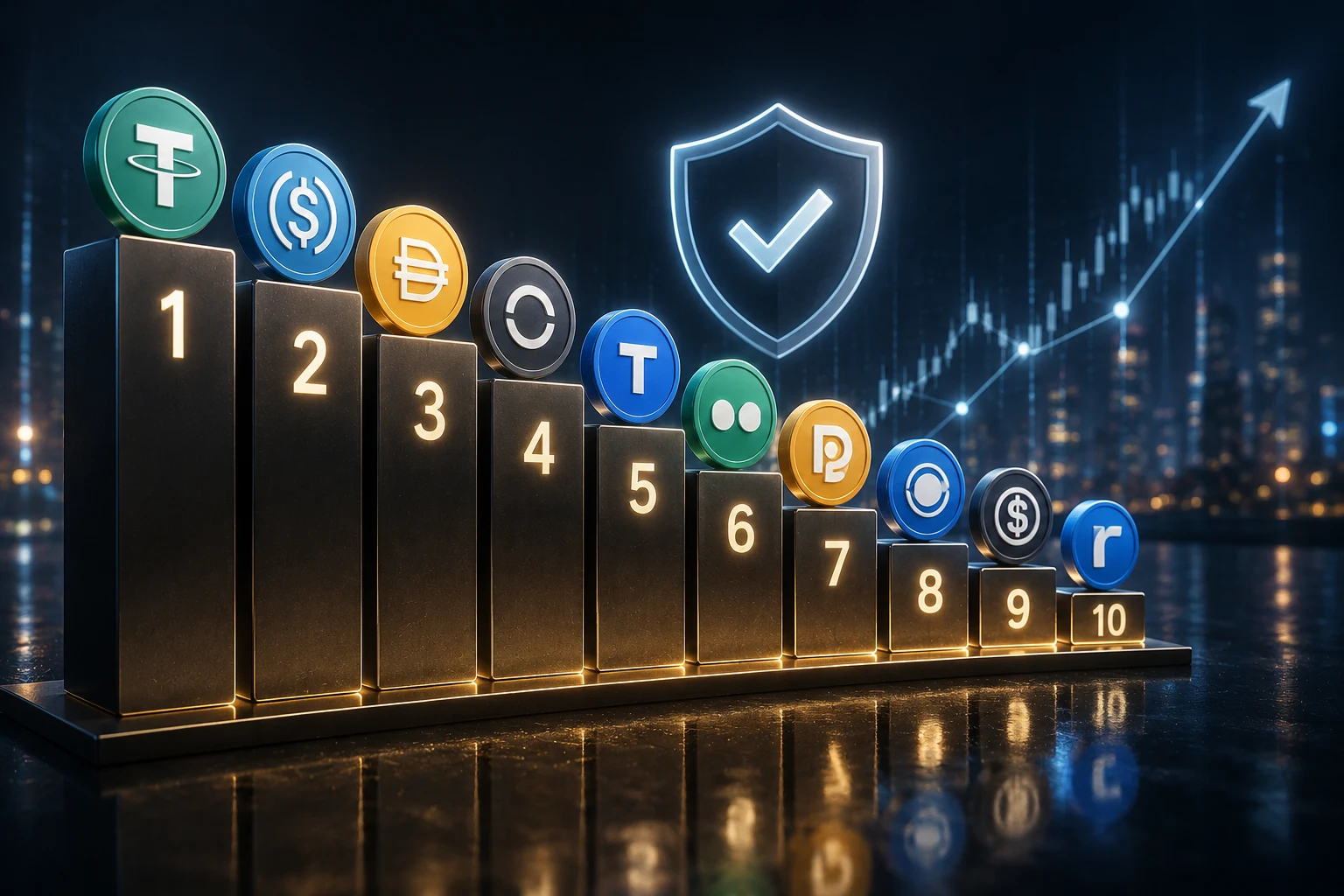
Smaller stablecoins — DAI, USDS, FRAX, PYUSD, USDe — fill specific niches and each have their own risk story. What is DAI covers MakerDAO's flagship; what is a stablecoin covers the general design space.
Watch the reserves, watch the news
Stablecoin risk events — reserve disputes, banking partner stress, regulatory rulings, depeg flashes — typically surface in headlines hours before exchanges and protocols can react. Zippfeed tracks regulation, security, and major-token headlines with sentiment and importance scoring, so you can see USDT and USDC stress signals early — useful whether you are holding meaningful balances, providing liquidity in stable pools, or just trying to understand why a particular stablecoin briefly traded at $0.98.


 WuBlockchain
 CoinDesk
 TheBlock