Polygon in context
In 2017 the team that would become Polygon launched Matic Network, a sidechain that let Ethereum users transact for fractions of a cent instead of paying mainnet gas. As Ethereum gas prices climbed through 2020 and 2021, Matic became one of the most-used chains in crypto, mostly because it was the closest thing to Ethereum that did not cost $30 per swap.
The team rebranded to Polygon and expanded the vision: instead of being one sidechain, Polygon would become the home for many scaling solutions. Today Polygon ships multiple chains, the most important of which are Polygon PoS (the original chain) and Polygon zkEVM (a zero-knowledge rollup).
How Polygon actually works
Polygon PoS: the EVM sidechain
Polygon PoS is an EVM-compatible proof-of-stake chain that processes transactions independently and periodically posts checkpoints to Ethereum. It is technically a sidechain rather than a rollup, which means it inherits less security from Ethereum than a rollup does. The trade-off is speed and cost — block times are around two seconds and fees are usually well under a cent. For most users, the experience is indistinguishable from Ethereum, just faster and cheaper.
Polygon zkEVM: the rollup
Polygon zkEVM is a zero-knowledge rollup that posts compressed transaction data and cryptographic proofs back to Ethereum mainnet. Unlike the sidechain, the zkEVM inherits Ethereum's security: if you can verify Ethereum, you can verify what happened on the zkEVM. The performance trade-off is small overhead for the proof generation, but the security upgrade is significant. Our explainer on Layer 2 blockchains walks through how this category compares with optimistic rollups.
Polygon CDK and AggLayer
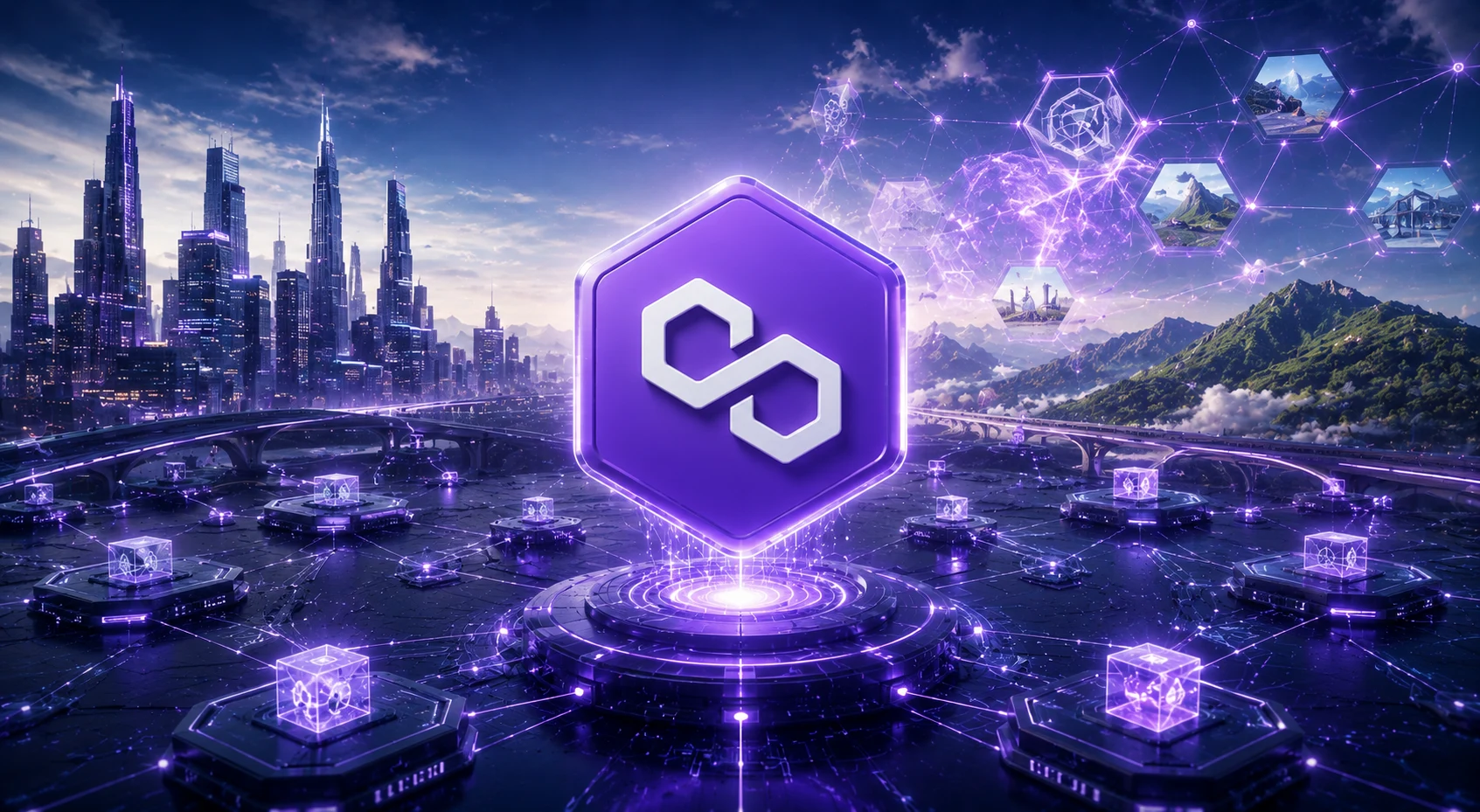
The newest part of the story is Polygon's chain development kit (CDK) and the AggLayer. CDK is a framework that lets any team launch a zk-rollup that interoperates with Polygon's ecosystem. AggLayer aggregates state across these chains and Ethereum so they can share liquidity and message each other natively. The strategic bet is that Ethereum scaling will be many chains, not one — and Polygon wants to be the connective tissue.
From MATIC to POL
In 2024 Polygon migrated its native token from MATIC to POL. The migration was a one-to-one swap and was driven by the multi-chain expansion. POL is designed to be staked by validators across multiple Polygon chains simultaneously, not just on the PoS chain — a feature called "hyperproductive" staking. The rebrand also included a treasury and tokenomics reset to fit the new ecosystem scope.
What the POL token is for
POL has multiple roles:
- Gas on Polygon PoS. Every transaction on the PoS chain pays gas in POL.
- Validator staking. Validators bond POL to secure Polygon PoS and earn rewards; the multi-chain design lets the same stake secure multiple Polygon chains.
- Governance and ecosystem incentives. POL is used to vote on protocol-level changes and to fund grants, liquidity programs, and developer support.
- Bridging and economic flows across CDK chains. As more chains plug into the AggLayer, POL becomes the connective economic asset.
The Polygon ecosystem
Polygon hosts an unusually broad mix of activity:
- DeFi — the leading AMMs, lending markets, and stablecoin pools have substantial Polygon deployments.
- Enterprise pilots — payments providers, loyalty programs, and consumer brands have used Polygon for product launches and pilots, often citing low fees and familiar tooling.
- NFTs and gaming — low fees make consumer NFT mints and game economies practical.
- Stablecoins — major USD stablecoins are deployed on Polygon and used as a low-fee alternative to Ethereum mainnet transfers.
Polygon versus other Ethereum scaling approaches
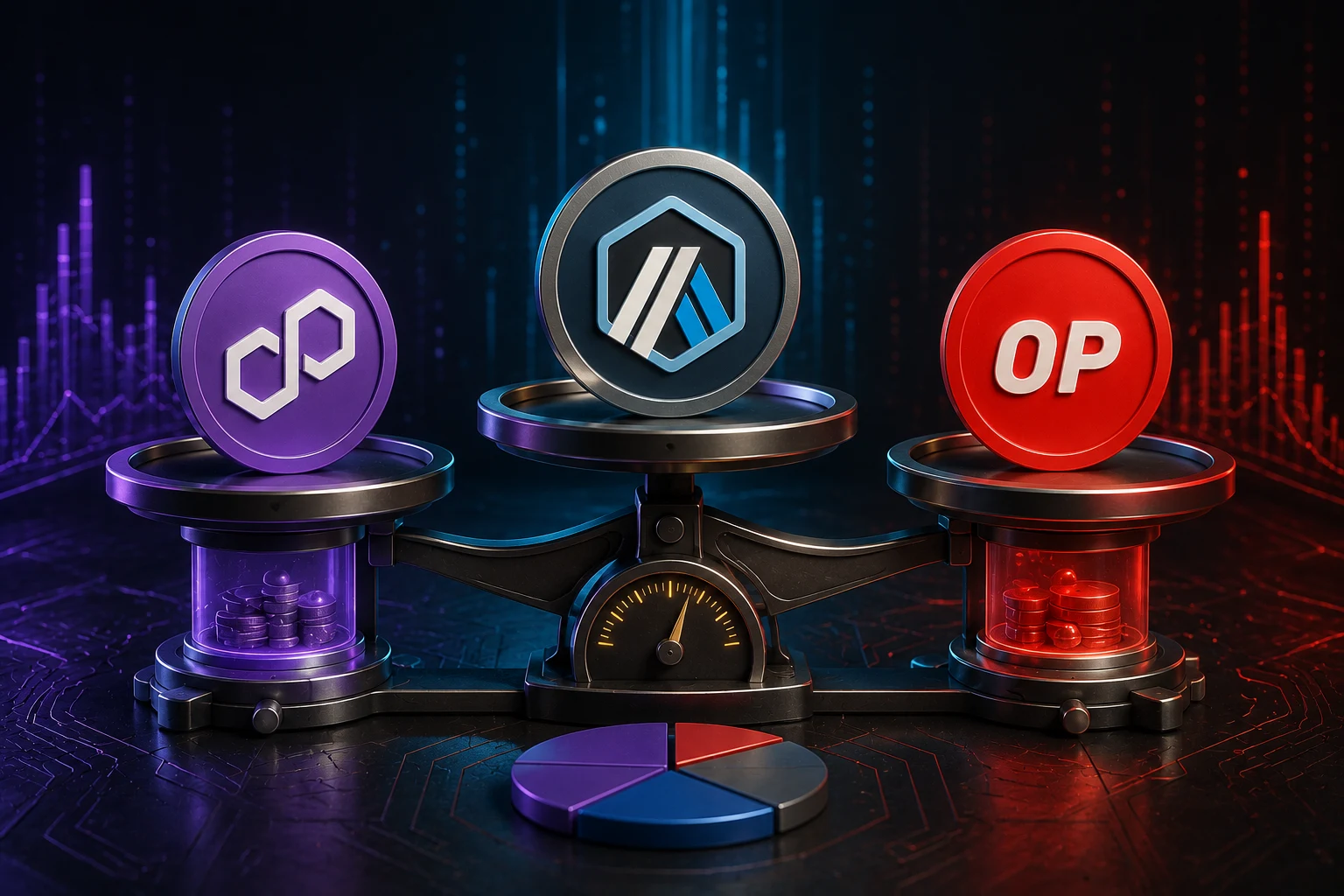
Polygon competes mostly with other Ethereum scaling solutions — Arbitrum, Optimism, Base, zkSync. Each takes a different approach. Optimistic rollups (Arbitrum, Optimism) are mature and have the largest L2 ecosystems. Zero-knowledge rollups (Polygon zkEVM, zkSync) inherit Ethereum's security more directly. Sidechains like Polygon PoS process transactions independently and post checkpoints, which is faster but less Ethereum-secure than a rollup.
Polygon's bet on the AggLayer and CDK is different from the single-chain L2 model: the company is trying to be infrastructure for many chains rather than just one. That is a riskier bet than running a single L2 well, but if it works, it positions POL as the connective token across a large multi-chain ecosystem.
The risks worth knowing
- Sidechain versus rollup security. Polygon PoS does not have the same Ethereum-anchored security as a true rollup. If Polygon PoS validators colluded, the chain could in principle behave incorrectly. That is a real difference from the zkEVM or true L2 rollups.
- Strategy complexity. Running PoS, zkEVM, CDK, and AggLayer at once is a wide surface. Strategic clarity has been a recurring critique.
- Competition is fierce. The L2 space is crowded and active. Arbitrum and Base host most of the new Ethereum L2 activity.
- Token volatility. POL is a volatile asset and the MATIC-to-POL transition is recent enough that historical price comparisons need care.
- Migration friction. The MATIC-to-POL migration is complete, but residual MATIC on some exchanges or wallets may need to be migrated manually.
None of this is investment advice. Treat any crypto position as money you can afford to lose.
Following Polygon without the noise
Polygon news spans multiple chains, enterprise pilots, and L2 ecosystem dynamics. Zippfeed surfaces Polygon headlines with sentiment scoring (bullish, neutral, or bearish) and an importance rating, so you see the upgrades and partnerships that actually matter instead of every L2 microbenchmark. That is the difference between reading the signal and chasing rollup metrics threads.

 Crypto Rank News
 CryptoSlate
 CoinDesk
 WuBlockchain